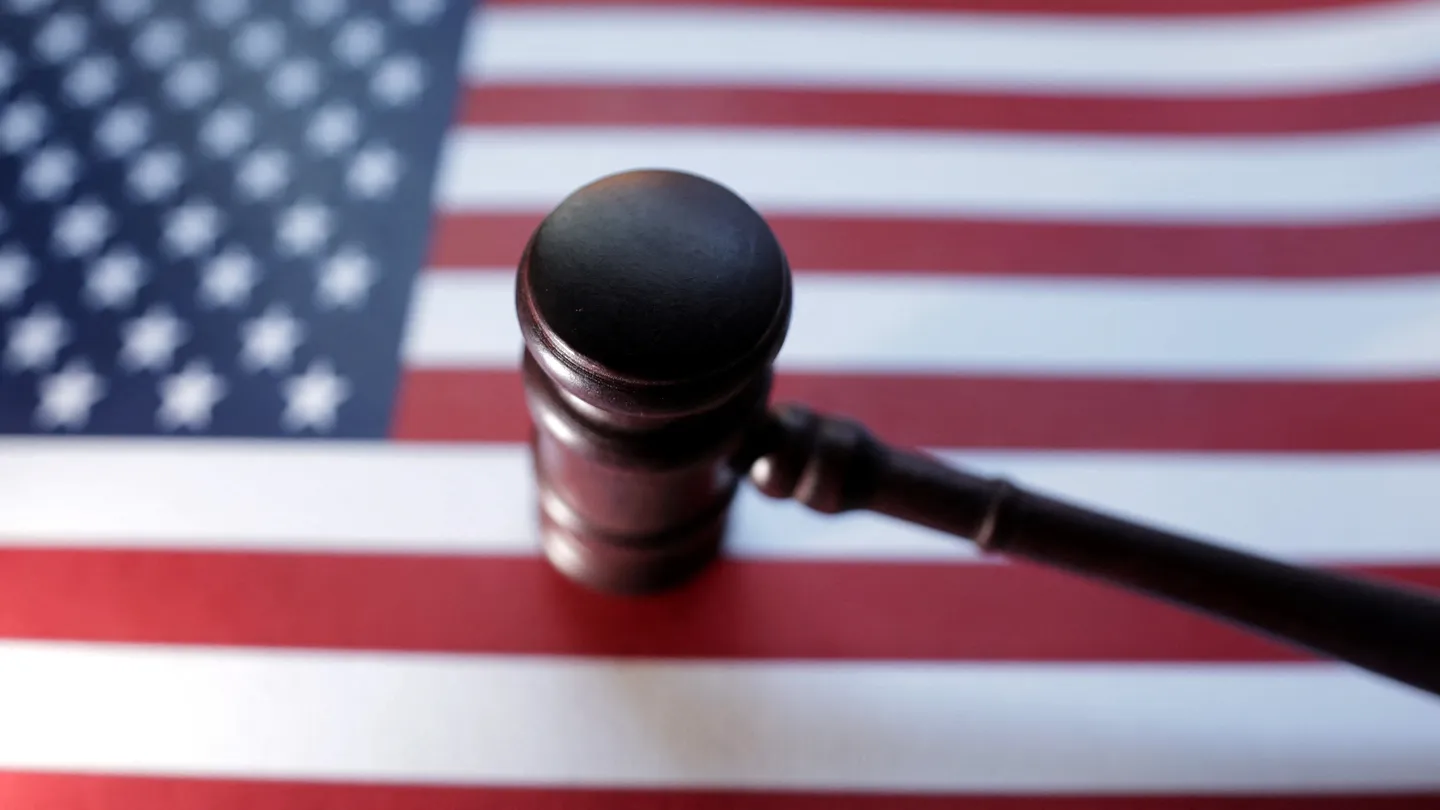






A federal judge in California has issued a landmark ruling declaring that the US government’s use of immigration provisions to target non-citizens based on their political speech is unconstitutional. In a 90-page decision delivered on August 28, US District Judge Noel Wise found that such actions violate both the First and Fifth Amendments, effectively challenging the administration’s strategy of using visa revocations and deportation threats against activists.
The legal challenge was initiated by The Stanford Daily, the student newspaper of Stanford University, alongside an anonymous F-1 visa holder referred to as Jane Doe. The plaintiffs argued that the government’s policy created a climate of fear, forcing international students to delete social media posts, avoid political engagement, and hesitate before reporting on the conflict in Gaza. Judge Wise sided with the plaintiffs on six of their eight claims, determining that the government’s interpretation of its authority amounted to viewpoint- and content-based restrictions on constitutionally protected speech.
Central to the dispute are provisions within the Immigration and Nationality Act of 1952. The administration had interpreted these rules to grant the Secretary of State, currently Marco Rubio, broad discretion to revoke visas if a non-citizen’s presence was deemed to threaten US foreign policy interests. During the proceedings, Rubio’s own arguments highlighted the potential reach of this authority; he suggested that while the government would not revoke a visa over protests regarding mundane issues like paper straws, the same legal framework could theoretically be applied to such activities.
Judge Wise explicitly rejected this logic, asserting that the government cannot penalize protected speech simply because it disagrees with the viewpoint expressed. Her ruling, which extensively cites American founders Benjamin Franklin and James Madison, establishes a constitutional boundary against the use of immigration enforcement to suppress political dissent.
Human rights lawyer and writer Maria Kari, who has represented several individuals targeted by these immigration crackdowns—including Momodou Taal, Yaakub Ira Vijandre, and Mahmoud Khalil—welcomed the decision. Kari described the silencing of students and activists for opposing government funding of war as profoundly un-American. She emphasized that constitutional protections are inalienable and do not diminish based on citizenship status.
Despite the victory, Kari cautioned that the ruling is declaratory rather than injunctive. This means it does not automatically halt future visa revocations or secure the release of those currently detained by Immigration and Customs Enforcement (ICE). She noted that the government is expected to appeal the decision within the 60-day window, potentially leading to further testing of these foreign policy provisions in higher courts.
The administration’s aggressive stance has been evident since a January 2025 executive order directed federal agencies to identify and remove non-citizen students and faculty whose political activities were perceived as contrary to US foreign policy. This policy led to the detention of several high-profile activists, including Columbia University graduate Mahmoud Khalil in March 2025, and Tufts University doctoral student Rumeysa Ozturk, who was detained after co-authoring an op-ed criticizing her university’s response to the situation in Gaza. These cases, along with those of Cornell student Momodou Taal and Columbia student Mohsen Mahdawi, transformed individual immigration actions into a broader national debate over the limits of political activism for non-citizens.
Kari expressed concern that the administration is now expanding its tactics to target individuals based on family connections rather than their own actions or speech. She characterized this as a new and dangerous frontier in immigration enforcement. While the Ninth Circuit Court of Appeals has previously affirmed that free speech protections extend to non-citizens, the legal battle over the government’s authority to use immigration law as a tool for political suppression remains ongoing. The report also notes that the case emerged from a fear already taking hold on university campuses: that an international student’s words could put their legal status at risk. The report also notes that too many brave and principled pro-Palestinian voices have become collateral damage due to Washington’s attempts to suppress criticism of the genocidal Israeli state, according to human rights lawyer and writer Maria Kari. The report also notes that war crimes and the murder of thousands of babies and for that reason Judge Wise’s ruling is a very welcome and significant victory,” Kari tells, i cannot think of anything more profoundly un-American than silencing students and activists for voicing opposition to the US government funding genocide. The report also notes that rubio’s own arguments showed just how far the provision could reach. The report also notes that then we’re obviously not going to yank a visa over that,” he said, if you’re complaining about paper straws. The report also notes that however, when it comes to the practical, beneficial impact this ruling can have, Kari believes the answer is, unfortunately, not much.