






A coalition led by New York State has filed a lawsuit in the Southern District of New York against the Trump administration, seeking to invalidate a new Department of Homeland Security (DHS) regulation. The rule, which is scheduled to take effect this Friday, expands the government’s authority to deny green cards, visas, or entry into the United States by broadening the criteria for what constitutes a public charge. By giving immigration officials greater discretion, the policy targets applicants deemed likely to become dependent on government-funded assistance.
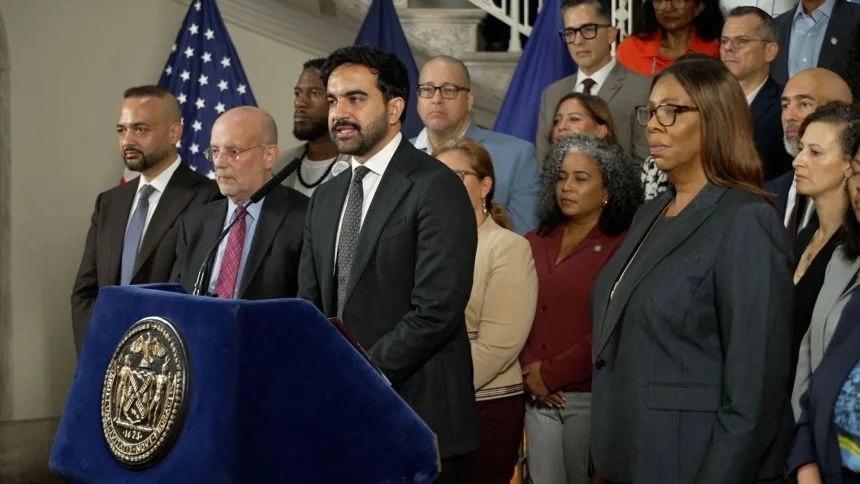
New York State Attorney General Letitia James and New York City Mayor Zohran Mamdani announced the legal challenge during a City Hall press conference. The coalition, comprised of 22 states and the District of Columbia, argues that the regulation is arbitrary and capricious. Plaintiffs contend that the DHS failed to provide adequate justification for the change and ignored the harmful consequences the rule would impose on families. According to the lawsuit, states anticipate losing approximately $4.05 billion in annual federal transfer payments for Medicaid and CHIP programs alone, as families potentially disenroll from safety net programs out of fear of immigration consequences.
The legal action centers on the definition of a public charge, a long-standing provision of US immigration law originating from the 1882 Immigration Act to ensure immigrants are self-sufficient. Historically, officials restricted their assessments to cash-based assistance like Supplemental Security Income or Temporary Assistance for Needy Families. While the first Trump administration expanded these criteria in 2020, the Biden administration later returned to the practice of excluding non-cash benefits. The current DHS policy rescinds those protections and is notably more expansive, stating only that officials will consider the receipt of any means-tested public benefits without specifying which programs are included.
Addressing the potential impact on public health and welfare, Attorney General James stated that hardworking families should not be forced to forgo necessary support due to fears of deportation. She added that the rule unfairly preys on that fear, pressuring families to forfeit health care and food assistance to which they are legally entitled. Mayor Mamdani echoed these concerns, noting that the policy creates a chilling effect that will discourage even families fully eligible for benefits from seeking medical care, thereby affecting all residents in cities with high immigrant populations.
The lawsuit explicitly notes that the rule allows immigration officers to account for benefits applied for on behalf of family members, including children who are US citizens. Because undocumented immigrants are ineligible for such benefits, the policy primarily impacts those who already maintain legal status in the country. The plaintiffs argue that the DHS is exceeding its statutory authority, asserting that Congress never authorized a broader interpretation of public charge status.
Joining New York in the litigation are several major local governments, including Chicago, San Francisco, Seattle, Washington’s King County, and California’s Santa Clara County. The filing does not seek monetary damages, but specifically requests that the court intervene to block the rule and prevent the federal government from implementing its expanded standards. DHS has not yet provided a comment regarding the pending legal challenge. The report also notes that new York and 21 other states are suing the Trump administration to block a new Department of Homeland Security rule that would give immigration officials wider discretion to deny green cards, visas or entry into the United States when determining whether applicants could become dependent on government aid. The report also notes that federal lawmakers at the time wanted to make sure that immigrants would be able to take care of themselves and not end up a public burden. The report also notes that including Medicaid, food stamps and housing vouchers, the first Trump administration in 2020 widened the categories of benefit programs that could be considered. The report also notes that but in 2022, the Biden administration published a rule that again excluded non-cash benefits from consideration, largely reverting to longstanding practice. The report also notes that “The new public charge rule seeks to push immigrant families away from the programs that have kept people fed and healthy for decades. The report also notes that specifically citing the risk of losing federal funding as people drop out of programs, while public agencies face higher costs trying to address confusion and fear, the states bringing the lawsuit say they will bear the cost of the policy. The report also notes that “Defendants estimate that nationwide, states will lose an estimated $4.05 billion in annual transfer payments from the federal government for the States’ Medicaid and CHIP programs alone,” the lawsuit states. “Of that nationwide total, Plaintiff States stand to lose approximately $2.2 billion in reduced federal payments.”. The report also notes that plaintiffs involved in the states’ suit are: California, Illinois, Colorado, Connecticut, Delaware, Hawaii, Maine, Maryland, Massachusetts, Michigan, Minnesota, New Jersey, New Mexico, Nevada, Oregon, Pennsylvania, Rhode Island, Vermont, Virginia, Washington and Wisconsin, besides New York and the District of Columbia.