









Members of Parliament have voted against a proposal to legalize assisted dying in England and Wales, effectively halting the latest legislative attempt to reform the law. The House of Commons rejected the Terminally Ill Adults (End of Life) Bill by a margin of 16 votes, with 286 MPs voting against the measure and 270 in favor.
The proposed legislation would have permitted adults with a terminal diagnosis and fewer than six months to live to seek assistance in ending their lives, provided they met specific safeguards. These requirements included approval from two independent doctors and an expert panel. Despite the bill’s failure, the issue remains a significant point of contention, having been debated for hundreds of hours in Parliament over the past two years.
The vote was conducted as a free vote, meaning MPs were not required to follow party lines. Prime Minister Andy Burnham did not cast a vote, having previously stated that the matter was for Parliament to decide, though he has expressed a preference for prioritizing improvements to end-of-life care funding before considering legal changes.
Key Perspectives and Reactions
- Dame Esther Rantzen: The 86-year-old broadcaster, who is terminally ill with cancer, expressed deep sadness, stating it was a “tragic day” and that she is now too physically fragile to travel to Switzerland for assisted suicide.
- Lauren Edwards: The Labour MP who tabled the bill stated that Parliament had “dropped the ball” and argued that the current law is “too cruel and too unjust to be allowed to stand.”
- Opposing MPs: Labour members Ashley Dalton, Dame Meg Hillier, and Jess Asato welcomed the result, describing the bill as “unsafe and unworkable” and emphasizing the need to improve NHS, social, and palliative care services first.
- Advocacy Groups: Sarah Wootton of Dignity in Dying warned that many terminally ill people would continue to suffer, while Gordon Macdonald of Care Not Killing praised the “decisive” vote and urged a focus on better funding for end-of-life care.
The legislative journey of this issue has been complex. A previous version of the bill, introduced by Kim Leadbeater, passed the Commons on June 20, 2025, with a majority of 23, but it ultimately stalled in the House of Lords after peers tabled more than 1,200 amendments. Lauren Edwards had reintroduced the proposals in hopes of allowing the process to conclude, but this latest defeat removes the prospect of immediate change.
During the debate, personal testimonies highlighted the emotional weight of the decision. Labour MP Janet Daby, who had supported the previous bill, revealed she had changed her stance, citing “nightmares about dying and death” and a lack of peace regarding her earlier vote. Conversely, Labour MP Claire Hazelgrove spoke in favor of the bill, sharing the experience of her mother, who died alone last October while living with a rare blood cancer, arguing that “not all pain can be palliated.”
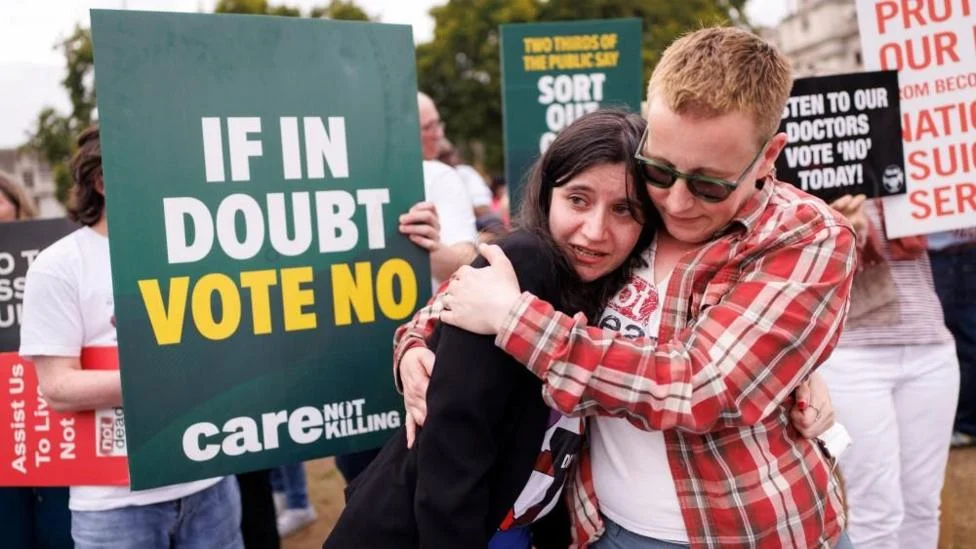
Conservative MP Martin Vickers voiced strong opposition, warning that legalizing assisted dying would cross a societal line and fundamentally alter the doctor-patient relationship. Meanwhile, Liberal Democrat MP Tom Gordon supported the bill, characterizing the existing legal framework as offering no protections or safeguards for individuals in their final moments. Supporters have indicated they intend to bring the legislation forward again, with potential for another attempt in the next parliamentary session. The report also notes that while some say improving palliative care should be the priority, but critics said it included too few measures to protect vulnerable people from being coerced into ending their lives. The report also notes that please upgrade your browser to view this interactive. The report also notes that enter your full postcode or the name or constituency of your MP. The report also notes that note: a small number of postcodes do not give an accurate constituency for all properties. The report also notes that there were emotional scenes outside Parliament from both sides after MPs voted against giving the bill a second reading. The report also notes that who was unable to join supporters in Parliament Square, said that it was “so sad that people in this country won’t have the choice” that terminally ill adults have in other countries, dame Esther Rantzen. The report also notes that the Childline founder said: “I am sure a change in the law will come.