








The U.S. Army announced on Friday that it is temporarily suspending all training flights for its fleet of Apache helicopters. This decision follows a fatal crash earlier this week near Fort Hood, Texas, which resulted in the deaths of two soldiers.
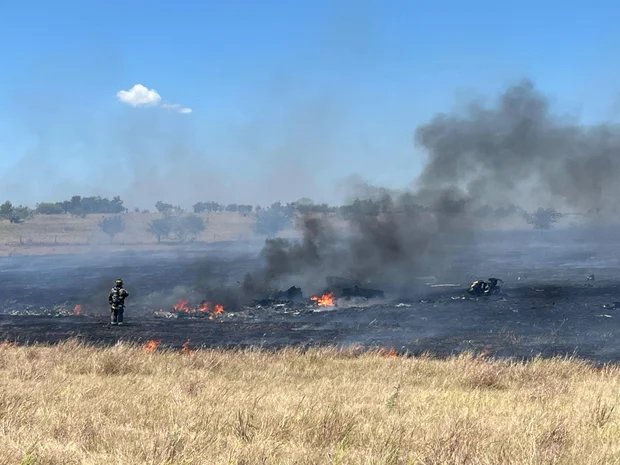
The AH-64 Apache attack helicopter went down on Wednesday in a rural field in Salado, Texas, not far from its home base at Fort Hood. Authorities have identified the two victims as 34-year-old Chief Warrant Officer 2 Deontre T. Huey and 25-year-old Warrant Officer Seth L. Olmsted, both of whom were Texas natives. Bill Coleman, a spokesperson for the Bell County Sheriff’s Office, described the incident as a “violent crash” that ignited a wildfire, though he noted that the aircraft did not strike any structures.
In a formal statement, the Army expressed its profound sorrow regarding the loss of the two aviators, offering condolences to their families, friends, and unit members. Officials confirmed that the training stand-down will remain in effect until the military gains a clearer understanding of the root cause of the accident. While the specific cause of the crash remains under investigation, such temporary suspensions are standard procedure for the military following fatal aviation incidents.
The AH-64 Apache, produced by Boeing since the late 1990s, is characterized by the Army as the world’s most advanced aerial fighting vehicle. The twin-engine aircraft typically carries a pilot and a co-pilot gunner, equipped with a rapid-fire cannon and Hellfire missile capabilities. Hundreds of these helicopters are currently in service across Army and National Guard units. The platform has seen extensive use, including in recent conflicts; notably, President Trump previously reported that an Apache patrolling the Strait of Hormuz was downed by an Iranian drone in June, with the pilots subsequently rescued by a sea drone.