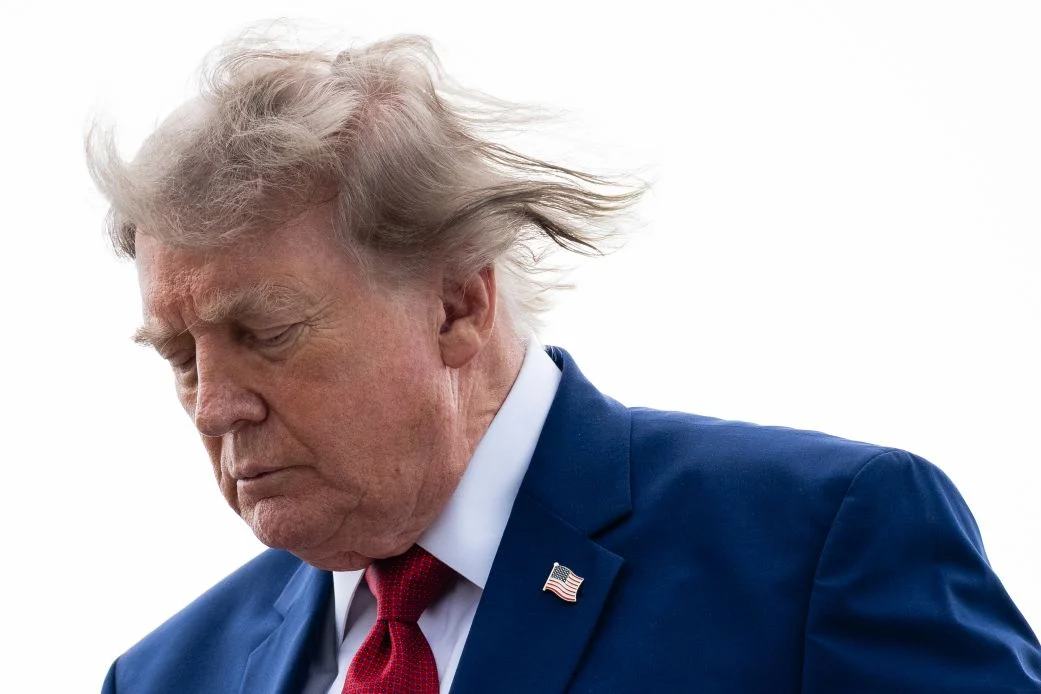








President Donald Trump’s political stature is currently so diminished that he has squandered the Republican Party’s long-standing advantage on two major issues that almost always favor the GOP: the economy and national security. This shift represents a significant departure from historical trends, as these policy areas have traditionally served as reliable pillars for Republican support.
A Reuters-Ipsos poll conducted this week showed Democrats and Republicans are now virtually tied on the issue of “war, foreign conflicts and terrorism.” The GOP previously led on that issue by 11 points following the 2024 election. Today, 37% of US adults say Democrats have a better approach, compared to 36% who say the GOP does.
Fox News polling from a couple of weeks back showed something very similar: On national security, 50% of registered voters preferred the GOP, to 48% who preferred the Democratic Party. That is a sharp contrast to the 12-point edge Republicans held in January, before the onset of the Iran war.
While both recent findings fall within the margin of error, the fact that the numbers are this close is historically unprecedented. Fox polling has regularly tested how registered voters compare the two parties on terrorism and national security. Until the Iran war, Democrats had never even been within double-digits of the Republican Party on either issue.
Republicans have also led consistently on national security in Gallup polling. Democrats only nosed ahead on that issue once in the 21st century: in 2007. Furthermore, Gallup’s data on which party is better on “international terrorism and military threats” has been even more lopsided in the GOP’s favor. Across 22 polls conducted since a year after 9/11, Democrats have led on that issue only once—again, in 2007—and most of the time Republicans led by double-digits.
The most recent Fox survey showed Democrats leading on that issue by nine points, 54%-45%. That was the biggest Democratic advantage since 2006, when they led by 20 points. Additionally, when Democrats took a lead on the economy back in April, it marked the first time they were ahead since 2010, shortly after the 2008 financial crisis that began during the George W. Bush administration.
Polling back in May showed a closer split between the two parties on the economy, with 35% of adults preferring Democrats, compared to 33% who preferred the GOP. The poll previously asked people to choose between congressional Republicans and congressional Democrats, and the last time Republicans did not lead on that question was 2009. These numbers illustrate that Trump likely miscalculated the fallout from launching the Iran war, as well as the impact of controversial policies like his global tariffs.
By launching the tariffs, Trump effectively took ownership of the economic picture. He then compounded negative public sentiment by largely ignoring responsibility for addressing Americans’ inflation concerns. Now, he is contending with a stagnant economic picture, with the economy shedding 23,000 jobs in July. While the Democratic Party remains unpopular in polls, their lead on the economy is significant. The national security numbers are even more striking, as Democrats rarely compete with Republicans on the topic. Just as education and health care favor Democrats, national security and defending the homeland are signature GOP issues. Trump, however, appears to have botched the Iran war so severely that Americans now view Democrats on equal footing with the GOP on the party’s own home turf. The report also notes that but the numbers even being that close is basically unheard of. The report also notes that that remained true even when Bush launched wars in the Middle East that gradually became pretty unpopular.