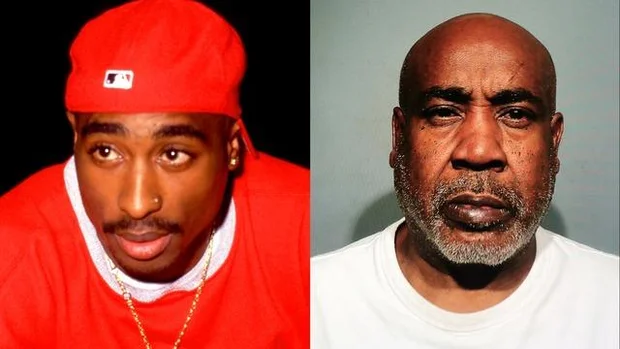







Las Vegas — The man who prosecutors say orchestrated the 1996 killing of rap icon Tupac Shakur is scheduled to go to trial Monday, almost 30 years after the fatal drive-by shooting in Las Vegas. Duane “Keffe D” Davis, 63, faces a single count of murder with a deadly weapon with the intent to promote, further or assist a criminal gang in Shakur’s death. He has been jailed since late 2023 and has pleaded not guilty to the charges.
For decades, Shakur’s unsolved killing has gripped hip-hop fans worldwide. He is considered one of the most influential rappers of all time, with a catalog of songs that speak deeply to the human experience of love, heartache, and complex familial relationships. His work, which sold over 75 million records globally, ranged from high-energy party anthems like “California Love” to poignant social commentary found in tracks such as “Changes” and “Dear Mama.”
The trial, which is expected to last about a month, likely will not reveal who pulled the trigger. Instead, prosecutors aim to prove that Davis was the shot caller who provided the weapon. When Shakur died, he was in the midst of a fierce battle for dominance in a music scene increasingly shaped by rival gangs. Gunfire erupted from the Cadillac that Davis was in, and he is one of the only people present that night who is still alive.
Prosecutors argue that if Davis had not written explicitly about the killing in his 2019 tell-all memoir or discussed it in various media interviews, it is likely no one would have ever been charged. On Sept. 7, 1996, Shakur was in the passenger seat of a black BMW, and Death Row Records co-founder Marion “Suge” Knight was driving. They had just watched Mike Tyson knock out Bruce Seldon and were headed to a nightclub where Shakur was scheduled to perform.
Shakur was shot multiple times and died six days later, while Knight survived with minor injuries. Knight is currently serving a 28-year prison sentence for a separate fatal hit-and-run incident. The case remained cold for decades until Davis began making public statements about his involvement as a leader of the South Side Compton Crips, which eventually revived the police investigation.
Davis’ defense attorneys argue there is no physical evidence he directed the shooting and claim the state relies on witnesses who were not present. The defense maintains that Davis left the narcotics trade in 2009 and worked a steady job before illness forced him to retire in 2014. They unsuccessfully fought to block the use of his book and a 2008 police interview, arguing the book was fictionalized.
For Shakur’s family, the last 30 years have been exhausting and stressful, his stepbrother Maurice “Mopreme” Shakur said. Sitting through the trial will be retraumatizing, Shakur noted, but he remains “cautiously optimistic” that justice will finally be served. “I hope that the trial is fair, and we find out the truth,” he added.
Hundreds of pages of grand jury transcripts portray the shooting as a culmination of a longstanding feud between rival record labels Death Row Records and Bad Boy Records, alongside rival gang sects. Witnesses testified that South Side Compton Crips hung out with and provided protection to Bad Boy Records, which was founded by Sean “Diddy” Combs and included artists like The Notorious B.I.G.
Prosecutors allege Davis orchestrated the shooting to seek revenge after Shakur and his entourage beat up Davis’ nephew, Orlando “Baby Lane” Anderson, at the MGM Grand hours before the shooting. In his book, Davis further claimed that Combs wanted Knight and Shakur killed, though Davis previously denied any involvement in an interview with CBS Las Vegas affiliate KLAS-TV.
The issues Shakur discussed in his music still resonate with people 30 years later, according to history professor Jeffrey O.G. Ogbar. “I can’t think of anyone else in the history of hip-hop who’s had a greater impact in such a short period of time,” said Ogbar, the founding director of the Center for the Study of Popular Music at the University of Connecticut.
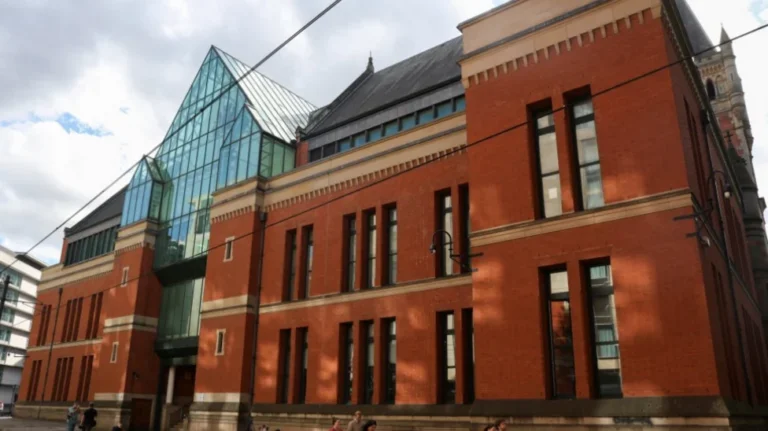
Public interest in the trial is immense. The Eighth Judicial District Court will implement a lottery system to determine who will get to watch the proceedings in the main courtroom, according to KLAS reports. The court will also provide an overflow room equipped with live video of the trial to accommodate the high demand from the public and media.
As the trial begins, the legal system faces the challenge of dissecting decades-old gang rivalries and conflicting narratives. The outcome remains uncertain, but for those who followed Shakur’s meteoric rise and tragic end, the proceedings represent a long-awaited attempt to close a chapter on one of music history’s most notorious unsolved crimes.
“We couldn’t let no record company studio gangsters do us like that,” the book says.
No weapon was found in Knight and Shakur’s car, according to retired Las Vegas police Detective Clifford Mogg, who was assigned to the investigation in early 2018.
Mob Piru, part of the larger Bloods gang, was associated with Death Row Records, which featured rappers like Shakur, Snoop Dogg and Dr.
They also argued Davis’ interview with a federal task force investigating the deaths of Wallace and Shakur was supposed to be confidential and not used against him.
When they encountered Shakur and Knight, Davis claimed to see Shakur reach for a weapon and wrote that “one of my guys from the back seat grabbed the Glock and started bustin’ back.”
He’s serving roughly four years in prison after being convicted of prostitution-related charges.
Combs’ attorney did not return emailed requests from The Associated Press for comment.
Seating in the overflow room will be limited and available on a first-come, first-served basis.