








Recent polling data suggests a shifting political landscape in Texas, traditionally a Republican bastion, as Democrats show newfound strength in high-stakes contests for both the United States Senate and the governor’s office. With the November midterm elections approaching, these races are transforming into critical battlegrounds that could influence the national balance of power.
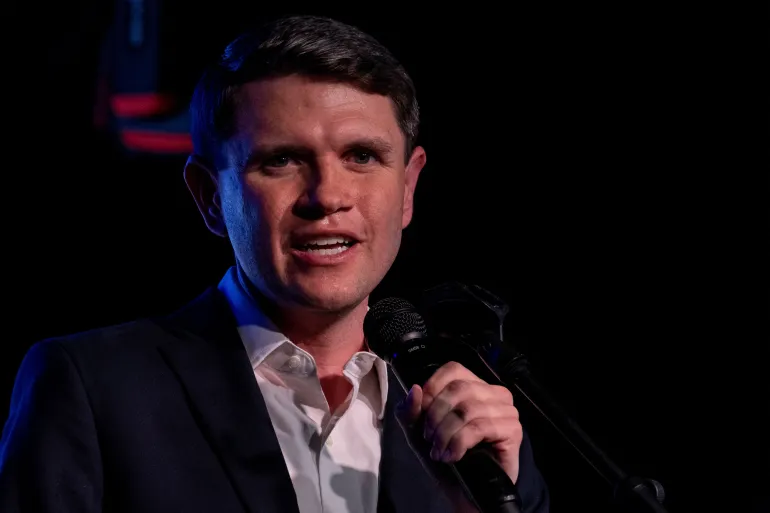
On Friday, the Texas Pulse initiative, a nonpartisan research effort involving the Texas A&M Bush School of Government and Public Service, published its latest findings. The data indicates that Democratic nominee James Talarico has secured a four-point lead in the Senate race, garnering 47 percent support compared to 43 percent for his Republican opponent, state Attorney General Ken Paxton.
This performance represents a notable surge for Talarico, who was deadlocked with Paxton in a previous Texas Pulse survey conducted during June. The findings align with a separate study released on Thursday by YouGov and 254 Labs, which placed Talarico ahead by a 48 to 45 percent margin, with 6 percent of voters still undecided.
The YouGov and 254 Labs research highlights a distinct advantage for the Democratic candidate among independent and undecided voters. Approximately 57 percent of independent respondents expressed a preference for Talarico, while 20 percent of that group remained uncommitted. Furthermore, the survey revealed that Talarico holds a commanding 34-point lead among moderate voters, capturing 54 percent of their support against just 20 percent for Paxton.
Evan Roth Smith, lead pollster for Texas Public Opinion Research, attributes this momentum to a strategic focus on economic concerns. Smith explained to Al Jazeera that Talarico’s emphasis on affordability is a model for Democratic campaigns, noting that prioritizing these issues is essential for electoral success.
Talarico, a former educator with a background in seminary studies, has centered his platform on cost-of-living relief, including a proposal to increase the federal minimum wage. Additionally, he recently proposed eliminating tax incentives for technology firms constructing data centers within the state.
In contrast, Ken Paxton has centered his economic platform on targeted tax relief. His proposals include a $25,000 deduction for medical expenses paid out-of-pocket and a $50,000 tax deduction aimed at assisting first-time homebuyers.
Paxton’s candidacy has faced scrutiny regarding his broader appeal to centrist voters. His political history includes an impeachment trial—though he remained in office—and various allegations involving misconduct and abuse of office. He also navigated a long-running securities fraud case that concluded with a dismissal last year, alongside public criticism regarding his support for the January 6, 2021, attack on the US Capitol.
The gubernatorial contest is similarly tightening. According to the Texas Pulse poll, Governor Greg Abbott’s lead over his Democratic challenger has dwindled to a single percentage point, with Abbott at 46 percent and his opponent at 45 percent. A separate survey from Texas Public Opinion Research shows a slightly wider gap, with Abbott leading 45 percent to 42 percent.
A significant variable remains the 10 percent of voters who have yet to declare a preference in the governor’s race. These undecided voters could prove decisive as both campaigns enter the final stretch of the election cycle.
The outcome of these Texas races carries national implications. Democrats are aiming to reclaim control of Congress, which would provide a legislative check against President Donald Trump’s agenda during the latter half of his term. While the House of Representatives features all 435 seats on the ballot, the Senate’s structure makes every individual race vital to maintaining or flipping the chamber’s majority.
Texas has not elected a Democrat to statewide office in over three decades, cementing its reputation as a Republican stronghold. However, the current competitive environment suggests that the state’s political identity may be undergoing a period of transition as voters weigh the competing visions presented by the candidates.
Another 6 percent of respondents said they were undecided.
A Fox News poll from late July similarly found that 68 percent of independents are getting behind Talarico, a 37-year-old state representative.
A Texas Public Opinion Research poll, released last week, found Paxton trailing Talarico by five points, 45 percent to 40 percent.
While polls can vary dramatically in the months leading up to an election, the latest survey results are likely to serve as a bellwether for Democratic odds in November’s midterms.
The left-leaning party is hoping to wrest both chambers of Congress from Republican control.
But analysts believe the Senate may be more difficult to flip than the House of Representatives.
Paxton, the Trump-endorsed candidate, defeated the incumbent Senator John Cornyn in the Republican primary in May.
Paxton’s career in politics has been riddled with corruption scandals.
Notably, that poll suggested that the Democrat leads by 34 percentage points among self-described moderates, with 54 percent support to Paxton’s 20 percent.
When they go on TV, podcasts and talk to reporters, they should focus on affordability.
He also recently unveiled a plan late last month to end tax breaks for tech companies building data centres.