







The U.S. Senate concluded a high-stakes legislative session early Friday morning, pushing through a government funding package designed to prevent a shutdown, confirming Todd Blanche as attorney general, and rejecting a contentious voter identification measure. This flurry of activity allowed senators to finally depart Washington for their annual five-week summer recess and return to their respective states for campaign activities.
Despite the late-night productivity, internal Republican divisions left significant legislative goals unaddressed. Efforts to advance Pentagon funding in response to the war in Iran stalled, as did bipartisan proposals aimed at reforming college athletics. Furthermore, long-anticipated legislation to regulate the cryptocurrency industry failed to gain traction, and a complex push to implement key components of the SAVE America Act—a priority for President Donald Trump—remained unfinished.
Senate Majority Leader John Thune, a South Dakota Republican, had previously acknowledged the difficulty of aligning his caucus on these pressing issues. “It’s just a series of things that are sort of piled up,” Thune remarked earlier in the week, adding that while the situation was challenging, “Train wreck’s probably a little extreme of an analogy.”
The chamber now faces a compressed schedule when it returns, with limited time before the November midterms to navigate politically sensitive legislation. With the current era of GOP control on Capitol Hill potentially at stake, Republican senators are balancing the pressure to maintain their majority with the urgency of completing their legislative agenda. Senator John Kennedy, R-Louisiana, noted the tension in a floor speech, stating, “I’m planning on being in all battleground states, and I’m anxious to get there to help my colleagues. But we’ve got to stay here and get our business done.”
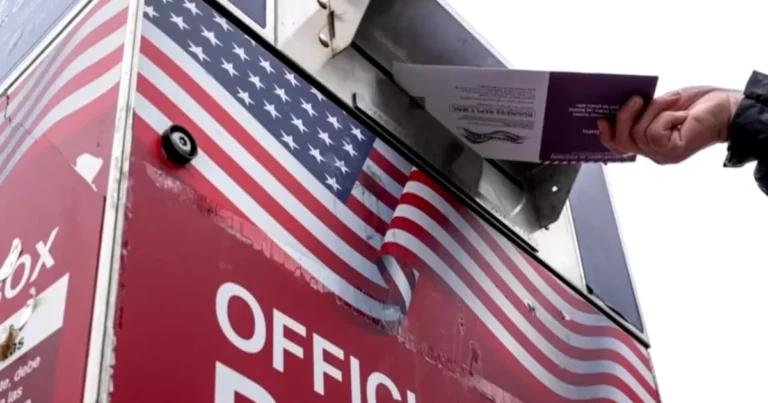
A central point of contention in recent months has been the SAVE America Act, which seeks to mandate photo identification and citizenship documentation for voting while restricting mail-in ballots. Although the full bill lacks the support to pass, GOP leaders have attempted an end-run around the filibuster by incorporating portions of the legislation into a budget bill, which could theoretically pass along party lines.
Senate Budget Committee Chairman Ron Johnson, R-Wisconsin, noted that the plan would allocate approximately $20 billion toward election integrity measures. While the House of Representatives previously approved the effort, Senate Republicans were unable to finalize it before the recess due to last-minute disagreements and competing priorities. In a final attempt to satisfy proponents, Senator Jon Husted, R-Ohio, introduced a measure requiring photo ID for elections during the overnight session, but the bill failed to secure the necessary support.
Senator Mike Lee, R-Utah, a vocal champion of the SAVE America Act, expressed frustration that no Democrats supported the measure. “Not a single Democrat joined us,” Lee stated. Despite his earlier threats to obstruct the chamber’s adjournment to force a vote, Lee ultimately allowed the session to conclude. “I left no stone unturned,” he wrote on social media. “I wish the outcome would’ve been different as to the adjournment and as to these votes.”
Ultimately, no Republican senator, including Lee, moved to object to the chamber’s adjournment, which occurred shortly before 5 a.m. The Senate is now officially in recess, leaving the most contentious legislative battles for the fall.
“The most you’d spend is $20 billion on election integrity,” Sen.
Lee, or any other Republican senator, could’ve objected to the chamber adjourning just before 5 a.m.
But after days of Republican infighting, the chamber left a lot on the cutting room floor.
Hopes of getting around to years-in-the-making legislation to regulate cryptocurrency were dashed.
A few days ago, Senate Majority Leader John Thune acknowledged the challenges he was having getting everyone on the same page.
While the blueprint is primarily focused on defense spending to beef up the Pentagon, it would also set aside billions of dollars for election-related purposes.
The House of Representatives already greenlit the effort weeks ago, the first step in a long process.