
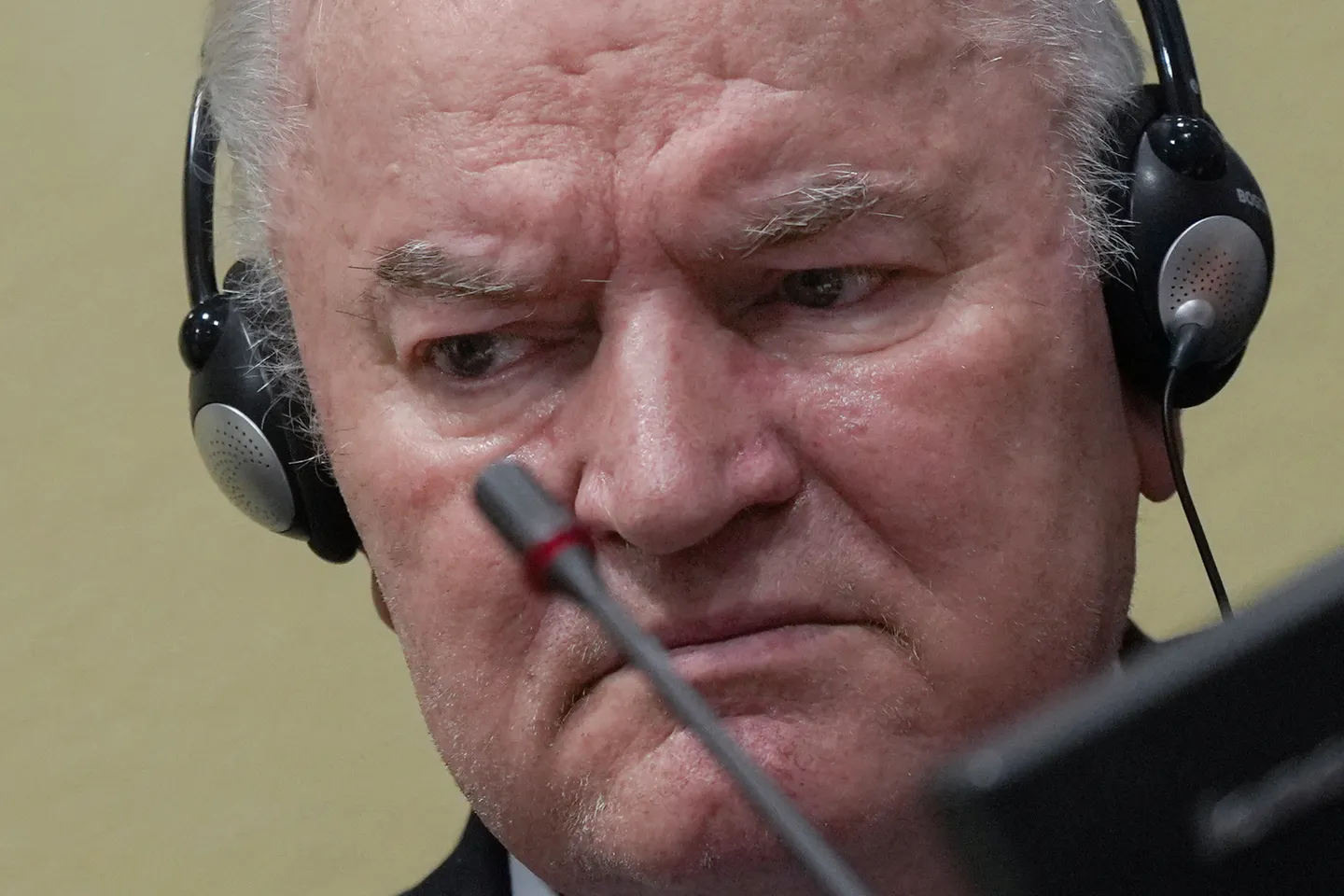





Ratko Mladic, the former Bosnian Serb general whose name became synonymous with the brutal ethnic cleansing campaigns of the 1990s, has died at the age of 84. He passed away on Thursday while held at a UN detention hospital in The Hague, where he had been serving a life sentence for his role in the Bosnian War.
Born in 1942 in the village of Bozanovici, located in what was then the Nazi-aligned Independent State of Croatia, Mladic was raised in a Partisan family that suffered the loss of his father during the conflict. He pursued a career in the Yugoslav People’s Army, graduating from the military academy in Belgrade in 1965. His rise through the ranks was marked by a military culture that prioritized martial aggression, a trait that would define his later command.
When Yugoslavia fractured in 1992 and Bosnia declared independence, Bosnian Serbs established the breakaway state of Republika Srpska. In May of that year, Mladic was appointed to lead its army. According to Albinko Hasic, founder of the Bosnian History platform, the withdrawal of the Yugoslav People’s Army left behind a massive infrastructure of weaponry and personnel that effectively became the backbone of the Bosnian Serb military forces.
Mladic’s command was characterized by a campaign to remove non-Serb populations from territory he sought to secure. This strategy culminated in the 1,425-day siege of Sarajevo, the longest in modern warfare. During this period, his forces subjected the city to relentless shelling and sniper fire. On one day in July 1993 alone, nearly 4,000 shells struck the capital. By the time the siege ended, approximately 13,000 people had died, and areas like Mesa Selimovic Boulevard became known as “Sniper Alley,” a dangerous corridor civilians were forced to sprint across to survive.
Evidence presented during his trial revealed that Mladic personally directed the bombardment of the city. In radio communications, he ordered his gunners to target Muslim neighborhoods, explicitly stating, “Shell them until they are on the edge of madness.”
The most devastating atrocity under his command occurred in July 1995 with the fall of Srebrenica. The event remains a haunting symbol of the conflict. Witnesses described how Mladic walked through the town, handing out sweets to children and offering false assurances of safety to terrified Bosniak civilians. Within days, his forces separated more than 8,000 Muslim men and boys, some as young as twelve, before marching them to execution sites. This massacre remains the worst mass killing on European soil since the Second World War, and families continue to search for the remains of their loved ones three decades later.
Following the war, Mladic evaded capture for 16 years, protected by networks that Hasic notes were essential to his longevity as a fugitive. He was finally arrested in 2011, appearing frail and partially paralyzed from an untreated stroke. His trial before the International Criminal Tribunal for the former Yugoslavia spanned over 500 sitting days and included testimony from nearly 600 witnesses.
In 2017, judges convicted Mladic of genocide, crimes against humanity, and war crimes. During the verdict, he erupted in fury, shouting that the proceedings were lies before being removed from the courtroom. An appeals chamber upheld his conviction in 2021.
Reflecting on his death, Hasic emphasized that the legal and historical record remains unchanged. “What strikes me most about Mladic’s death is the simple fact that he had the opportunity to grow old,” Hasic said, noting that thousands of his victims were denied the chance to experience careers, families, or even ordinary afternoons. For many, his passing serves as a reminder of the importance of documenting the atrocities of the past to ensure they are remembered by future generations. The report also notes that he spent the rest of his life in detention and never expressed remorse for the crimes he and his army committed. The report also notes that graduated in 1965, and climbed steadily through the ranks of the Yugoslav People’s Army, a career officer forged in a military culture that prized martial ferocity as a virtue rather than a warning sign, he trained at the Yugoslav military academy in Belgrade. The report also notes that with total conviction, to drive them from what he considered Serb soil for good, he viewed Bosnia’s Muslims as the descendants of the Ottoman Turks and set out. The report also notes that “Serbia and the Federal Republic of Yugoslavia provided enormous amounts of military and financial support, including weapons, ammunition, fuel, salaries, logistical assistance and personnel,” Hasic, also a history expert, tells. The report also notes that and indeed the wider Bosnian genocide, itself demonstrates just how organised this machinery was,” he adds, the Srebrenica genocide. The report also notes that herded into camps, or driven into exile as the machinery of ethnic cleansing ground forward, civilians were trapped under sieges.