







New Mexico has officially initiated legal action against the United States Department of Justice and its acting Attorney General, Todd Blanche. The lawsuit, filed in the US District Court in Washington, DC, accuses federal authorities of “stonewalling” the state’s ongoing investigation into the late convicted sex offender Jeffrey Epstein.
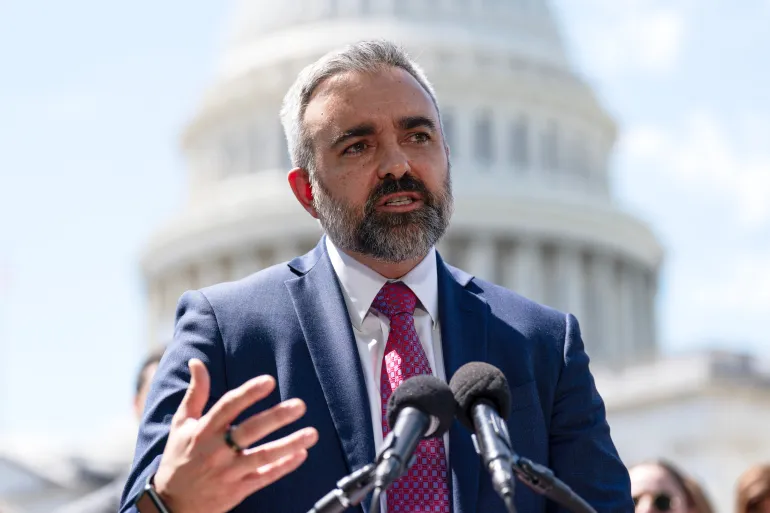
New Mexico Attorney General Raul Torrez, who filed the complaint on Wednesday, contends that the federal government is unlawfully withholding unredacted materials essential to the state’s probe. These records are considered vital for identifying potential victims, witnesses, and evidence of criminal conduct at Zorro Ranch, the expansive property Epstein owned in New Mexico from 1993 until his death in 2019.
In a press release, Torrez emphasized the urgency of the matter, stating that the federal government’s delay is actively hindering the state’s criminal investigation and obstructing the justice that survivors deserve. The lawsuit marks a significant escalation in the ongoing tension between Torrez, a Democrat, and the Republican administration of President Donald Trump.
The conflict has intensified over several months. In June, Torrez sent a formal letter to the Justice Department expressing his frustration, noting that despite receiving “verbal assurances of cooperation,” the federal government had failed to provide the requested access to relevant documentation. The Justice Department has maintained that privacy laws prohibit the disclosure of unredacted documents from its Epstein files to state officials, with a spokesperson last month questioning if the state attorney general was suggesting they break federal law.
The history of the Zorro Ranch investigation dates back to February 2019. By July of that year, the Justice Department requested that New Mexico stand down and transfer its gathered information to federal authorities, citing their own active investigation into Epstein for sex trafficking. Shortly thereafter, while awaiting trial in a New York City jail, Epstein was found dead in a case ruled as a suicide.
Torrez claims that following Epstein’s death, the investigation into the New Mexico property effectively stalled. The property was eventually sold in August 2023 to businessman Don Huffines, a former Texas state senator. The lawsuit alleges that federal law enforcement never conducted a search of Zorro Ranch, nor did they attempt to seize the property or gather evidence of criminal activity there.
Public interest in the case surged again in 2025 following the re-election of Donald Trump. The administration faced scrutiny over claims regarding a secret “client list,” which both former Attorney General Pam Bondi and FBI Director Kash Patel later denied existed. While Trump and Epstein socialized in the 1990s and early 2000s, Trump has denied knowledge of Epstein’s criminal activities, attributing their falling-out to a business dispute.
The Epstein Files Transparency Act, passed with bipartisan support last November, mandated that the Justice Department release its files in a searchable format within 30 days. While the department released millions of files in January, members of Congress have criticized the process, alleging that some documents were redacted without proper justification or improperly exposed the identities of survivors.
New Mexico reopened its investigation into Zorro Ranch in February. According to state officials, the newly released federal files contained over 13,000 references to the ranch and approximately 5,000 references to the state as a site where individuals were trafficked, groomed, and assaulted. Despite this evidence, Torrez asserts that the Justice Department has failed to honor its promises to assist the state.
The lawsuit further notes that the late Virginia Giuffre, a survivor who died by suicide in 2025, had previously warned that criminal acts occurred at the ranch. Additionally, a conservative talk show host reported contacting the FBI regarding an anonymous tip about potential abuse and the alleged burial of two foreign girls at the site, though that claim has not been corroborated.
Legal representatives for New Mexico argue that the continued federal inaction does not merely delay the investigation but serves to prolong the suffering of survivors. The filing characterizes the situation as a transition from years of promised cooperation into what it describes as “bureaucratic defiance.”
Ultimately, the state is seeking judicial intervention to compel the release of the unredacted files. Torrez maintains that his office has complied with every bureaucratic requirement requested by the Justice Department, yet they remain blocked from accessing information that could be critical to resolving the long-standing case.
The two socialised together in the 1990s and early 2000s, before severing ties.
His one conviction came in 2008 for the solicitation of a minor — and he served only 13 months of an 18-month sentence, in what some have described as an overly lenient plea deal.
During that time, the wealthy financier was accused of orchestrating a sex-trafficking ring whose victims are thought to number in the hundreds.
At the time, the Justice Department was pursuing its own investigation into Epstein, and it arrested him on charges of trafficking minors for sex and engaging in a conspiracy to commit such sex trafficking.
Still, critics have questioned how Epstein could have avoided justice for so long.
The law required limited redactions, save for the protection of victims’ identities.