








Israel’s upcoming October election serves as a critical juncture for the political future of Prime Minister Benjamin Netanyahu and the evolution of his Likud party. Once a cornerstone of mainstream Zionist politics, the party is now increasingly viewed by analysts as a central component of Israel’s far-right bloc. This shift marks a significant departure from the party’s historical identity as the National Liberal Movement, a secular-leaning organization that helped shape the nation’s governance for decades.
The trajectory of Israeli politics has been heavily influenced by Likud-led coalitions since the 1990s, following a period where the Israeli left dominated the political landscape from the state’s establishment in 1948 until 1977. The decline of the left’s influence began with the rise of Likud under Menachem Begin, a former leader of the Irgun, a Zionist underground group that operated prior to Israel’s founding. Over the years, the party has been led by prominent figures such as Ariel Sharon, yet recent internal developments suggest a profound change in its ideological direction.
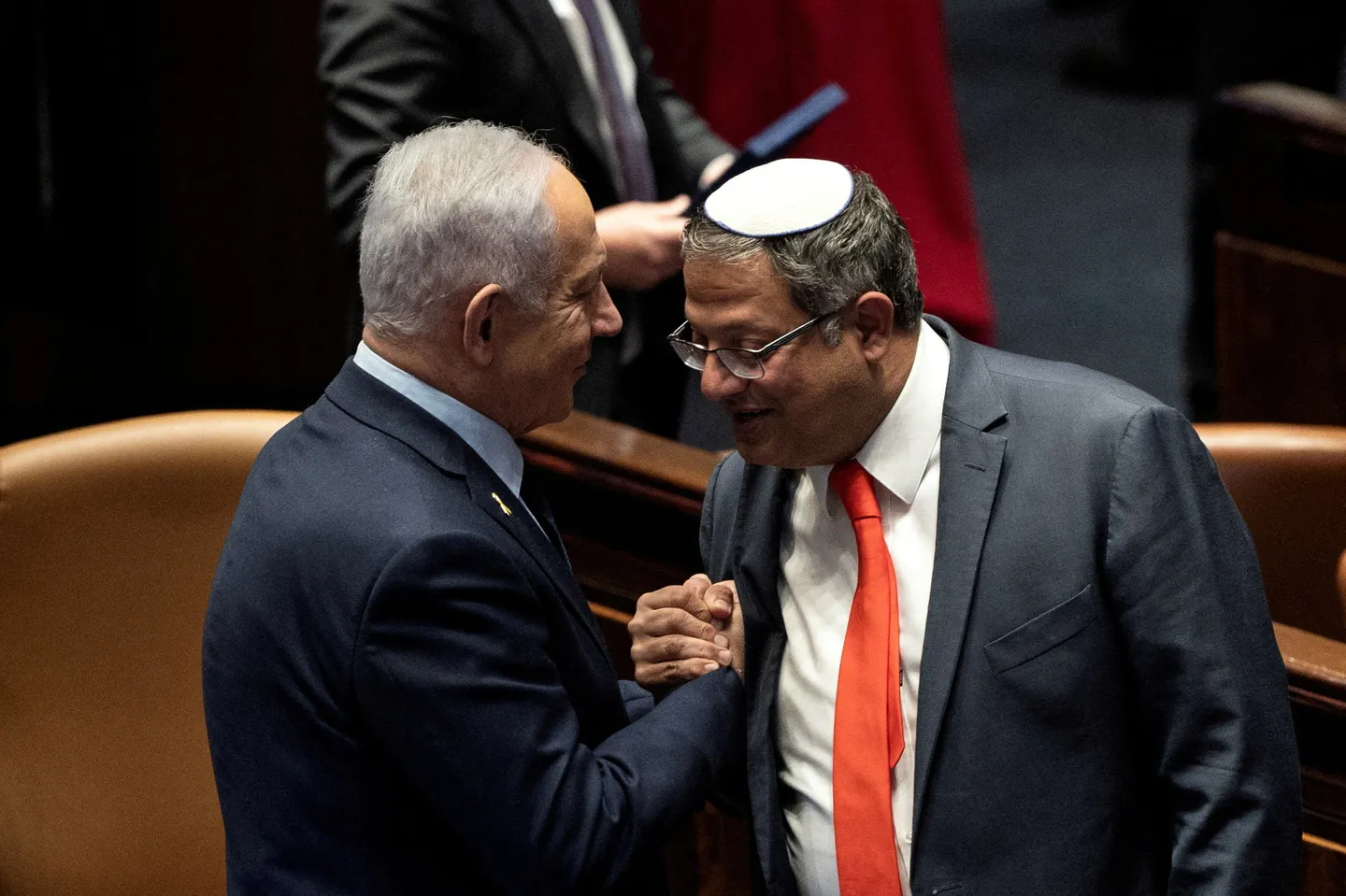
Under Netanyahu, the nation’s longest-serving prime minister, Likud has forged deep alliances with far-right factions, including Itamar Ben-Gvir’s Jewish Power and Bezalel Smotrich’s Religious Zionism. These partnerships have normalized positions that were previously relegated to the political fringe. Political scientist Dahlia Scheindlin, author ofThe Crooked Timber of Democracy in Israel: Promise Unfulfillednotes that there is no longer a meaningful distinction between the policies and ideologies of Likud and these far-right parties.
The integration of these groups into the government following the 2022 election is described by experts as a definitive turning point. While Netanyahu may not be an ideological religious fundamentalist, analysts argue that his political survival instincts have driven him to embrace these alliances. Figures like Ben-Gvir and Smotrich actively advocate for the annexation of occupied Palestinian territories, and Ben-Gvir has faced widespread criticism for inflammatory rhetoric, including calls for the military to increase lethal force in Gaza.
This ideological shift has caused internal friction, leading several long-standing members to abandon the party. Recent departures include senior lawmaker Yuli Edelstein and deputy Dan Illouz, both of whom protested the government’s push for a bill exempting ultra-Orthodox Haredi Jews from military service. Critics argue that Netanyahu has prioritized his own political security and legal challenges over traditional governance, effectively centralizing power within the party. He has secured the authority to personally appoint one-third of the candidates for parliament, a move that experts say cements his control over the party’s direction.
The transformation has also been marked by a rise in populism. Observers suggest that the party now centers more on Netanyahu’s personal leadership than on its historical platform. Political analyst Goren suggests that this deviation from liberal democratic practices has made Likud and its far-right partners appear more compatible, despite the potential long-term risks to the party’s influence over Israeli society.
Despite these alliances, the party faces a challenging electoral environment. Current polling indicates that Netanyahu’s hardliner bloc holds approximately 50 seats, falling short of the 61-seat majority required to form a government. Some surveys even show the party trailing behind the centrist Yashar party, led by former military chief Gadi Eisenkot. While the political landscape remains fluid and subject to regional developments, the broader Israeli public does not necessarily align with the worldview of the far-right coalition partners.
Ultimately, the future of the party remains uncertain. If Likud continues to integrate fully into the far-right, experts warn that it risks losing its standing as a mainstream political force. Even if the party maintains its current structure, the prospect of forming a government with ultra-Orthodox and far-right allies suggests a grim trajectory for Israel’s future, according to some political commentators. As the October election approaches, the party must contend with both its internal divisions and the growing perception that it has abandoned its traditional, more moderate roots in favor of radicalism. The report also notes that ben-Gvir has also attracted controversy for statements ranging from calling on the Israeli military to kill dozens of Palestinians in Gaza each day to proposing a ditch filled with crocodiles around prisons holding Palestinian detainees. The report also notes that a Zionist underground group attacking British and Palestinian forces before Israel’s 1948 founding, and later led by Ariel Sharon, a former general and another co-founder of the party, has recently become more extremist, likud was co-founded in 1973 by Menachem Begin of the Irgun. The report also notes that first, it has become centred around Netanyahu, whose loyalists are filling the ranks. The report also notes that then, it has also shifted towards populism and far-right,” Nimrod Goren, President of the Mitvim Institute, an Israeli think tank, tells. The report also notes that in response, quite a number of long-time Likud members have left the party and joined or established other right-wing parties.”. The report also notes that earlier this month, Dan Illouz, a Likud deputy, also quit the party on the same grounds, refusing to vote for the military exemption bill, which easily became a law. The report also notes that it would be more accurate to say that it has undergone two significant changes in recent years,” Arik Rudnitzky, a researcher at the Moshe Dayan Center for Middle Eastern and African Studies.