








Two girls look through their pinhole boxes during the partial solar eclipse in Boston, USA, in 2017, serving as a reminder of the simple methods available for safe observation. With most online orders unable to arrive in time and shops running out of stock, it may be too late to buy eclipse glasses for Wednesday evening. However, you can still safely watch the spectacle using some household items.
People in the UK will see a partial eclipse—rather than the total eclipse that will be seen in parts of Spain, Greenland, and Iceland—but it is the country’s most significant eclipse since 1999. Experts emphasize that enthusiasts should not look directly at the Sun without specialist glasses. You should not be tempted to try using standard sunglasses or dark goggles instead, as they often do not provide enough UV protection. According to The Royal Astronomical Society, looking directly at the Sun without proper equipment could end up seriously damaging your eyesight.
The astronomy group suggests creating a pinhole projector, which can be done by making a hole in a piece of card using the tip of a ballpoint pen. By holding the card in one hand and a blank piece of paper in the other while facing away from the Sun, you can line them up so that an image of the Sun becomes visible on the paper. This pinhole projector will show you the shadow being cast on the Sun replicated in miniature.
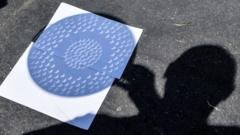
Alternatively, instead of straining vegetables and pasta, you can use a colander to achieve a similar effect. Eye specialist David Jones, a consultant ophthalmologist at the Royal Cornwall Hospitals Trust, notes this is his favourite way of witnessing an eclipse. “If you hold the colander to the Sun and you look away from the Sun, protecting your eyes, you can make not just one picture of the Sun but a hundred all at once,” he explains. Demonstrating the technique, he holds a blank piece of paper behind the colander to capture a kaleidoscope of images showing the Sun and the shadow cast on it.
An empty cereal box is also ideal for making a pinhole viewer, as the cardboard blocks out surrounding sunshine to provide a clearer image. To construct one, tape a piece of paper to the bottom of the box to act as a screen. After taping the box shut, cut two small squares in the top. Cover one with foil, poking a tiny hole in the center with a needle. Standing with your back to the Sun, look through the open square; once you’ve lined up the hole in the foil with the Sun, you should see an image of it on the screen at the bottom.
You might be tempted to watch or film the eclipse using your mobile phone, but NASA advises against this. “To take images when the Sun is partially eclipsed, you’ll need to use a special solar filter to protect your camera, just as you’ll need a pair of solar viewing glasses to protect your eyes,” the agency states. They warn that sensors in your phone could be damaged if pointed directly at the Sun, especially if you are using any sort of magnifying lens attachment.
When the partial eclipse becomes visible in the UK and mainland Europe on Wednesday, it will occur in the evening, meaning it will take place low in the sky. For a better view, the Royal Astronomical Society advises you try standing somewhere more elevated than the area around you with a clear view of the western horizon. Whatever you do, do not look directly at the Sun.
This event has triggered a surge in interest, with reports of eclipse chasers scrambling for glasses as stocks run low. There have also been recent warnings from individuals who suffered eye damage during past eclipses, highlighting the importance of these safety measures. As the UK prepares for this once-in-a-generation event, public awareness regarding safe viewing techniques remains a top priority for astronomers and health officials alike.
For those interested in further details, there are ongoing resources available regarding the solar eclipse 2026 weather forecast, as well as guides on how and when to see the eclipse. Whether you are an experienced observer or a first-time viewer, using these household methods ensures you can participate in the event without risking your vision. Remember to stay updated on local conditions and follow all safety guidelines provided by the Royal Astronomical Society.
Eclipse chasers scramble for glasses as stocks run low Published 21 hours ago
Warning from man whose eyes were damaged by eclipse Published 1 day ago
What it’s like to chase solar eclipses around the world Published 3 days ago
Are you planning to watch the Perseid meteor shower peak, and how are you preparing?
What it’s like to chase solar eclipses around the world
Get our flagship newsletter with all the headlines you need to start the day.