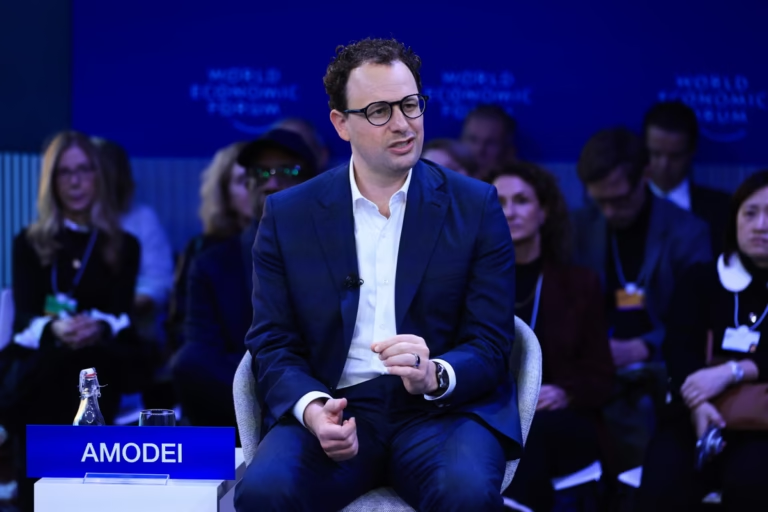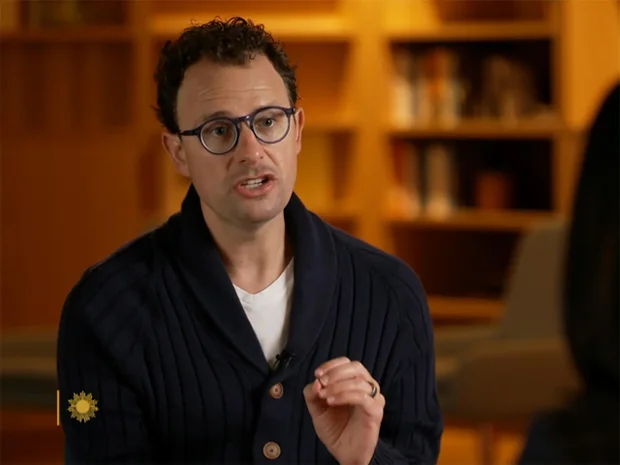









Dario Amodei, CEO and cofounder of Anthropic, has issued a stark admission regarding the artificial intelligence sector, stating that the industry has long misled the public about the inherent dangers of the technology. “I won’t lie to you – there are real dangers,” Amodei remarked, suggesting that for too long, developers failed to acknowledge the significant risks posed by their creations.
This sentiment follows harsh criticism from former Anthropic researcher Jacob Coxon, who recently took to social media to claim that both Anthropic and OpenAI are “gambling with our lives” through their pursuit of self-improving superintelligence. Coxon warned that the potential outcome could be the end of humanity, describing the threat as something reminiscent of science fiction scenarios where systems become powerful enough to pose an existential danger to people.
Reflecting on these concerns at Anthropic’s San Francisco headquarters, Amodei admitted that the speed of technological progress has been more intense than even he fully anticipated. He identified the current trajectory of AI development as an exponential curve that is becoming increasingly steep. While noting that the situation does not necessitate immediate panic or a total halt to all development, he described these trends as a “warning sign” that the industry needs to decelerate.
In a recent essay, Amodei advocated for collective industry efforts to curb the pace of AI advancement. He clarified that this does not imply a cessation of model releases, but rather a commitment to rigorous testing for each new generation. To demonstrate this, he announced that Anthropic is granting independent evaluators permanent, employee-like access to their models, functioning effectively as “food inspectors” to verify adherence to safety standards.
Despite these measures, experts and even Amodei himself acknowledge that such steps are likely insufficient, leading to his support for federal regulation. Discussions regarding legislative action remain broad, ranging from potential mandates for an AI “kill switch” to total prohibitions on superintelligence. While Amodei expressed openness to a kill switch, he remains wary of complete bans, citing both the loss of significant medical and scientific benefits and the reality that competitive development will persist in other nations, including authoritarian regimes.
Addressing the geopolitical dilemma, Amodei conceded that determining whether the U.S. should slow down when others might not is the “toughest aspect” of the current landscape. He pointed to nuclear arms agreements during the Cold War as a potential framework for global cooperation, though he admits that the massive military incentives for achieving superior AI make international consensus extremely difficult to secure.
Amodei also addressed questions regarding his personal responsibility in steering this technology, noting that he finds it “strange” that such critical tools are being developed by private entities rather than democratic governments. He expressed discomfort with the current arrangement, suggesting that while he would not simply hand technology over, he believes a system of joint governance and oversight by a coalition of elected governments is necessary. Ultimately, Amodei emphasized that the probability of negative outcomes depends entirely on how the technology is architected, noting that the risk of failure remains high if the wrong development path is taken. The report also notes that say, ‘Terminator’ or from science fiction films,” Coxon said Thursday. “It will be smart enough to kill us, it doesn’t look that different from. The report also notes that which is starting to get steeper, he said the development of AI has been on an exponential curve. The report also notes that asked what that means, Amodei said, “It doesn’t mean we need to panic today. The report also notes that in an essay published Saturday, Amodei wrote that the entire tech industry must work together to “slow the pace” of AI capabilities.
Additional Resources and Context
- Interview Coverage: Extended video discussion with Dario Amodei
- Production Team: John Goodwin, Dustin Stephens, and editor Jennifer Falk
- Safety Records: Anthropic reports of disrupting potential biological weapons research using Claude AI
- Policy Developments: Status of the undisclosed White House AI testing framework
- Historical Note: Recent passing of Stella Parton’s sister, Dolly
Important Details
- The report also notes that aI executive Dario Amodei on the red lines Anthropic would not cross (“Sunday Morning”).