
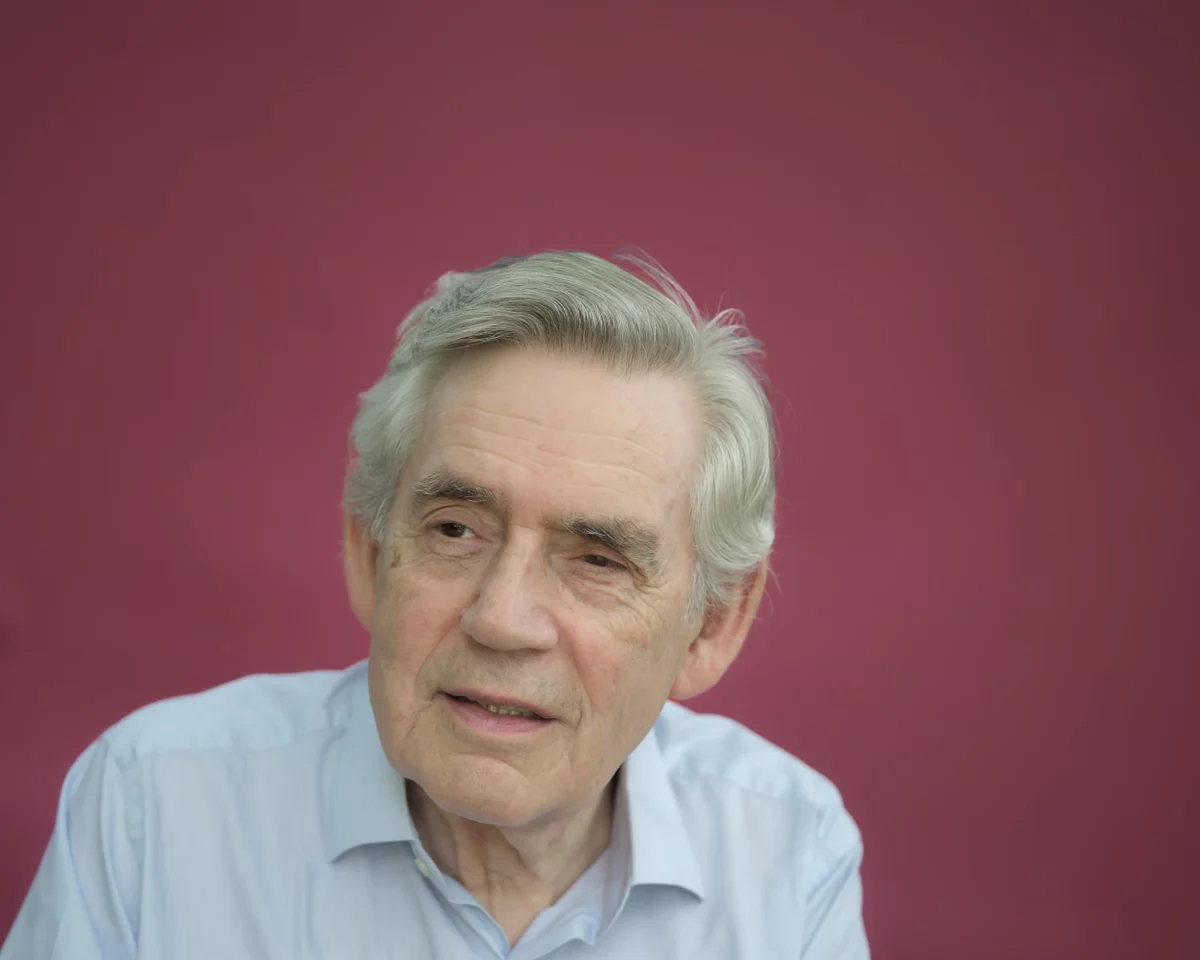








Gordon Brown, the former UK prime minister who served from 2007 to 2010, remains a significant figure in British politics despite his insistence that he has no desire to act as a “backseat driver.” Settling into a chair in his home office surrounded by political philosophy and historical texts, Brown emphasizes that while he continues to offer advice, he is careful not to interfere with current leadership. He specifically hopes that Andy Burnham will consider the recommendations from his report for Keir Starmer, which proposed abolishing the House of Lords and replacing it with an elected chamber that better represents the UK’s regions and nations. Brown points out that the current unelected chamber of roughly 800 members is the second-largest legislature in the world, trailing only China, and insists that change is necessary.
Brown’s current advisory role under Burnham involves overseeing the G20, which the UK is set to host next year. Reflecting on his time as the longest-serving chancellor of the exchequer in modern history, he notes that the British economy was growing at approximately 2.5% annually during his tenure. He remains active in public life, focusing on specific issues such as Brexit, antisemitism, and universal credit. He expresses deep concern over the decline of the postwar rules-based order, arguing that the world has shifted from a unipolar to a multipolar state, which he believes has contributed to global conflicts in Ukraine, Gaza, and Lebanon.
Addressing his past, Brown acknowledges that he made a mistake regarding the 2003 Iraq war, which he supported alongside Tony Blair. He notes that he felt misled after discovering documents post-government that contradicted the intelligence he had received. He is also critical of Blair’s current involvement with a peacekeeping agency that Brown views as essentially corporate in nature. To combat current global chaos, Brown advocates for an urgent return to a rules-based international system with an updated commitment to global cooperation.
Life in Fife has been impacted by recent climate shifts, with Brown noting that even his local area has experienced record temperatures, including a “shock” hit of 24C in July, far above the typical 15-17C range. He recounts a recent cold Saturday watching his local football team, Raith Rovers, and jokes about the Scottish climate, noting that the country essentially has only two seasons: July and winter. He remains physically active, maintaining a routine of walking and treadmill exercise four days a week, though he admits to finding the process of aging, such as going grey, challenging.
Brown’s commitment to his home town of Kirkcaldy remains a priority. He is an active force behind the Cottage Family Centre and a local multibank charity that distributes donated goods from 90 companies, including Amazon, to those in need. He also serves as a UN special envoy for global education. His personal philosophy, influenced by his father, the Rev John Brown, centers on being thankful for what one has and coping with less. This perspective explains why he declined to pursue lucrative roles in banking, a knighthood, or the prime ministerial pension to which he was entitled after leaving office.
Throughout his career, Brown has been shaped by his upbringing and the influence of his parents. He recalls his mother, Jessie, constantly questioning his motivations and encouraging him to reflect on his actions. His intellectual development was fast-tracked in Kirkcaldy, where he excelled academically. Today, he remains concerned about the prevalence of commercialism and inequality, which he attributes to a loss of the sense of community that defined his earlier years. Despite his political stature, he maintains a self-deprecating humor and continues to document his thoughts in copious notes, written in large black felt-tip letters, as he engages with the world around him. The report also notes that i t’s a Monday in August and as England burns in dystopian heat, Gordon Brown and I are in his office at the top of his house in North Queensferry, overlooking the moody waters of the Firth of Forth. The report also notes that wearing wool suits and necessary socks, my coat slung over the back of a chair, it’s hard to recall the top of my own sauna-like house in London as we stand here in the cool. The report also notes that there was a wind blowing in from the sea.” He asks if I’ve heard the famous joke – “Scotland’s only got two seasons: July and winter”– then chuckles. The report also notes that (I’ll hear him tell it three times today.). The report also notes that that’s not to say Fife has been untouched by the multiple heatwaves. The report also notes that he stood in his kitchen and considered the modest patch of grass at the back of the house. The report also notes that “I never imagined being out in the garden in the summer. The report also notes that he found himself battling a “very dangerous” nest of wasps, i never imagined it because it’s either raining or too cold.” Once out.