
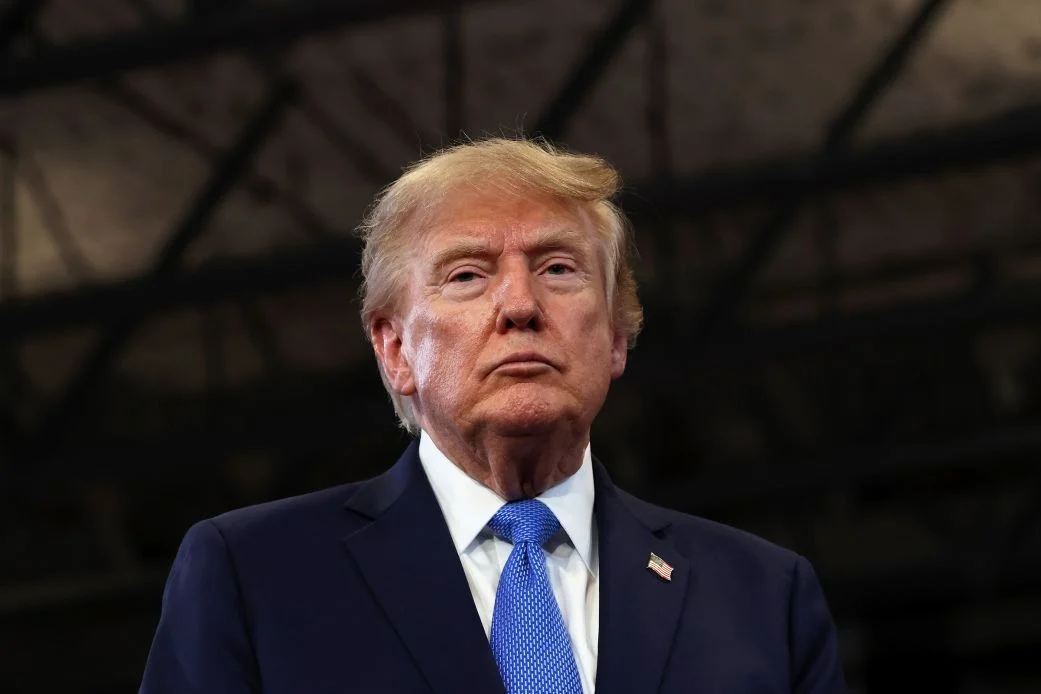







A federal judge has once again rejected Donald Trump’s attempt to move his New York state criminal hush money case into the federal court system. District Judge Alvin Hellerstein ruled on Friday that the arguments presented by the former president were “neither new nor legally sufficient,” effectively keeping the case within the state jurisdiction where Trump was convicted on 34 felony counts of falsifying business records.
The legal battle centers on whether Trump’s actions—specifically the reimbursement of hush money payments to adult film star Stormy Daniels during the 2016 election—constituted official presidential duties. Hellerstein was firm in his assessment, stating that the prosecution stemmed from Trump’s private conduct. He noted that characterizing such personal matters as related to federal office would render the definition of presidential responsibility “so broad that it is meaningless.”
Hellerstein’s decision follows a mandate from a federal appellate court last autumn, which required him to reconsider the removal request in light of the Supreme Court’s July 2024 ruling on presidential immunity. Despite this, the judge maintained that discussions regarding a cover-up of an affair fall well outside the “outer perimeter” of a president’s official responsibilities. He further dismissed the argument that the involvement of White House staffers in the matter elevated the conduct to an official act, asserting that a president’s assistant can perform personal tasks that remain unofficial in nature.
Beyond the merits of the immunity claim, Hellerstein cited procedural delays as a primary reason for the denial. He pointed out that Trump’s legal team waited approximately two months to file the renewed request, having first sought to have the conviction dismissed by state court Judge Juan Merchan. Hellerstein characterized this as a “quintessential strategic decision,” noting that the defense team essentially sought “two bites at the apple” and could not claim cause simply because their initial strategy proved unsuccessful.
A spokesperson for Trump’s legal team immediately announced an appeal of the ruling, labeling the Manhattan District Attorney’s prosecution a “Witch Hunt” and reiterating their stance that the case should be dismissed under the Supreme Court’s immunity precedent. The underlying state appeal remains active and could eventually proceed through New York’s appellate courts, potentially reaching the U.S. Supreme Court.
Trump’s previous conviction resulted in a sentence of unconditional discharge, meaning he faced no immediate penalties, though the case marked the first time a former president was convicted of a felony. The defense has long argued that the case should be moved to federal court to allow for an interpretation of federal preemption and to potentially secure a faster route to the Supreme Court for their appeal.
As the legal process continues, the focus remains on whether the state court proceedings properly accounted for the high court’s recent immunity standards. For now, the case remains firmly in the state system, with Trump’s lawyers continuing their efforts to overturn the conviction through existing state appellate channels. The report also notes that his lawyers tried again in the wake of the immunity decision that said presidents are protected from criminal prosecution for official acts and barred prosecutors from attempting to enter evi, months after his conviction. The report also notes that the 2nd US Circuit Court of Appeals kicked the case back to Hellerstein and said the district court must reconsider but didn’t weigh in on whether the SCOTUS decision should tip the scales for Trump, last November. The report also notes that “Trump’s delay in filing for removal constitutes a “quintessential strategic decision,” and the “fact that he later came to view that decision as a poor one is not sufficient, by itself, to establish cause.”. The report also notes that “That conduct, and the challenged evidence, bears no substantive relation to his position in federal office. The report also notes that to consider these facts to be ‘relating to’ a federal office would give the words a definition that is ‘so broad that it is meaningless.’”. The report also notes that this story has been updated with additional details.