







A decade after President Donald Trump reshaped the Midwestern political landscape into a reliable Republican stronghold, widespread economic discontent is threatening to unravel those gains ahead of the midterm elections. Persistent inflation, high fuel and grocery prices, and trade disruptions have generated voter frustration, making traditionally red states suddenly competitive. Democratic candidates are seeing unexpected openings across the region, including in states like Iowa and Ohio that had drifted away from national political contention, as well as Kansas, Nebraska, and Indiana. From $8 billion in new aid to farmers announced in Kansas to promises of building the nation’s largest steel plant in eastern Iowa to a commitment he made in Nebraska to temporarily ease diesel costs, Trump has made a se. Pete Ricketts’ bid for a second term in Nebraska. He has offered sweeteners to voters if they stick with Republican candidates, at most every stop along the way of his red-state October blitz. From $8 billion in new aid to farmers announced in Kansas to promises of building the nation’s largest steel plant in eastern Iowa to a commitment he made in Nebraska to temporarily ease diesel costs, Trump has made a series of pledges that follow his offer of giving every adult American $5,000 if Republicans retain their grip on Washington. A question hanging over the final week of the race is whether Trump’s relentless campaigning has awakened Republican voters to rally to his aid one last time in hopes of closing an enthusiasm gap.
The economic strain is particularly visible in agricultural and manufacturing communities. According to the federal Bureau of Economic Analysis, Iowa recorded the nation’s weakest annual growth rate in 2025, posing a direct political challenge to Republicans who have held continuous state government control for over ten years. Steve Kuiper, a farmer and president of the Iowa Corn Growers Association, observed, “I think everybody in agriculture is tired, would be the best way to put it. They’re just tired. They feel very beat up right now, demoralized.” And spending cuts targeting healthcare and grant programs have caused further strain.
Frustration over federal policy extends beyond the agricultural sector. Trade volatility and rising energy costs, exacerbated by international conflicts including war with Iran, have increased input expenses for farms and businesses while promises of a manufacturing revival remain unfulfilled. In Indiana, Beau Bayh, a third-generation Democratic candidate running for secretary of state, noted that “a lot of the promises the president made to bring costs down, to not start new foreign wars, to deliver on his economic message, have not come to fruition.” A victory for Bayh would mark his party’s first statewide win in Indiana in 14 years. Anxiety over Trump’s war with Iran and the fallout from his trade battles has turned into alarm, from spring planting to fall harvest. While some manufacturers, footing higher bills for imported components, have laid off workers, a whipsaw tariff policy has forced farmers to pay more for fertilizer. Trump’s decision to allow imported beef has infuriated ranchers. According to and even before the Iran war sent costs soaring, several of these battleground, Were in fiscal decline.
With midterms serving as a historical referendum on the governing party, both major political movements are adjusting their strategies. Trump experienced a similar dynamic in 2018, when Republicans maintained the Senate but surrendered their House majority, losing three seats in Iowa alone. GOP officials fear a potential reprise, while Democrats view the current climate as a key moment to challenge Republican dominance. Former Iowa Governor Tom Vilsack, who also served two terms as U.S. agriculture secretary under President Barack Obama, emphasized that voter anger stems from unmet expectations rather than ideological shifts. “It’s not that they’ve been overwhelmed by the Democratic Party, it’s just that they’re really, really pissed off,” Vilsack said. “They want to send a message of disappointment.” He added that Trump’s campaign commitments created high expectations of economic relief that ultimately went unmet: “He builds up the hope that it’s going to be fundamentally different. That was interpreted that he’s going to bring back the good times. He failed to do that.” In Iowa and Ohio, Democrats have a shot at winning Senate races that are crucial to the net four-seat gain they need to claim a majority — a goal that eluded them in 2018. With tight contests for the House, Senate and governor blanketing the middle of the country, the shift is happening up and down the ballot. Even though they also hold dim views of the Democratic brand, polls suggest voters are willing to punish the Republicans in power in Washington. Particularly given their own brand and favorability challenges, democrats acknowledge the uphill climb for winning all of the narrowly divided Senate races across the Midwest.
Former Minnesota Governor Tim Pawlenty, the last Republican to win that state’s governorship two decades ago, voiced concern about the party’s trajectory, advising that a change in economic message is crucial. “It’s going to be a blue wave,” Pawlenty remarked. “We just don’t know if it’s knee-deep, waist-deep, or going to hit us right in the face.” While he anticipates the House of Representatives falling to Democratic control, Pawlenty suggested that maintaining a Senate majority remains a realistic objective for Republicans.
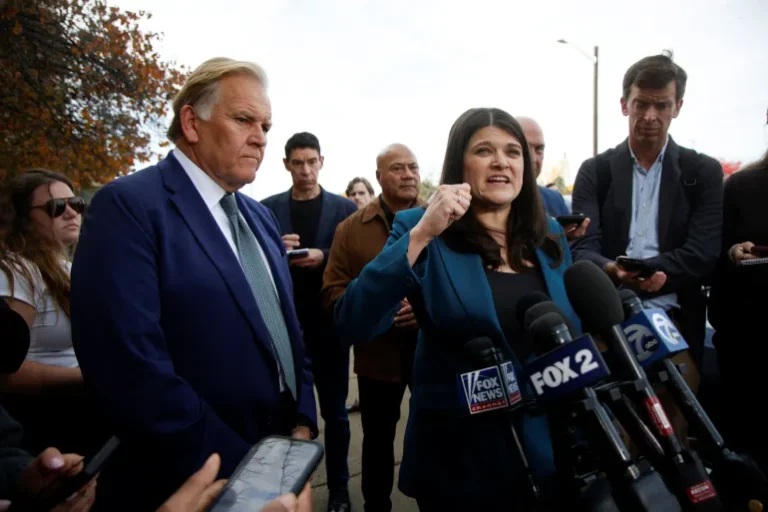
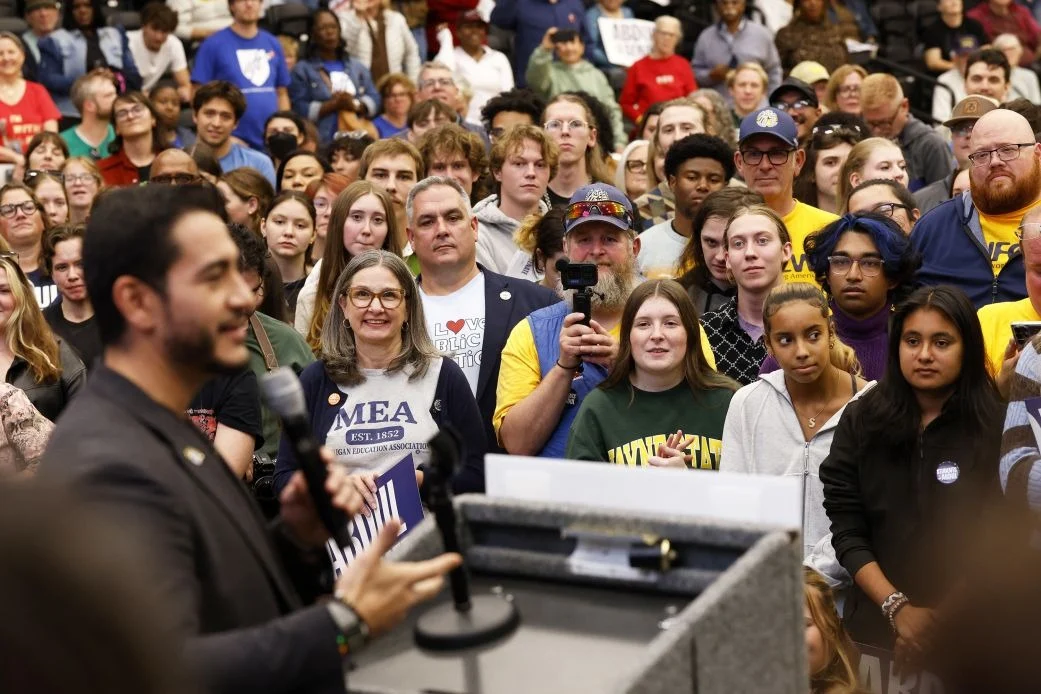
Down-ballot Republicans are directly addressing voter concerns while managing the national political climate. In Kansas, Republican Senate incumbent Roger Marshall faces a competitive challenge from megachurch pastor Adam Hamilton, while independent candidate Dan Osborn presents a challenge in Nebraska. Additionally, former public official Abdul El-Sayed is contesting a primary in Michigan, where progressive platforms collide with regional dynamics. Local officials are also feeling the pressure; Jim Howell, a Republican member of the Sedgwick County Board of Commissioners in Wichita, Kansas, noted the challenge of campaigning when federal actions cause public friction: “When our leader, the president himself, does things that make me cringe, that’s difficult to tell people to vote for me.” Public calls for tariff adjustments have also emerged within conservative ranks, with former Congressman Mike Rogers arguing in a television campaign ad, “We need to end this tariff war — now.” The party is also targeting an Omaha-based district in Nebraska and one in southeastern Wisconsin’s Driftless Area. Another House seat in Nebraska, as well as one seat each in Indiana and Kansas, could also prove to be much more competitive than either party expected early in the 2026 election cycle, if the election breaks in Democrats’ favor in a big way. With an economy envied by the world, he also makes clear he understands the challenges people are facing, even as the president boasts of America’s golden age.
At grass-roots gatherings, voters confirm that daily expenses dominate their decision-making. Sheri Vorherr, a 55-year-old mother of five from Loveland, Ohio, who attended a rally for Republican candidate Vivek Ramaswamy in Cincinnati, highlighted immediate cost-of-living concerns. “I have to go get gas right now in my car, and that’s difficult,” she explained, adding that she assists her eldest daughter with weekly grocery bills due to inflation. While Vorherr expressed continued faith in the administration’s long-term goals, stating, “I do believe Trump is trying to do that — it’s just taking a lot longer,” broader public fatigue continues to complicate Republican defense strategies across Midwestern legislative and congressional districts. According to and what’s receded from the forefront is the issue Ohio voters who spoke with in recent days — including Republicans who support Ramaswamy —, Is responsible for the state’s sudden competitiveness: the cost of liv. According to she, She helps her oldest daughter buy groceries each week and sees the economic pinch brought on by inflation.
Both political parties are deploying top surrogates across the battleground region in response to changing poll dynamics. While Obama has traveled to mobilize core Democratic constituencies, Trump has executed a monthlong campaign schedule across Iowa, Nebraska, Kansas, Ohio, and Michigan. Addressing supporters in Sioux City, Iowa, Trump urged his base to turn out in numbers comparable to the previous presidential election cycle to secure a economic comeback, telling the crowd, “If you get out and vote like you did in 2024, we win in a landslide, you know, we win in a landslide.” He’ll hold a rally at Port Huron — on the Canadian border, in Trump’s Sunday trip to Michigan.