








President Donald Trump is returning to the campaign trail, scheduling rallies in Iowa and Kansas to protect the Republican Party’s legislative majorities. These appearances follow a short rest at his Mar-a-Lago residence in Florida and come after a brief, confusing cancellation of both events late last week. A source close to the administration confirmed the change, stating, “Rallies are BACK ON! No one works harder, fights harder, or loves the American people more than President Donald J. Trump!” Only to reschedule them, republicans abruptly cancelled the Iowa and Kansas stops late Thursday. Losing either chamber would let Democrats block Trump’s agenda for his final two years in office and launch investigations of an administration that has so far faced largely compliant Republican majorities.
The President is focused on states he previously won, aiming to stave off mounting Democratic challenges. On Sunday, he is scheduled to visit Dubuque, Iowa—a region where he secured a double-digit victory in 2024. The visit is intended to support GOP efforts to retain a critical Senate seat and the governorship. Furthermore, Iowa’s 2nd Congressional District is currently the site of a tight contest between Republican candidate Joe Mitchell and his Democratic rival, Lindsay James, as the party struggles to maintain its narrow House control. He has spent weeks campaigning across multiple US states.
Later on Sunday, Trump will travel to Salina, Kansas. The state, which has not elected a Democratic senator since 1932, is witnessing an unexpectedly competitive race between incumbent Republican Senator Roger Marshall and his Democratic challenger, Adam Hamilton, a prominent local pastor. These efforts come as polling data from Reuters/Ipsos suggests a cooling in support, with the President’s approval rating among rural voters dipping to 45 percent in October. And Trump’s approval among rural Americans fell to a new low of 45 percent in October, according to Reuters/Ipsos polling, polls show Democrats tied with or leading Republicans in many of the states’ races.
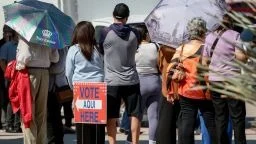
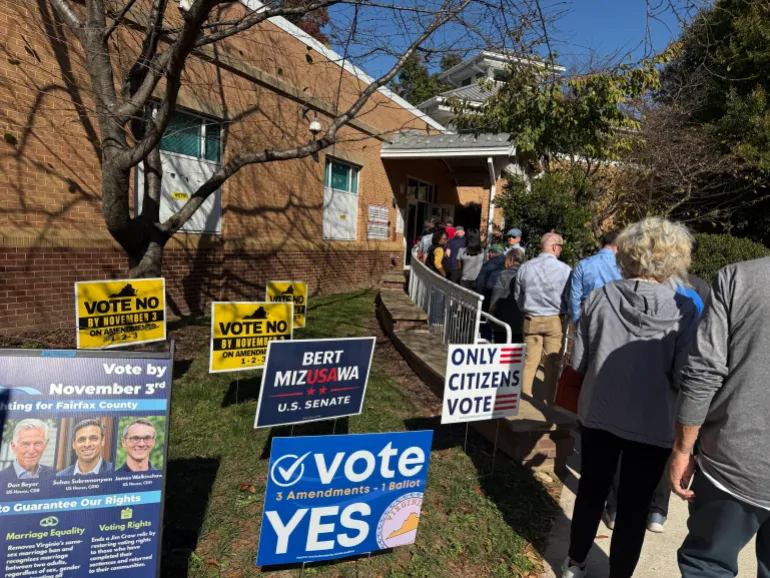
Across the country, voters are deciding the balance of power, with 35 Senate seats and all 435 House seats up for election on Tuesday. Republicans currently command a 53-47 majority in the Senate alongside a slim lead in the House. Should they lose either chamber, the administration faces the prospect of a legislative gridlock and increased scrutiny from Democratic-led investigations. Economic concerns, compounded by the fallout from new tariffs and the ongoing war in Iran, remain central to the campaign narrative.
The intensity of the final push is reflected in early turnout numbers. Data from the University of Florida’s Election Lab indicates that over 52 million Americans have already cast their ballots either by mail or in person. This figure marks a new record for midterm cycles, significantly surpassing the 46 million early votes recorded before Election Day in 2022.