







A report from the Government Accountability Office (GAO) released Thursday has determined that the Department of Government Efficiency (DOGE) relied on unsubstantiated claims and inaccurate data to track its purported budget savings. The watchdog found that the department’s public-facing “Wall of Receipts” significantly inflated the amount of money saved for taxpayers by billions of dollars.
The investigation, which examined activities between January 20, 2025, and July 7, 2026, concluded that $110 billion in claimed savings from federal contracts, grants, and leases lacked sufficient supporting evidence or were based on incorrect estimates. The probe was initiated following requests from Democratic Senators Richard Blumenthal and Gary Peters.
Specific examples of these discrepancies include 108 of the 264 lease terminations claimed by DOGE, which the GAO found were already in the process of being eliminated before the department was established by President Trump in January 2025. In another instance, the agency reported $1.7 billion in savings from a Pentagon Defense Health Agency IT contract that was never actually terminated or defunded.
The GAO report further criticized the department for a lack of transparency, noting that it failed to follow its own stated methodology for the majority of savings reported from terminated contracts. Regarding federal grants, the watchdog stated that DOGE provided insufficient information to verify the calculation methods for 96 percent of the savings it claimed.
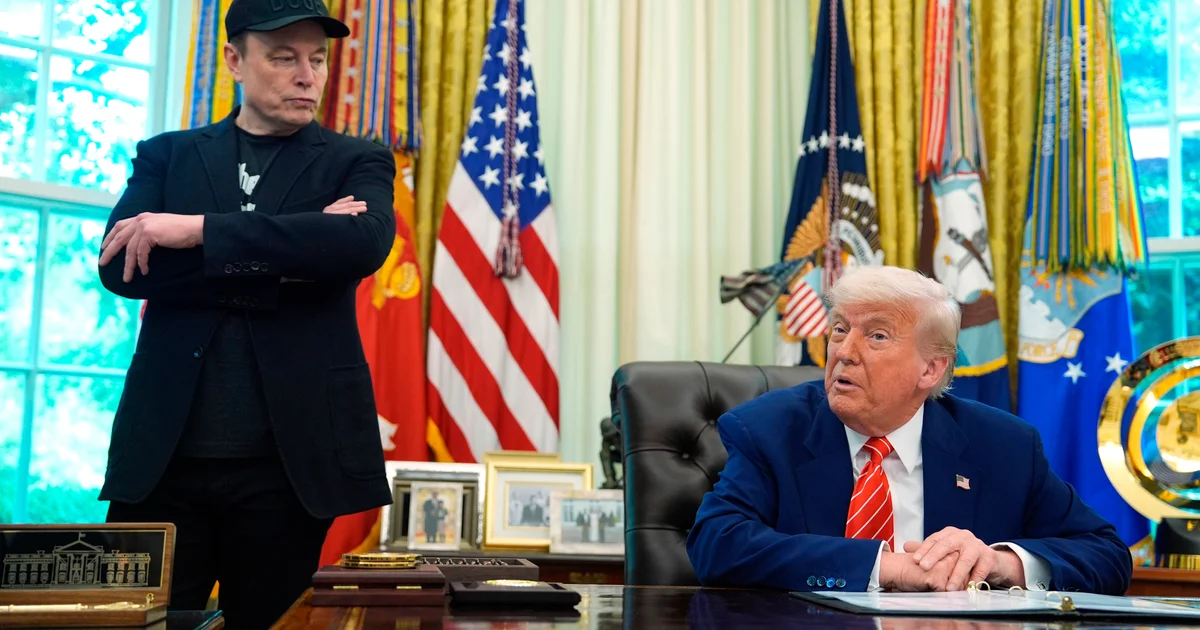
DOGE was launched under the influence of Elon Musk shortly after the start of the Trump administration. While Musk left his government role in late May 2026 to focus on his private companies, many of the department’s itemized savings were publicized on his social media platform, X. The department officially concluded its operations on July 4, 2026.
Senator Gary Peters condemned the department’s performance in a statement, calling the initiative a “slapdash and deceptive effort” that misled the public and potentially compromised sensitive data. He argued that while the goal of reducing government waste is widely supported, the execution by DOGE hollowed out critical agencies without delivering the promised fiscal results.
Previous reporting by had identified similar issues, including the cessation of details regarding canceled U.S. Agency for International Development contracts due to unspecified “legal reasons.” A separate review of three of the largest cuts claimed by DOGE as of August 2025 found that the actual savings amounted to less than 3% of the figures the department had publicly reported.
The GAO noted that while such tracking efforts could be valuable, they remain ineffective without proper disclosure of data limitations and calculation methods. The watchdog also reported that DOGE did not respond to its requests for interviews or additional information during the audit process. Daniel Ruetenik contributed to this report.
In another case, GAO said DOGE reported it saved $1.7 billion by identifying a Pentagon Defense Health Agency IT contract to terminate, but it never followed through on either terminating or slashing the funding.
Many of the itemized so-called savings were posted to DOGE’s account on Musk’s social media platform X, which has 4.7 million followers.
“Everyone supports rooting out waste, fraud, and abuse in the federal government, but DOGE was a slapdash and deceptive effort that misled the American people while doing real damage to the government’s ability to serve
The congressional watchdog noted that information like the Wall of Receipts “can have significant value,” but went on to say that it would be more useful to policymakers and the public if DOGE provided more information about how it calculated savings and disclosed data limitations.
previously identified other issues with DOGE’s reporting, as well.