




Supreme Court Chief Justice John Roberts has once again diverged from his conservative colleagues, emerging as the sole dissenter in a 5-4 ruling that permits the construction of a massive 90,000-square-foot ballroom at the White House. While Roberts has led the court’s majority this year in blocking several of President Donald Trump’s initiatives—including attempts to redefine birthright citizenship, impose broad tariffs, and remove a Federal Reserve leader—his stance on the ballroom project marks a rare break from the court’s conservative bloc.
In his dissent, Roberts argued that the construction is likely unlawful, noting that the project lacks congressional approval and potentially infringes upon the legislative branch’s authority to regulate federal property and control spending. “Today’s decision is no victory for the separation of powers,” the Chief Justice wrote. The ruling allows the project to proceed while legal challenges continue, marking the third time since Trump’s return to office that Roberts has disagreed with his fellow conservatives on an emergency appeal regarding administrative policy.
The two previous instances also centered on spending disputes. Last year, Roberts was the only conservative to vote against allowing the administration to cancel $65 million in teacher training grants. Similarly, he stood with the court’s three liberal justices against the other five conservatives when the administration moved to slash hundreds of millions of dollars in health research funding.
A central point of contention in the ballroom case involves the legal standard of “standing,” or whether the National Trust for Historic Preservation has the right to sue over the project’s design. Erwin Chemerinsky, dean of the University of California, Berkeley School of Law, noted that Roberts’ willingness to accept “aesthetic injury” as a basis for standing puts him at odds with his conservative peers. “Ultimately, it means that even if the president’s actions as to the ballroom are unconstitutional, no one will have standing to sue to challenge them,” Chemerinsky observed.
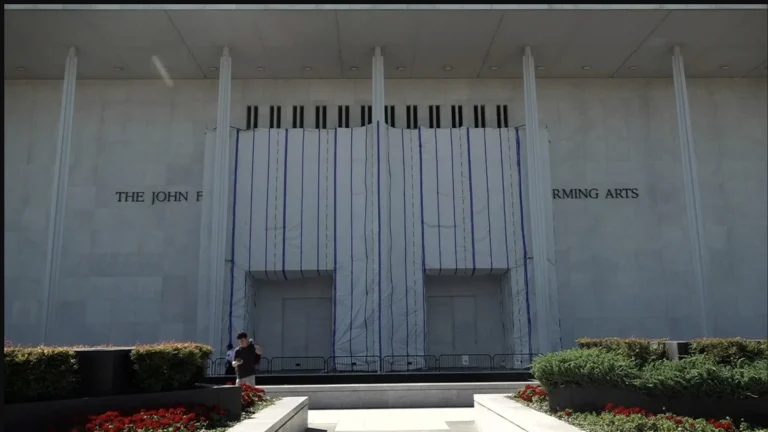
Roberts emphasized that the White House is an iconic structure whose history and symbolism are deeply tied to its architecture. He argued that while not every government action offends everyone, some actions interfere specifically with a documented interest in preserving historic buildings. Conversely, the majority opinion maintained that mere distaste or disagreement with a project does not provide a legitimate legal basis for a lawsuit.
The administration has defended the project by citing security concerns, arguing that halting construction would jeopardize the White House grounds and complicate presidential protection. Roberts addressed these claims in a footnote, asserting that the underground work already permitted by lower courts sufficiently addressed those security requirements.
The decision has drawn sharp criticism from some legal observers. Josh Blackman, a professor at the South Texas College of Law Houston, described Roberts as “a shadow of his former self.” Writing on a legal blog, Blackman criticized the Chief Justice for dismissing the government’s national security arguments in a perfunctory footnote, noting that Roberts was originally nominated by George W. Bush in part for his robust understanding of presidential power in national security contexts.
Throughout his two-decade tenure, Roberts has faced significant criticism from the right, most notably for his 2012 vote to uphold the Affordable Care Act. Additionally, during the court’s 2022 decision to overturn Roe v. Wade, the Chief Justice supported further abortion restrictions but ultimately declined to join the majority in fully overturning the 1973 precedent. The report also notes that both of the previous cases involved spending matters, as with the ballroom. The report also notes that the ballroom fight also raised a question about whether the case even belonged in court, while the ability of the administration to get around Congress’ control of spending was a theme in all three interim rulings in which Roberts dissented. The report also notes that the greatest criticism Roberts has received from the right since joining the court more than two decades ago came after he joined a majority that upheld President Barack Obama’s Affordable Care Act in 2012 over the dissents of his four conservative colleagues.