
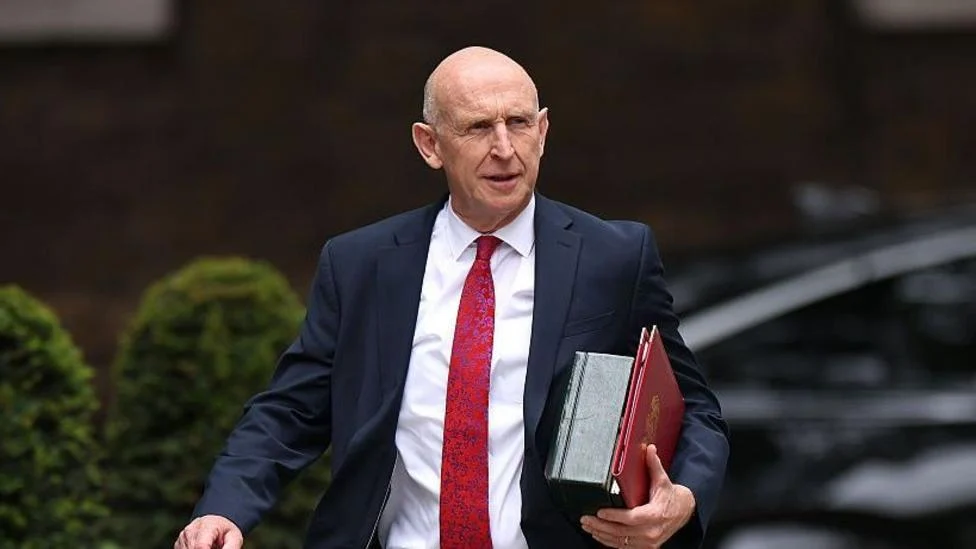








Chancellor John Healey is preparing to unveil a £150m investment fund specifically for companies in the north of England. This initiative, which utilizes existing allocations from the British Business Bank, is intended to support innovative, fast-growing firms and serve as a cornerstone for a wider government strategy to distribute economic growth more equitably across the UK.
In a speech scheduled for Monday, the chancellor will detail how public investment will be leveraged to unlock private capital, support the innovation economy, and generate new employment opportunities. The fund is expected to provide individual investments ranging from £5m to £15m, with a focus on backing university spin-outs and other ambitious regional businesses.
Economic Strategy and Official Commentary
- Government Vision: The chancellor intends to shift power to local regions, stating, “The next chapter of Britain’s growth story will be written in more places.”
- Expert Analysis: Helen Miller of the Institute for Fiscal Studies noted that while the ambition for growth in every postcode is appealing, achieving it in practice will be significantly more difficult than strengthening major regional cities.
The announcement arrives during a period of heightened economic pressure. Ahead of his first Budget on 28 October, the chancellor is navigating concerns regarding rising government borrowing costs and the inflationary risks posed by the ongoing conflict involving Iran.
Political Reaction and Opposition Criticism
- Conservative Party: Leader Kemi Badenoch has pressed for clarity on managing rising national debt, noting that borrowing costs have hit an 18-year high. Shadow Chancellor Andrew Griffith argued the plan offers little comfort to families worried about potential tax hikes or borrowing rates currently near a 28-year high.
- Defense Concerns: Critics, including the Conservatives, have questioned the chancellor’s priorities, pointing out his previous resignation over defense spending and arguing that he has failed to address how the government will reach a target of 3% of GDP for defense, particularly amid threats from Russia and Iran.
- Liberal Democrats: Deputy leader Daisy Cooper dismissed the initiative, stating that re-allocating £150m across the entire north of England will have a negligible impact on overall growth.
- Reform UK: Economic spokesman Robert Jenrick described the chancellor as an “empty vessel,” claiming the government lacks a coherent plan to rescue the economy following recent market instability.
In response to the scrutiny, the government maintains that its approach remains grounded in fiscal responsibility. Prime Minister Andy Burnham has defended his administration’s position, attributing current economic challenges to the legacy of the previous Conservative government.
Important Details
- The report also notes that the chancellor is expected to say: “The prime minister laid out a clear diagnosis of what has gone wrong in the past. The solution is a fundamental shift that starts with putting power in the right places.
- The report also notes that she said it would be easier to see how the government could make stronger second and third cities than to see “how it would drive growth in literally every postcode”.
- The report also notes that after the cost of borrowing for the UK reached a new 18-year high, conservative leader Kemi Badenoch urged him to say how he would deal with the UK’s increasing debt.