







A distinct shift is returning to the British political landscape, as the traditional red-versus-blue divide between Labour and the Conservatives sharpens. While Reform UK has dominated headlines with unprecedented financial inflows, the major parties are finding a renewed sense of purpose in their direct confrontation.
The scale of the funding currently flowing into Nigel Farage’s party is unprecedented. An initial donation of £36 million has been followed by a pledge from another donor to match that amount, driven by a self-described “competitive spirit.” Industry experts describe these figures as “gobsmacking,” noting that the initial £36 million alone exceeds the entire 2024 election budgets of Labour, the Conservatives, and Reform combined. For context, Labour spent roughly £9 million during the last general election, while the Conservatives, Reform, and the Liberal Democrats each spent less than £2 million.
Despite these massive sums, Reform has recently seen a dip in polling numbers, leaving both Labour and the Conservatives to focus on their own ideological reassertion. A member of Kemi Badenoch’s inner circle described the current climate as “normal jogging” returning to politics, expressing optimism that the era of smaller parties disrupting the traditional duopoly may be stabilizing.
Key Political Developments
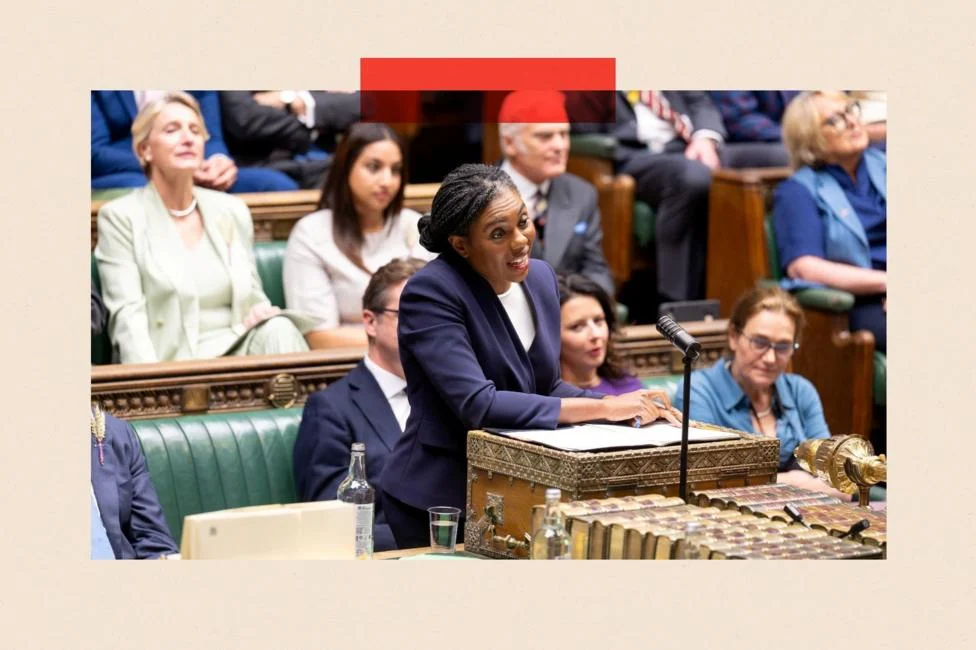
- Security DebatePrime Minister Andy Burnham’s recent declaration at the despatch box—that national security cannot come at the expense of social security—has become a focal point for Conservative criticism.
- Conservative PerspectiveSenior Tories view this as a significant “line in the sand,” interpreting the Prime Minister’s stance as a prioritization of welfare over defense spending.
- Labour’s StrategyDowning Street officials maintain that Burnham’s vision of security includes stable communities, which they argue cannot be achieved through benefit cuts.
- Ideological ClarityCabinet ministers have welcomed the clearer distinction between the two parties, noting that the current friction between Burnham and Badenoch has revitalized the Labour-Tory dynamic.
- Leadership StyleSupporters of the Prime Minister suggest he is willing to engage with complex, thorny issues directly, even before a definitive government solution is finalized, in an effort to stake out his political reputation.
- Internal DynamicsLabour figures contrast the current leadership with the past, describing the transition as “chalk and cheese” and noting that Burnham’s focus on building council houses and addressing social issues resonates more effectively with the party’s base.
While both parties are currently buoyed by the pressure on Reform, the long-term challenge remains the difficulty of governance. Labour officials acknowledge that “hope” as a strategy is insufficient as policy choices become increasingly difficult. Nevertheless, the party feels more cohesive under its new leadership, with backbenchers feeling more heard and understood than they did under previous management.
For the Conservatives, the situation is equally clarifying. Badenoch has indicated to associates that the current environment allows for a sharper ideological divide, which she believes benefits the party’s identity. As the political universe settles into this more familiar rhythm, both sides are betting that their distinct visions for the country will ultimately prevail in the eyes of the electorate. The report also notes that placards and online posts, look closely at the posters. The report also notes that your eyes aren’t deceiving you if Labour’s red seems a little deeper and the Conservatives’ blue a little truer. The report also notes that it’s a gobsmacking sum,” a senior figure involved in running successive election campaigns for one of the big parties tells me. The report also notes that a member of Conservative leader Kemi Badenoch’s top team tells me, “normal jogging is reasserting itself”, hopeful they’re at the start of a more straightforward, routine moment in politics after years of craziness, with smaller parties vying to shove the traditional tribes out of the way. The report also notes that we could never have imagined Sir Keir Starmer saying that, one senior conservative said: “It was a real line in the sand. The report also notes that asserting the prime minister cares more about welfare than guarding against war, the party seems cock-a-hoop at a line they can use again and again.