
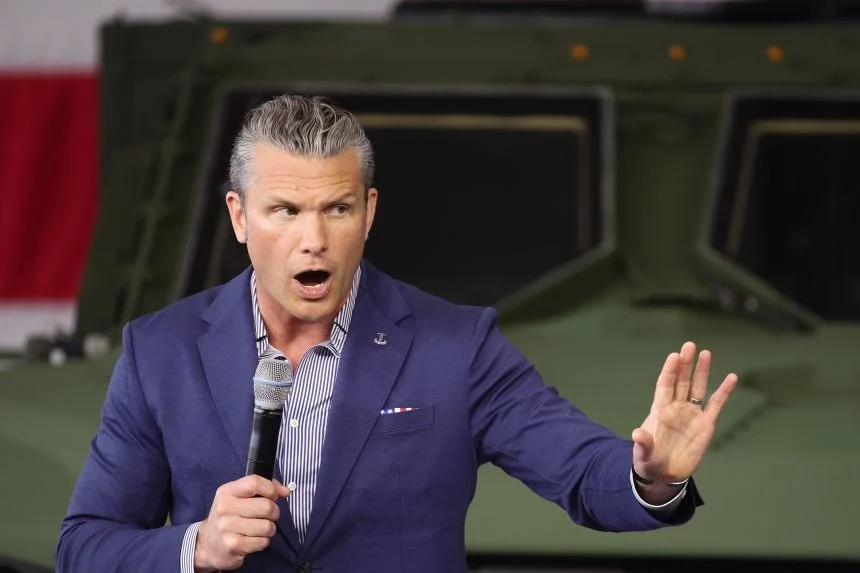








The resignation of Army Secretary Dan Driscoll has intensified concerns regarding the direction of the U.S. Army, as multiple sources indicate that Defense Secretary Pete Hegseth’s preoccupation with culture war issues is hindering the service’s modernization efforts. Driscoll, who announced that Wednesday would be his final full day in the role, reportedly cited significant concerns about the administration’s approach to Army readiness and the firing of generals responsible for transformation initiatives.
Critics within the military argue that Hegseth is creating a leadership void by pushing out officers who do not align with his specific vision of the “American warfighter.” A former senior Army official emphasized that successful modernization requires leaders who possess both technological expertise and the temperament to collaborate with industry. According to this official, the arbitrary removal of key personnel has introduced unnecessary turbulence and confusion into the service.
While Hegseth has previously issued guidance regarding unmanned systems and technology reform, defense officials operating in Europe suggest that these directives are often overshadowed by his public rhetoric. One official noted the conflict between the Secretary’s memos on modernization and his frequent focus on topics like “muscles, dudes in dresses, and testosterone.” This official stated that, in practice, there is no meaningful change at the operational level, despite the Secretary’s stated goals.
Chief Pentagon Spokesman Sean Parnell dismissed these criticisms as a “total fabrication,” asserting that the Department of War remains unified behind Hegseth’s vision. Parnell described the Secretary as a transformative leader who, under President Donald Trump’s direction, has successfully ushered in a new era of “Peace Through Strength.” He maintained that the department is fully focused on modernization and upholding high standards.
The current leadership vacuum is particularly concerning as the Army faces ongoing global challenges, including the conflict with Iran. With the departure of Driscoll, the service will soon lack both a confirmed secretary and a chief of staff. Despite this, some experts, such as Mike O’Hanlon of the Brookings Institution, remain optimistic that the Army possesses a deep bench of talent capable of navigating this period of instability, even as they criticize Hegseth for prioritizing personal vendettas over strategic progress.
Hegseth’s tenure has been consistently defined by his aggressive stance on social issues. Since taking office, he has frequently targeted military leaders he deems “woke.” During an October meeting with top general officers, he lambasted leadership over physical fitness standards and the perceived cultural direction of the department. He has continued this rhetoric throughout the year, criticizing the previous administration’s policies and vowing to eliminate social engineering, DEI initiatives, and what he describes as “dudes in dresses” within the ranks.
The impact of this approach is felt across the force, with sources pointing to the forced exits of high-ranking officials including Army Chief of Staff Randy George and Gen. Christopher Donahue, the former head of U.S. Army Europe and Africa. Donahue had been actively integrating lessons from the war in Ukraine, particularly regarding drone warfare and lethal, low-cost technology. These departures, combined with a general “back to basics” mandate, are viewed by some as antithetical to the modernization work previously underway, even though some of Driscoll’s initial reforms were born from Hegseth’s own early directives. The report also notes that “When you fire these guys for arbitrary reasons, it creates confusion and a void … the Army is enduring turbulence right now.”. The report also notes that “It’s conflicting because yeah he put out a memo saying this is important, but … he’s talking about muscles, dudes in dresses, testosterone,” the official said. The report also notes that “Standards and merit are back, our arsenal is stronger than ever before, and morale and recruitment across every service are at all time highs. The report also notes that unleashed innovation, and delivered for our warfighters every step of the way.”, secretary Hegseth has slashed bureaucracy. The report also notes that and while Hegseth said early on in his tenure he would seek to reduce the number of four-star generals and admirals — something others have supported historically — sources and experts said the firings don’t seem to be driven by any broader strategy, the Army currently has five active-duty four-star general officers. The report also notes that “If anything I think he’s pretty good on transformation, but because he wants to engage on culture wars he distracts from the real priorities.”. The report also notes that he has gone after military personnel and leaders he perceives to be “woke;” some of the first steps he took as secretary included advocating for renaming the Defense Department the Department of War, and changing the names of Army bases back to Confederate-era titles, though naming them after different individuals with the same names.