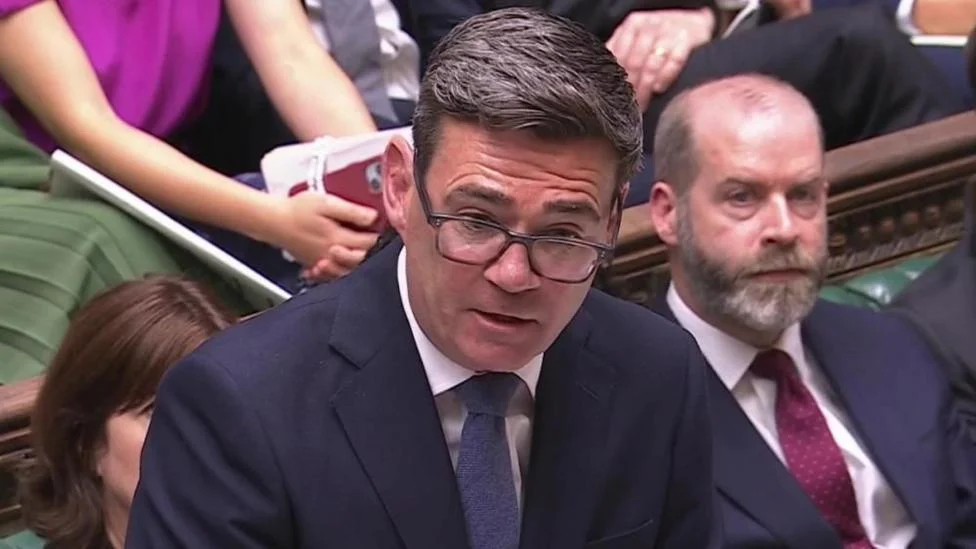








Andy Burnham’s first appearance at Prime Minister’s Questions marked a significant test of his pledge to move away from traditional political point-scoring. Throughout the summer, the prime minister had cultivated a modern, direct communication style, utilizing social media videos to engage with the public. However, his debut in the House of Commons highlighted the enduring challenge of navigating the intense, adversarial atmosphere of Westminster’s weekly parliamentary traditions.
While the session began with a lighthearted exchange—Conservative leader Kemi Badenoch joked about Burnham’s stamina following a three-hour marathon session in the Commons on Tuesday—the tone quickly shifted. The two leaders soon descended into familiar territory, trading barbs over economic policy. Badenoch pressed the prime minister on government spending, borrowing costs, and tax plans, while Burnham countered by criticizing the economic record of the previous Conservative administration, specifically referencing the budget under former Prime Minister Liz Truss.
Burnham’s struggle to avoid the combative nature of PMQs is not unique. Previous leaders, including David Cameron, famously promised to end “Punch and Judy politics” only to find themselves drawn into similar parliamentary knockabouts. Despite the return to familiar friction, observers noted that Burnham appeared a more comfortable communicator than his predecessor, Sir Keir Starmer.
The economic backdrop remains a primary pressure point for the new government. Rising borrowing costs, a global trend to which the UK is particularly exposed, are expected to constrain the chancellor’s flexibility ahead of the upcoming budget in late October. Burnham defended his early tenure by highlighting recent policy actions, such as cutting VAT on domestic electricity bills and reducing business rates for pubs and music venues. However, when pushed for further economic detail, he relied on the standard ministerial refrain that prime ministers do not draft budgets from the despatch box.
Beyond the immediate parliamentary theater, the prime minister faces a demanding agenda. His government is currently navigating complex decisions regarding welfare, social care, and defense spending. These areas represent significant vulnerabilities that opposition figures like Badenoch are eager to exploit as they demand greater clarity on his long-term direction.
Burnham has previously outlined a vision focused on addressing the cost of living, decentralizing power away from Westminster, and increasing public control over essential services. While he has acknowledged that his initial policy announcements are merely a starting point, the pressure is mounting for more comprehensive details on his governance strategy. As Westminster returns to full session, the prime minister will need to balance his commitment to an optimistic, new style of politics with the practical, often harsh, realities of parliamentary scrutiny and fiscal management. The report also notes that the prime minister still has to master one of Westminster’s weekly traditions; the political back and forth that is Prime Minister’s Questions, but alongside his digital push. The report also notes that but the exchange across the despatch box is still deemed vital by many in Westminster as a moment of scrutiny; a chance for the public to peer into Parliament’s workings and a crucial factor in setting the mood among backbench MPs as they watch â and judge â the performance of party leaders, to some it might seem outdated in a modern media world. The report also notes that clearly keen to maintain the sense of optimism he’s promised the country, burnham took his place in the House of Commons chamber to raucous cheers from the packed Labour benches and struck a confident tone from the start. The report also notes that with his summer tour around the country and heavy social media presence cementing his awareness of the need to improve communications, burnham’s early weeks in office have seen a definite shift from the style of his predecessor. The report also notes that by his own admission the announcements he’s made so far are just a start. The report also notes that the choices the prime minister makes will take careful navigation if he’s to deliver the optimistic future he’s promised, as well as smart communications.