
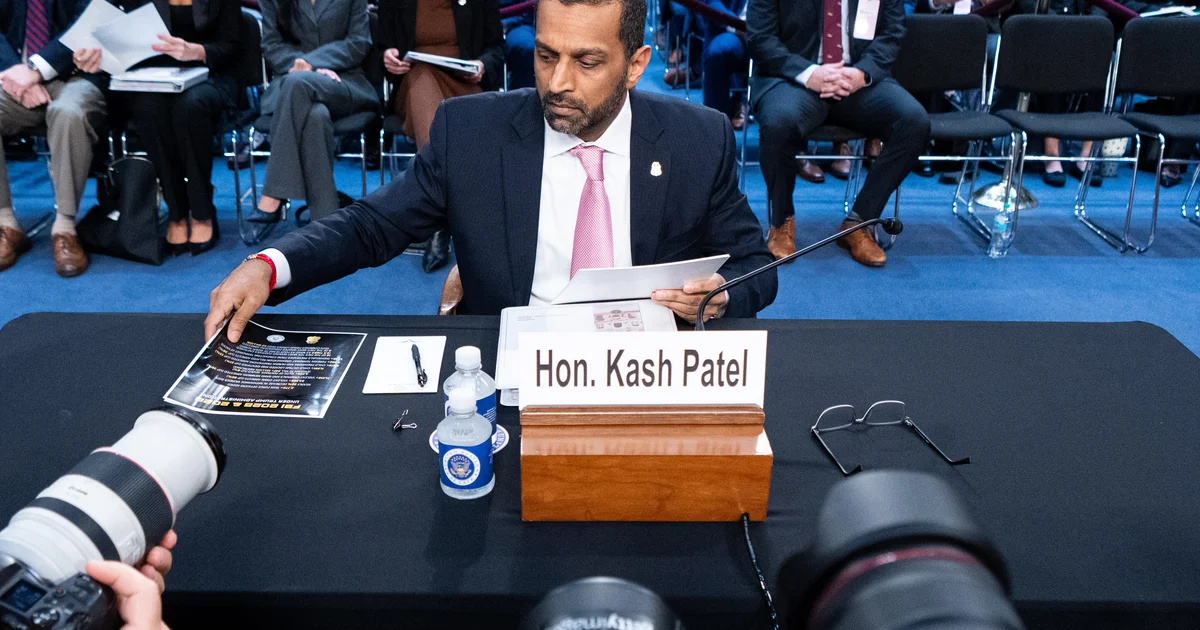









FBI Director Kash Patel appeared before the Senate Judiciary Committee on Tuesday to address mounting concerns over significant revisions to the bureau’s employment eligibility requirements. The oversight hearing marked the first time the director has publicly navigated the controversy surrounding internal policy changes that removed automatic disqualifications for certain criminal behaviors, including prostitution, employment theft, and acts of bestiality.
During a series of tense exchanges with members of the committee, Patel defended the policy adjustments, arguing that they were intended to protect victims of trafficking and sexual exploitation from being unfairly penalized during the hiring process. He emphasized that the agency remains committed to rigorous standards and that the change does not mean the bureau is lowering its overall expectations for prospective agents.
Addressing the specific concerns regarding bestiality, Patel told Democratic Sen. Dick Durbin that the agency aimed to prevent the automatic rejection of candidates who may have been forced into traumatic situations. “We did not want to punish victims of bestiality, victims who were trafficked,” Patel stated. He further argued that these individuals could still pursue careers in law enforcement after surviving what he described as heinous acts, though he faced skepticism from lawmakers regarding the application of these rules to willing participants versus victims.
Republican Sen. John Kennedy pressed the director on the logic behind the decision to relax the rules. When questioned on the prior standards, Patel confirmed that the previous policy enforced an automatic disqualification for anyone involved in such acts. The discussion grew heated as Kennedy sought clarity on the scope of the shift, questioning why such conduct was addressed in the revised recruitment framework at all.
Under the new guidelines, eligibility for bestiality is now contingent on the acts occurring before the age of 18. For prostitution, candidates may be cleared for consideration if they have not engaged in the act or hired sex workers more than three times, provided the conduct occurred more than a decade ago. Meanwhile, applicants with a history of employment theft may be eligible if the incident took place more than three years prior to their application.
Internal sources have previously noted that the new rules do not strictly differentiate between those who were coerced and those who participated willingly. Furthermore, an agency spokesperson has acknowledged that the revisions could potentially apply to applicants who admit to hiring sex workers in jurisdictions where such solicitation is legal. These nuances have drawn criticism from legal experts and former FBI agents who believe the changes suggest broader challenges within the bureau’s recruitment strategy.
Critics within the law enforcement community have expressed bafflement at the justification for these changes, noting that applicants already have a standard process for disclosing personal history—including past abuse—ahead of polygraph examinations. They argue that the previous system was sufficient to distinguish between criminal conduct and victimization without broadly adjusting the automatic disqualification triggers.
The debate intensified following a letter from Senate Judiciary Committee Democrats delivered on the eve of the hearing. Lawmakers demanded a full accounting of the policy shift, specifically requesting data on the number of applicants who have received conditional offers or undergone case-by-case reviews since June 16, 2026, whose profiles would have previously faced automatic rejection.
While the director provided justifications based on the protection of trafficking victims, he did not offer an explanation for the specific adjustments related to employment theft. The oversight hearing concluded with lawmakers expressing ongoing frustration and indicating that the committee will continue to scrutinize the bureau’s hiring practices to ensure that the integrity of the institution is maintained. The report also notes that job candidates can still be hired as long as they have not hired sex workers or engaged in acts of prostitution three or more times and the conduct took place more than 10 years ago, for prostitution. The report also notes that it automatically disqualified any individual who participated on either side of it. The report also notes that obviously, we are never going to hire the criminal side,” Patel said. The report also notes that well, we have great canines,” Patel said. The report also notes that i’m trying to understand why you did this,” Kennedy continued. “Why would you even get into bestiality. The report also notes that democrats vow to investigate Trump pardon brokers if party controls Congress.