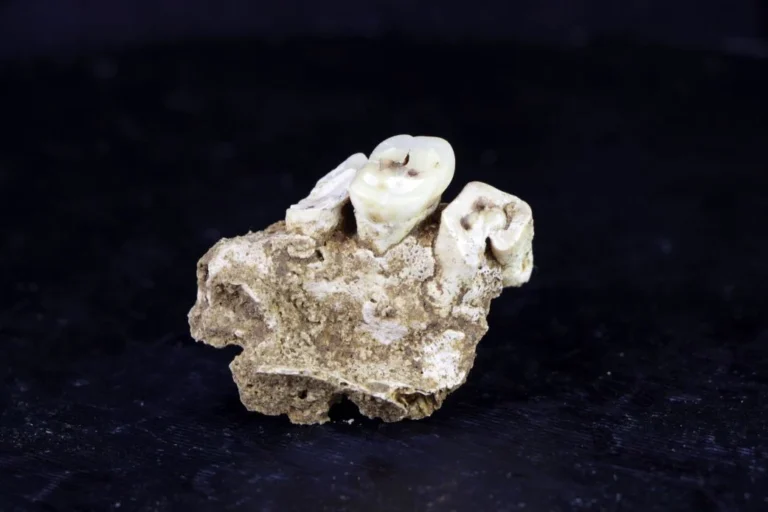

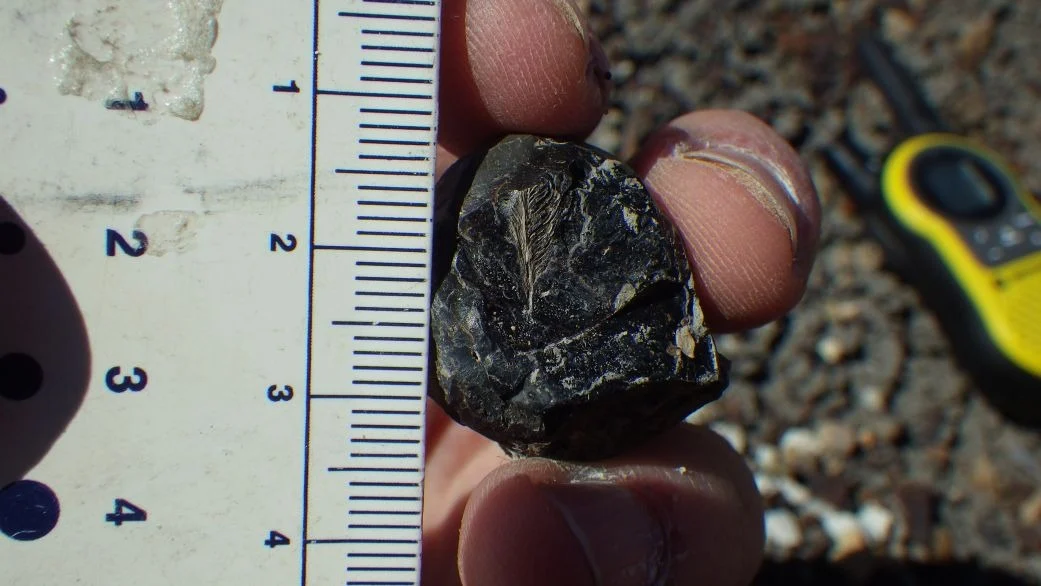









A rare discovery in Montana has provided paleontologists with a unique perspective on the survival of early birds during the mass extinction event that wiped out the dinosaurs 66 million years ago. Researchers have identified a highly detailed feather encased inside a coprolite—fossilized dinosaur feces—that had been excreted by a predatory dinosaur, potentially a Tyrannosaurus rex or a close relative, shortly before the catastrophic asteroid strike.
This specimen, described in the journal Current Biology, represents the best-preserved feather ever recovered from the Mesozoic Era. Lead author Jingmai O’Connor, an associate curator at the Field Museum in Chicago, noted that the find is significant because it provides an unexpected look at the evolutionary adaptations that may have determined which bird lineages persisted through the global cooling that followed the asteroid impact.
The fossilized remains are believed to belong to a small, flightless diving bird similar to modern loons, part of a group known as Hesperornithiformes that ultimately went extinct. While modern birds share a common ancestor within the Neornithes group, the Hesperornithiformes did not survive the climate shift caused by the asteroid. O’Connor explained that the primitive, fuzzy body feathers found on the specimen lacked the insulating efficiency of modern avian plumage. As the impact triggered an “impact winter” that dropped global temperatures, these birds faced an energy crisis, requiring more fuel to maintain body heat in a world where food sources were rapidly dwindling.
The research team utilized micro-CT scanning to reveal the full contents of the coprolite, uncovering multiple feathers, leg bones, and even remnants of the bird’s last meal, which included small fish. This discovery marks a departure from previous theories, which often suggested that living near water provided a protective advantage for birds during the extinction event. Since the Hesperornithiformes also inhabited aquatic environments but failed to survive, O’Connor suggests the specific structure of their feathers may have been the deciding factor in their downfall.
The specimen was first discovered in 2016 by David DeMar Jr., a paleontologist from the University of Washington, while he was searching for fish fossils in the Hell Creek Formation. Initially, DeMar suspected the object might contain plant material, given that no feathers had been documented in the area during its 150-year history of exploration. Upon closer examination with a hand lens, he realized the object was a feather, leading to further study that revealed its exceptional 3D preservation.
Reflecting on the importance of the find, Anthony Fiorillo of Southern Methodist University and the New Mexico Museum of Natural History remarked on the unpredictability of the fossil record. O’Connor emphasized that future research will focus on finding Neornithes fossils from the pre-extinction period to confirm whether they already possessed more advanced, insulating feathers, noting, “Who knows, maybe someone has already picked up a coprolite with these traces inside.” The team remains optimistic that further investigation into coprolites could yield more critical data about the transition between dinosaurs and birds. The report also notes that or rocks from the age of the dinosaurs, and the discovery offers a rare glimpse into a make-or-break moment for many species, the remains include the best-preserved feather ever extracted from Mesozoic deposits. The report also notes that that means the bird species flapping around in backyards today are effectively the only surviving dinosaurs. The report also notes that the hellish conditions triggered by the planet’s collision with the city-size space rock wiped out all other birds and dinosaurs, O’Connor noted. The report also notes that with a central spine having a square cross section that would have helped make the feather stiff yet lightweight, o’Connor said some of the feathers looked highly similar to those present today in modern birds. The report also notes that sulfur and other gases into the atmosphere, blocking the sun and leading to a dramatic cooling of Earth’s climate, scientists believe the collision released billions of tons of dust. The report also notes that a biological process critical for life, for almost two years afterward, research suggests, plants were unable to photosynthesize. The report also notes that “Now the primitive body feathers and their less effective insulation is problematic — it takes more energy to stay warm but there is less food available through which to acquire this energy.”. The report also notes that she said a similar pattern had been seen in other birds from the Cretaceous called enantiornithines.