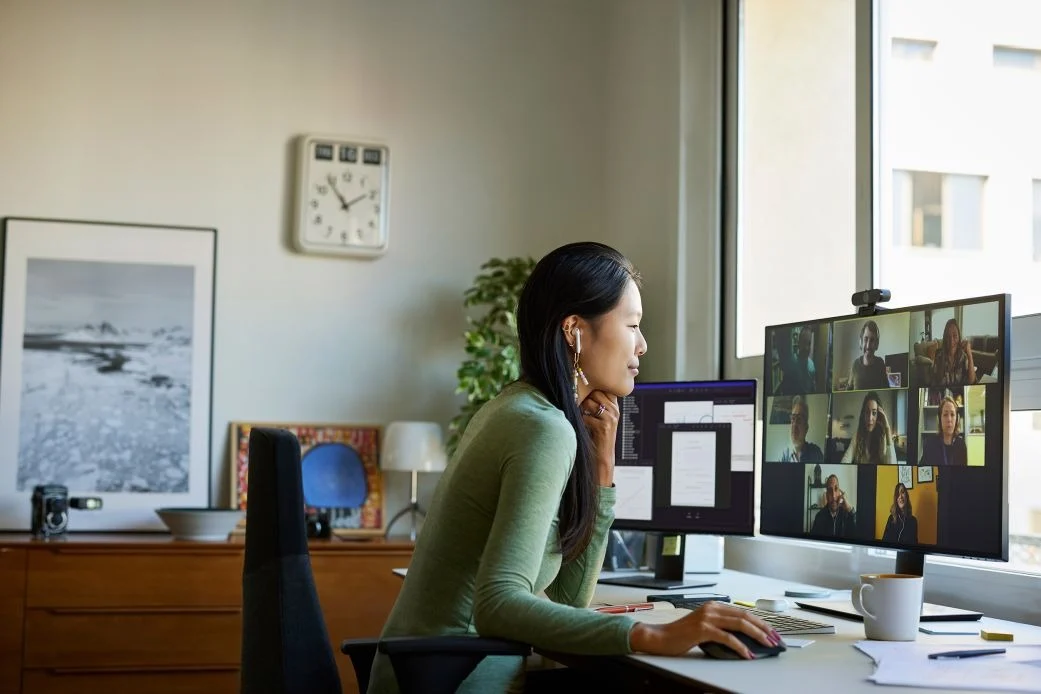









For many, the shift to remote work has redefined professional boundaries, though it brings significant questions regarding mental well-being for those who spend their days in isolation. Matthew Juhren, based near Portland, Oregon, has worked up to 75 hours per week from home since April. For an extrovert like him, the experience is notably different, acknowledging that the persistent solitude can be difficult to manage.
Remote Work Trends and Challenges
- Gallup data from November indicates that 61% of remote-capable employees prefer a hybrid model, while 33% favor fully remote work and only 6% opt for exclusively on-site attendance.
- Employees in remote-friendly roles who live alone reported spending 25% of their days without any social contact, a rate more than double that of their counterparts in non-remote positions.
- A study published in the journal Science observed that solo dwellers in remote-friendly jobs experienced a more significant rise in psychological distress post-pandemic compared to those who share a household.
While remote work is often praised for supporting work-life balance and productivity, the potential for social isolation remains a concern. Dr. Constance Noonan Hadley, an organizational psychologist and founder of the Institute for Life at Work, notes that the assumption that returning to an office automatically provides a fulfilling social environment is often flawed. A physical office does not guarantee meaningful human contact, nor does it ensure that existing workplace relationships are positive.
For those struggling with remote isolation, experts suggest that smaller, non-professional interactions—such as conversing with a local barista or exchanging smiles with strangers—can foster a necessary sense of belonging, as highlighted by 2013 research. Anika Farmer, a 45-year-old attorney, balances her remote workload with exercise and mindfulness, benefiting from the company of her family and pet. She notes that avoiding a long daily commute has significantly reduced her stress levels.
However, the pressure to return to the office can sometimes prove counterproductive. When leadership mandates in-person requirements that employees strongly resist, it may exacerbate feelings of loneliness rather than alleviate them. Hadley emphasizes that companies should focus on listening to their workforce, suggesting that mentorship programs and intentionally designed social events are more effective ways to foster connection than rigid mandates. For chronically lonely individuals, additional support, such as personal invitations to social gatherings, can help mitigate fears of rejection.
While one recent study highlighted higher distress levels among remote-friendly workers, other research offers a different perspective. A July study in Frontiers in Psychology, surveying 7,700 healthcare employees, found that those in fully remote roles actually reported the highest levels of positive well-being. Ultimately, health experts agree that the goal is not merely physical attendance, but finding environments where individuals feel valued, seen, and understood, whether that occurs within a traditional office or through intentional community engagement. The report also notes that new research suggests, spending too much time working alone can be harmful to your mental health. The report also notes that such as marketing, and jobs that require in-person work, such as surgery, the authors analyzed over a decade of data from national surveys and compared reports from workers in jobs that can be done remotely. The report also notes that respondents cited work-life balance as one of the biggest reasons why they love hybrid work. The report also notes that anika Farmer, 45, an attorney based in Trinidad and Tobago, has been working remotely since 2020. The report also notes that she received a chronic diagnosis that made it difficult for her to drive 2 ½ hours to her office each day, two years later.