







Defense Secretary Pete Hegseth and his political appointees actively sought to have two F-15 crew members, who were shot down over Iran in April, participate in an upcoming 60 Minutes broadcast detailing their rescue. While the administration pushed for their appearance, the airmen initially expressed reservations, with one pilot voicing concern over the possibility of being ordered to participate. Military officials also raised alarms regarding the potential exposure of classified operational details during the interview.
Although political appointees within the Defense Department remained adamant that both crew members take part in the production, the situation shifted when Hegseth held private meetings with the two survivors. During these sessions, he offered them the choice to participate rather than issuing a direct order. Ultimately, the crew member identified as “Bravo” agreed to sit for an on-camera interview, while the other airman, referred to as “Alpha,” chose to decline. Neither individual has been publicly identified by the Pentagon.
This initiative highlights a broader effort by Hegseth’s office to shape the public narrative surrounding the increasingly unpopular war in Iran, where there is significant internal pressure to demonstrate success. The secretary has maintained a notably hands-on approach to the planning of this specific television appearance, a role that goes beyond typical departmental duties. Tami Radabaugh, a former Fox News producer who now serves as a senior adviser to Hegseth, led the orchestration of the broadcast segment. Hegseth himself is also scheduled to appear in the program, according to network promotional materials.
Chief Pentagon spokesperson Sean Parnell strongly contested characterizations of the process, describing them as a complete lie. He maintained that the decision to participate rested entirely with the pilots, as it was their story to tell. Parnell added that the department prioritized operational security throughout the production, asserting that any claim to the contrary unfairly criticizes the military members involved. He emphasized that the department took extensive care to protect sensitive sources and methods.
The race to secure the interview was intense, with various major news organizations competing for access following the rescue. At CBS, veteran producer Keith Sharman began pursuing the crew members the same day they were extracted. The lobbying effort reached the executive level, with CBS News editor-in-chief Bari Weiss prioritizing the segment and personally encouraging Hegseth to grant the network exclusive access. As the network navigated internal management changes, including the installation of new executive producer Nick Bilton, the prestige of landing such an exclusive interview became increasingly important to the organization.
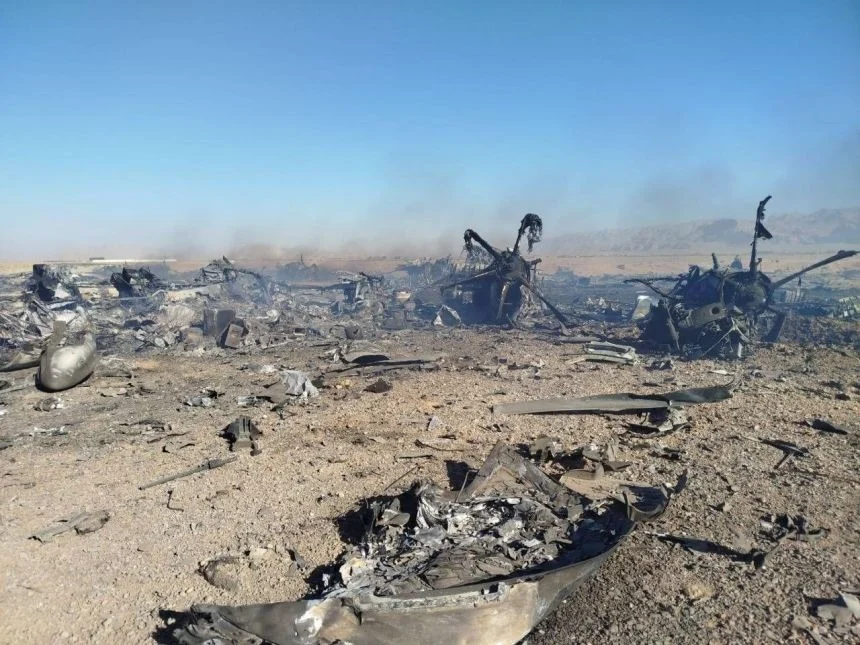
The rescue mission itself was a complex operation. While the pilot was recovered shortly after the plane went down, the weapons system officer spent more than 24 hours evading capture. He eventually reached a 7,000-foot ridge, relying on a pistol, a communication radio, and a tracking beacon before being extracted by American commandos supported by aircraft that cleared the area with munitions. Despite the dramatic nature of the story, some uniformed service members have expressed concerns that the media presentation is being leveraged for political gain.
Inside the military, high-ranking officials also grappled with the risks of the broadcast. General Dan Caine, chairman of the Joint Chiefs of Staff, acknowledged potential concerns regarding the inadvertent disclosure of military tactics to enemy forces but ultimately decided to participate in the segment. Throughout the process, appointees within Hegseth’s office continued to advocate for the production, even as members of the military chain of command voiced caution regarding the timing and the potential for revealing ongoing combat details. The report also notes that at CBS, producer Keith Sharman, a 25-year veteran of “60 Minutes,” reached out to longtime US military contacts on the day of the rescue to start pursuing an interview. The report also notes that who ultimately secured the interview, originally pitched a story for the previous season of “60 Minutes,” which ended in May, sharman and correspondent Norah O’Donnell. The report also notes that weiss forced out several “60 Minutes” correspondents and producers and installed a new executive producer, Nick Bilton, prompting weeks of critical news coverage. The report also notes that to suggest otherwise is to denigrate every member of our military who participated in and supported the interview.”. The report also notes that then CBS was consumed by internal strife. The report also notes that the Pentagon, regardless of political party in power, has historically worked to frame retelling of incidents of military heroism — there’s even an office set up specifically to work with Hollywood productions. The report also notes that at one point, he scaled the rugged terrain to a ridgeline 7,000 feet above sea level, equipped with little more than a pistol, a communication device and a tracking beacon. The report also notes that accompanied by US aircraft dropping bombs to clear the area, the airman was rescued by a team of American commandos.