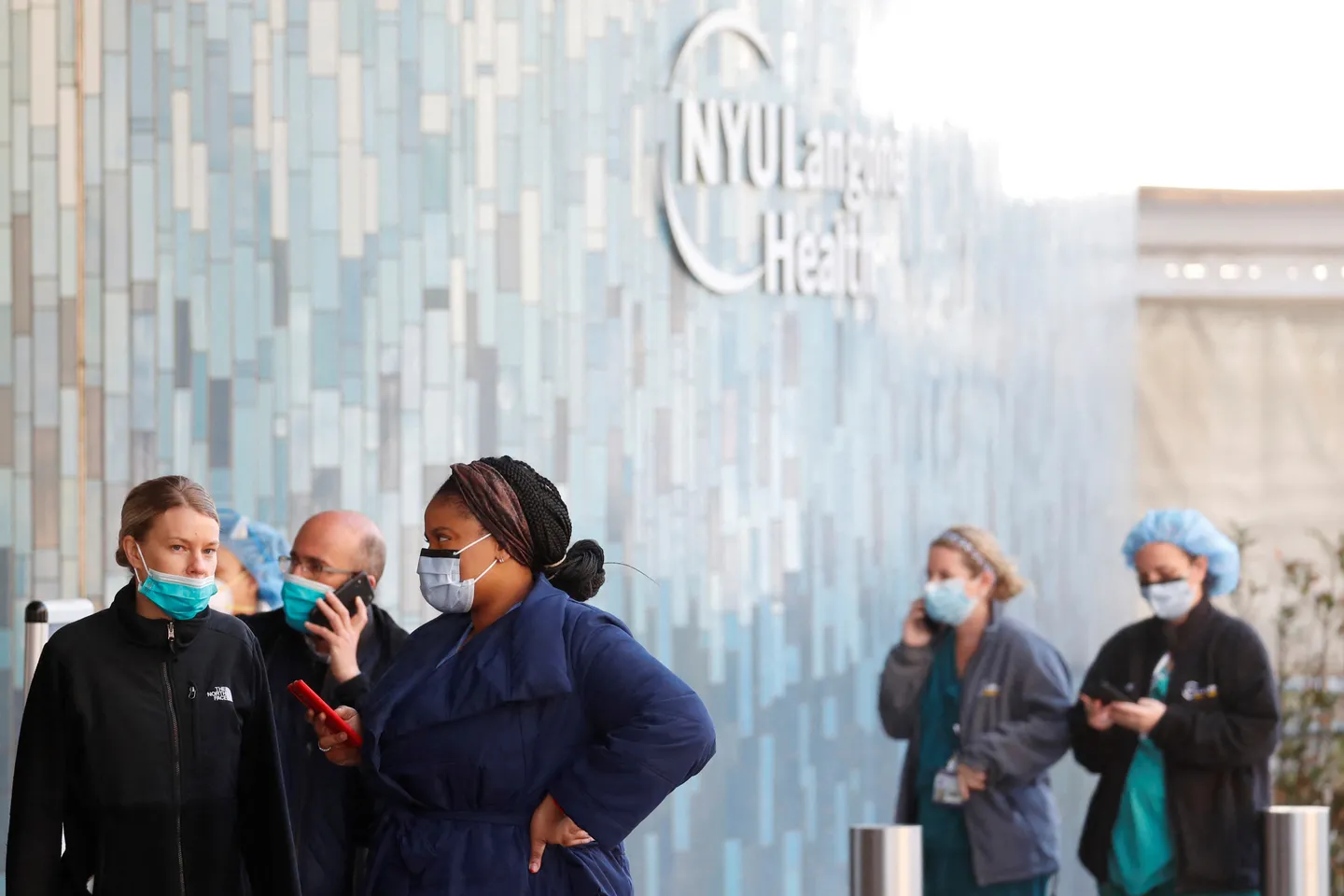




Annapolis, the waterfront capital of Maryland, remains a city defined by its active civic engagement. Yet, the echoes of 2020—when the city was swept up in intense Covid-era protests—still resonate. At the height of the pandemic, streets were gridlocked by demonstrations against government-mandated lockdowns and the science behind vaccines. Six years later, that skepticism has not only endured but has become a fixture of the local and national landscape.
For some residents, the initial willingness to follow health protocols has curdled into profound doubt. “When Covid came around, people were gonna get vaccinated because that’s what we were trained to do. So then, then you get vaccinated again, and then you get vaccinated again. And now people start to wonder, ‘What is this about?’,” says Penelope, an Annapolis local. Others express more pointed concerns, with one resident noting, “I won’t get another vaccination, you know. I just have to deal with the consequences, you know, because it didn’t, it didn’t help because I still caught Covid. I really don’t think they work, you know. And then again, I don’t know what they really injected in me.”
This sentiment reflects a broader trend of declining trust in US institutions. Research indicates that confidence in public health, education, the Supreme Court, Congress, and the media has plummeted. Of the 14 core institutions monitored annually since 1993, 12 are currently at or near their lowest-ever approval ratings. Pediatrician Dr. Paul Offit, who was removed from a government vaccine advisory board last year after criticizing Health Secretary Robert F. Kennedy Jr., suggests the pandemic acted as a catalyst for this collapse.
Dr. Offit explains that the nature of the virus—spread by asymptomatic carriers—necessitated drastic measures like school closures, travel restrictions, and social distancing. However, these mandates were widely perceived as government overreach. “You couldn’t go to your favourite restaurant or sporting event without your vaccination card. You may be fired from your job. That too was seen as government overreach. People didn’t like being told what to do,” he says. He warns that this distrust is now often framed as “medical freedom,” a stance he finds dangerous because it ignores the collective well-being of vulnerable populations who cannot be vaccinated.
Political analysts offer varying perspectives on the roots of this divide. Ameshia Cross, a Democratic analyst, argues that federal authorities lost public confidence long ago, though local trust persisted for a time. She notes that the rapid, often confusing shifts in guidance—from restaurant curfews to changing scientific messaging—left the public frustrated and damaged the mental and emotional health of many Americans. Cross also points to the “Wild Wild West” of social media, where non-journalists with massive followings spread debunked claims, further eroding media literacy.
Matthew Hurtt, an Arlington Republican Party official, views the pandemic as an event that exposed long-standing fractures. He cites shifting guidance from former Chief Medical Advisor Dr. Anthony Fauci and concerns over vaccine mandates as primary drivers of skepticism. Hurtt also points to the CDC’s acknowledgement last June regarding potential links between certain Covid-19 vaccines and myocarditis in young people as a factor that validated parental concerns. He notes that his own childhood vaccine schedule in the late 1980s was significantly more spaced out than the current regimen.
The debate over institutional capital remains contentious. When asked if the US has the capacity to handle another major crisis, Cross suggests that the structure is now “so badly disrupted” that a coordinated response would be nearly impossible. Conversely, Hurtt maintains a degree of optimism, arguing that communities still demonstrate the ability to organize effective responses to natural disasters, even if federal trust is fractured.
As for the future of public health, Dr. Offit believes that the path to restoring trust will not be found in policy alone. “I think the viruses and bacteria are gonna be doing the educating,” he says. Meanwhile, the cultural divide continues to widen, with Americans increasingly wary of everything from grocery-store produce to routine immunizations, leading to the resurgence of diseases like measles that were once considered eradicated. The report also notes that in 2020, it was also among numerous American cities swept up in Covid-era protests. The report also notes that the vaccine hesitancy has grown in US in recent years. The report also notes that has pursued changes to childhood vaccination policy that have drawn criticism from parts of the medical community. The report also notes that so all we could do was prevent human to human contact. The report also notes that restricted travel, social distanced and quarantined,” Dr, so we closed schools and shuttered businesses. The report also notes that particularly protections such as freedom of religion, speech, and the press, and the right to bear arms, americans remain protective of their constitutional rights. The report also notes that and where does that leave the country if there is no perceived standard bearer of trusted information, but how concerning is it when it relates to public health policy. The report also notes that i mean, basically, what you’re saying is that it’s my right to catch and transmit a potentially fatal infection, knowing that there are a certain number of people, millions of people in this country, for example, who can’t be vaccinated, who depend on me and the, the people around them to protect them.