

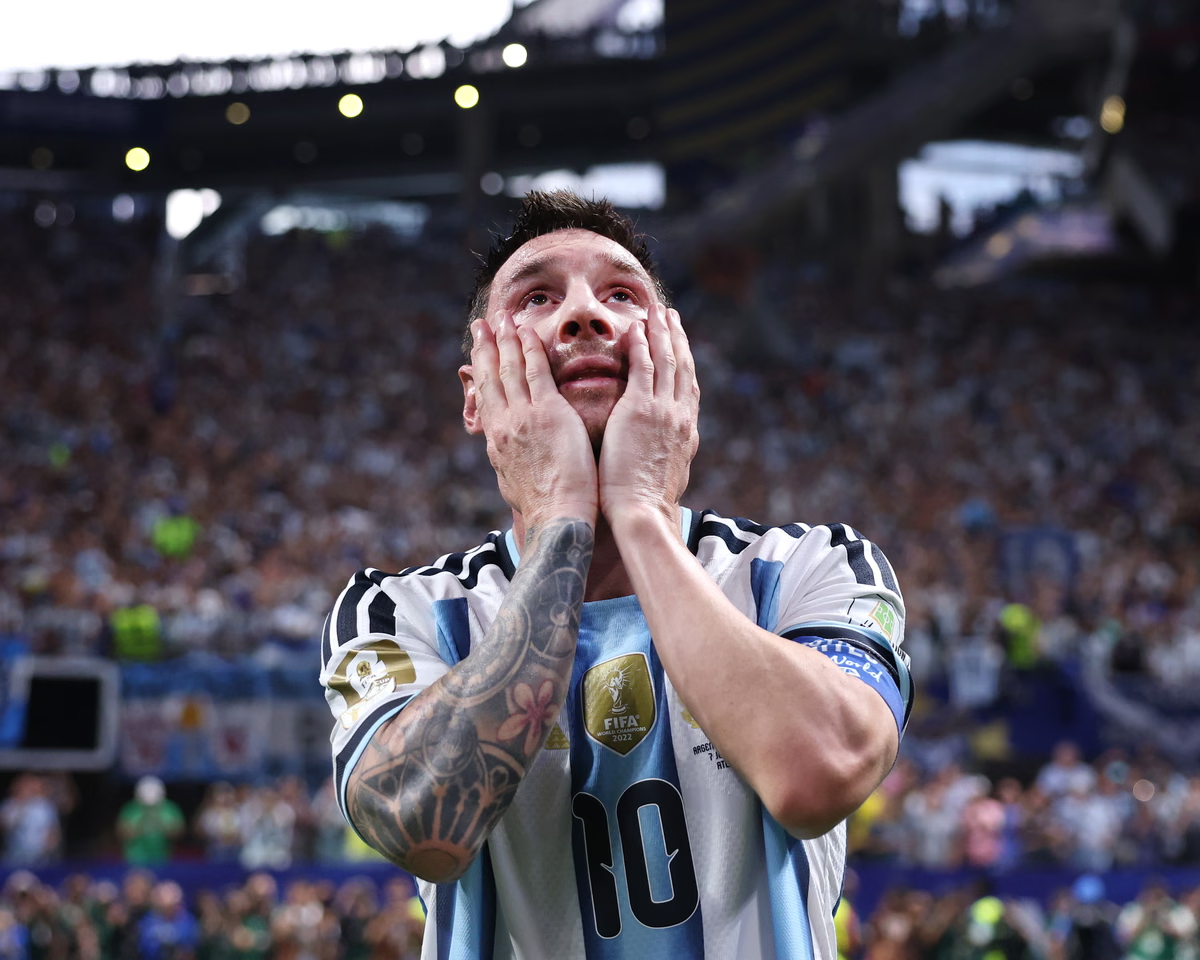








Lionel Messi’s announcement that he is retiring from international football has triggered a profound outpouring of affection and nostalgia across Argentina. The decision, shared on Instagram this Monday, was presented through handwritten notes and accompanied by the song “Brindis” by Soledad Pastorutti. While the news dominated headlines, it was not entirely unexpected; observers noted that the emotional toll on the team had been evident since the World Cup final between Spain and Argentina in New Jersey on 19 July. During the post-match press conference, manager Lionel Scaloni was visibly overcome with sobs, signaling that a significant era for the squad had reached its conclusion.
Teammates were quick to pay tribute to the 39-year-old icon. Cristian Romero acknowledged the inevitability of the moment, writing, “How crazy that the day has come, dear Leo.” Giovani Lo Celso reflected on his nine years spent learning alongside Messi, while younger players like Nico Paz shared memories of watching him play since childhood, dreaming of the day they might share the pitch. The sentiment extended far beyond the locker room, with fans across Buenos Aires finding unique ways to express their appreciation. On one street corner, a red telephone was set up with a sign asking, “What would you say to Messi?” Callers ranged from an 86-year-old who thanked him for the greatest joys of his life to a young student who wept at the news, all echoing the sentiment that he would remain in their hearts forever.
Cultural figures, including journalists, psychologists, and artists, have spent the week analyzing the impact of Messi’s career. Sportswriter Matías Martin praised his leadership, while motivational speaker Matias “Coco” Gallo Bevegni noted that Messi’s approach to both victory and defeat provided lasting lessons. Pundit Morena Beltrán described a sense of mourning among her generation, while psychoanalyst Milagros Filgueras highlighted the significance of his handwritten note as a rare, personal act of closure in the digital age. Writer Andrés Burgo emphasized that the nation is now entering a period of “orphanage,” noting that for nearly 45 years, the country enjoyed the privilege of watching either Diego Maradona or Messi on the world stage.
Messi revealed that his farewell letter was originally drafted two days after the final as a cathartic exercise. He explained that recent events, specifically regarding his father, Jorge, solidified his decision. Messi noted that he had initially written “I think” but corrected it to “I understand,” reflecting a firm acceptance that he has nothing left to give at the international level. He emphasized that he has always given his all for the team, consistently using “we” rather than “I” when discussing their collective achievements. While he is stepping away from the national team, he remains active at the club level, having recently scored four goals for Inter Miami.
The timing of his retirement arrives as Argentinian football faces a period of instability. The national association is currently navigating various scandals, debates over the potential privatization of non-profit clubs, and the fallout from international sanctions and fines incurred during the World Cup. Furthermore, the personal weight of the national flag—which Messi once described as a burden before it became a symbol of victory—had been tied closely to his desire to win for his father. With his father’s passing, some observers suggest he may finally feel a sense of personal liberation.
As the nation processes the end of this chapter, the spontaneous response remains one of deep gratitude and acceptance. Despite the controversies surrounding the final tournament, the prevailing image is one of a country moved by the history they have lived through. The sight of young children wearing Messi’s No 10 jersey on the streets of Buenos Aires serves as a poignant reminder of his legacy as the country looks toward an uncertain future. The report also notes that a nyone who was present at Lionel Scaloni’s press conference immediately after the World Cup final between Spain and Argentina in New Jersey on 19 July and saw his tears, the sobs which prevented him from speaking while he got up and walked out, could tell this was a man weeping not because of defeat in a single match but because he was fully aware that what that particular group of men had been through for the past. The report also notes that posted on Instagram on Monday complete with photos of three handwritten sheets of some anonymous yet corporate-looking headed paper and a Harry Potter Time Turner pen, to the soundtrack of Brindis sung by Soledad Pastorutti, instantly dominated the news and unleashed a barrage of homages, gratitude and joy from all corners, messi’s announcement that he is retiring from international football. The report also notes that you will be in my heart until the day I die,” one gentleman said. The report also notes that a young boy saw the news and “burst into tears even though I was at school”. The report also notes that a little girl added “you’re the best and the greatest”, a well-spoken woman said “we will miss you because you are an extraordinary being”. The report also notes that noting that a handwritten letter in this day and age is almost a countercultural act of originality, the journalist Pablo Perantuono devoted his column to the “epistolary genre”. The report also notes that either Maradona or Messi played, so this truly marks the “end of an era in which grandparents, parents, sons and daughters and grandchildren enjoyed an incredible privilege during almost 45 years, the writer Andrés Burgo highlighted that in 10 of the past 12 World Cups.