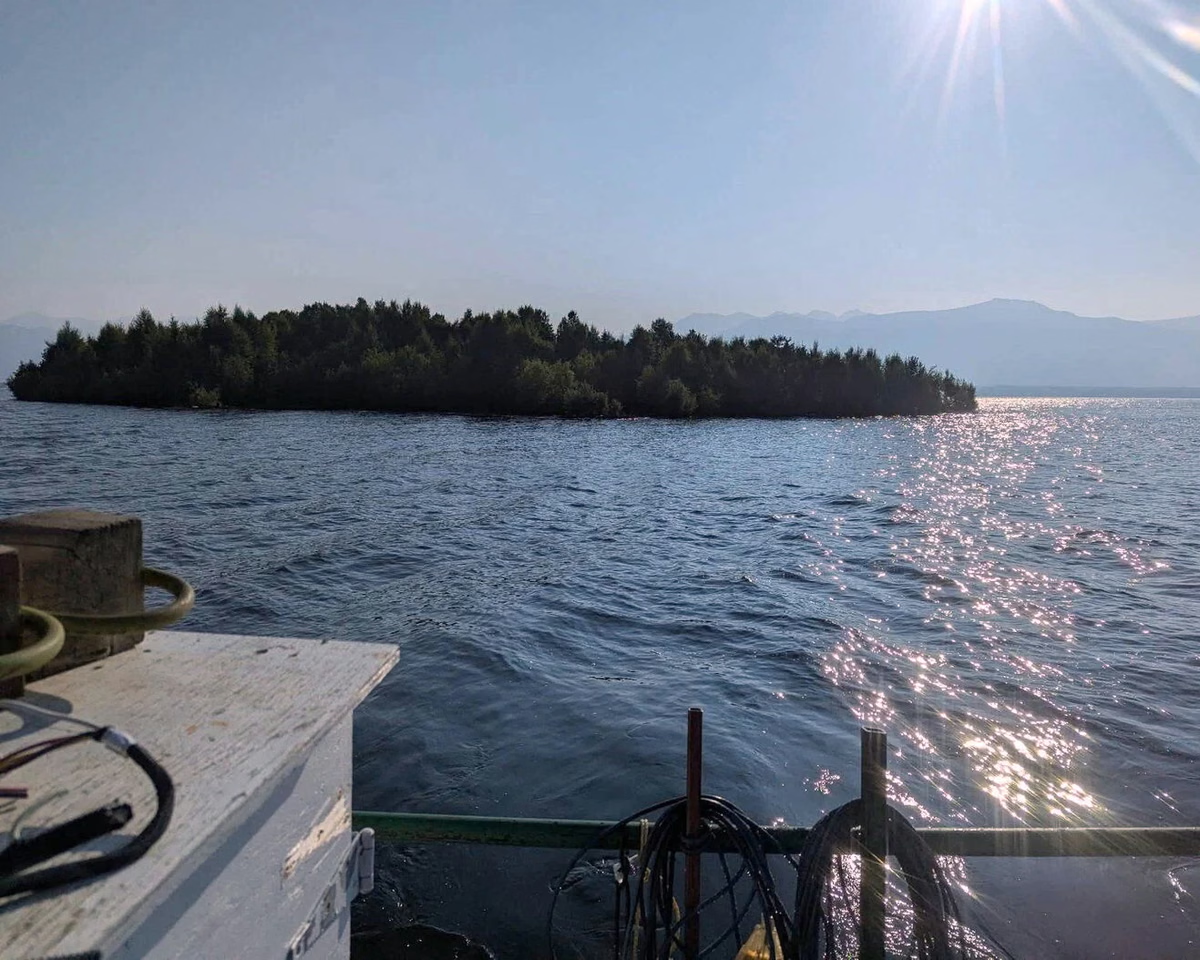









A heavily forested, 500-foot-long land mass has emerged on Williston Lake in British Columbia, leaving local residents and experts stunned. The island, which measures approximately 250 feet in width, was not present on any navigation charts or maps before its sudden appearance. One boater captured footage of the phenomenon, showing nearly 100 trees swaying in the lake’s chop, before the island seemingly vanished within a day.
Earlier this week, the land mass reappeared nearly 20 miles from its original location. This aquatic displacement has sparked curiosity about how such a large structure can seemingly disappear and return. The mystery is centered on Williston Lake, a reservoir spanning 1,700 square kilometers—the largest freshwater body in the province—which was formed in the early 1970s following the construction of the W.A.C. Bennett dam.
Bob Gammer, a spokesperson for the government-owned utility BC Hydro, described the sight as “quite something and rather unbelievable.” Initially, officials sought independent verification to rule out digital manipulation. “In the days of AI, you really needed another form of verification or evidence like a corroborating eyewitness account,” Gammer noted. Satellite imagery eventually confirmed the island’s existence, placing it in the main reservoir body about 60 miles west of the dam.
BC Hydro attributes the island’s formation to years of undisturbed plant and tree growth on woody debris along the reservoir’s sheltered shorelines. Similar phenomena have been documented elsewhere, such as the Forty Acre Bog on Wisconsin’s Lake Chippewa, where peat, mud, and roots knit together to form floating land. The British Columbia island is currently supporting a diverse ecosystem, including various trees, birds, and small animals, with observers suggesting the submerged root systems may provide a habitat for fish.
Gammer compared the island’s growth to hydroponics, noting that well-fed trees on a decaying food source with abundant water can grow rapidly. The reservoir is currently at its highest level in 14 years due to significant winter snowpacks and consistent summer rains, which likely provided the buoyancy needed to lift the island from the shoreline into open water. Between sightings, the island may have drifted back toward sheltered areas rather than sinking to the bottom.
While the exact age of the trees remains unknown, locals speculate they could be decades old. Gammer emphasized that the island is a highly unusual occurrence, stating, “This is an island with larger trees and it’s something you really have to wrap your mind around.”
Despite the temptation to explore, officials have issued strong warnings against approaching the island. Rocky Avery, a local resident who shared the initial video to warn boaters of a potential hazard, admitted he would “totally jump on that island if I could,” noting that while the center seems stable, the outer edges are likely shaky. Gammer cautioned that the island rests on a “delicate, thin layer of logs,” making it “very unsafe” and “very unstable” for any human contact.
The discovery has also drawn humorous commentary regarding recent geopolitical tensions. Following a dispute where U.S. President Donald Trump suggested renaming Lake Ontario, one social media user joked, “I’m surprised Trump hasn’t named [the island] and claimed it.” The report also notes that a thickly forested island appeared mysteriously on a western Canadian lake. The report also notes that the land mass took local people and experts by surprise, nearly 150 metres (500 feet) long and 75 metres (250 feet) wide. The report also notes that at nearly 1,700 sq km (650 sqmiles) it is the largest body of freshwater in the westernmost province. The report also notes that measuring roughly 12,000 sq metres (14,000 sq yards) in size, the British Columbia island is also bursting with life: birds and small animals are living among the mix of coniferous and broadleaf trees. The report also notes that he added, is higher than it has been in 14 years, as a result of high winter snowpacks and consistent summer rains that have raised water levels in the Peace River and the lake, the reservoir. The report also notes that “Suddenly, there are all of the right conditions to potentially lift this kind of little island from where it was, and bring it out into open water,” he said. The report also notes that its seeming disappearance “doesn’t mean it’s gone to the bottom of the reservoir”, Gammer previously told CBC.