






The death toll from the catastrophic floods that swept through the Himalayan valleys of Nepal and Tibet has reached 804 as of Sunday. Recovery efforts continue in the aftermath of the disaster, with search teams pulling bodies from thick, tar-like mud that blanketed the landscape after the waters receded. With more than 3,000 people still reported missing, officials fear the number of fatalities could rise significantly as rescue operations reach isolated areas only accessible by army helicopter.
Morgues across the region are at capacity, forcing authorities to implement emergency measures. In the district of Bharatpur, officials have begun conducting mass burials. Before interment, each victim is assigned a location number and a tag, with DNA samples collected to facilitate future identification by grieving families. The government has formally requested more than 1,000 freezer units to manage the storage of the deceased.
In Chitwan, located approximately 100 miles downstream from the hardest-hit zones, over 250 bodies have been recovered from riverbanks. Due to the severe state of decomposition, only nine individuals have been identified thus far, leading to the temporary burial of many victims in a nearby forest. To accelerate the identification process, police have uploaded photographs of recovered items and victims to their official website and created PowerPoint slideshows for families to review. Similar displays have been posted on walls outside the morgue in Kathmandu, where relatives search for identifying markers such as jewelry, tattoos, or scars.
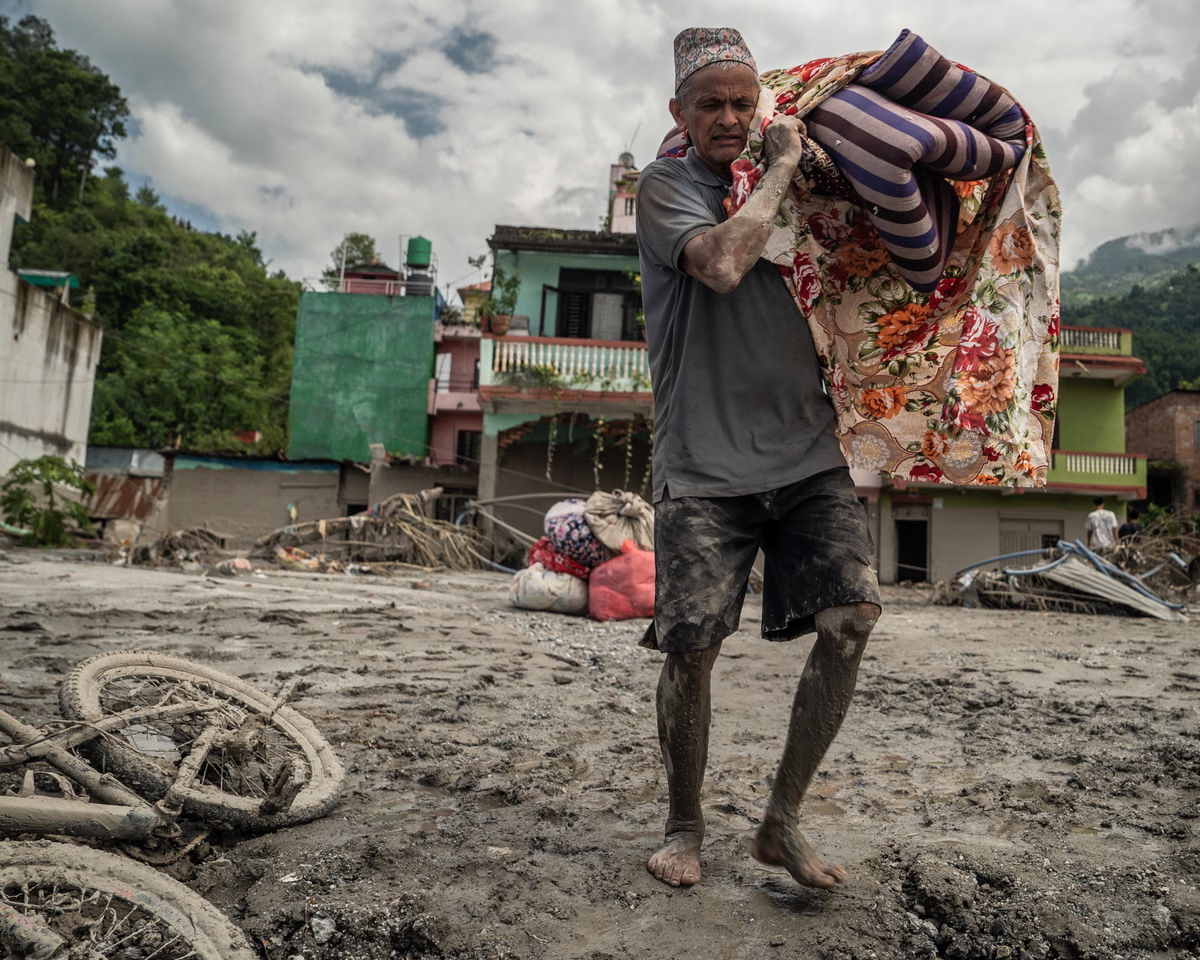
The town of Devighat on the Trishuli River remains a focal point of the recovery mission. Police Superintendent Amabadutta Bhatta noted the difficulty of the operation, stating that teams have retrieved 10 bodies from the site so far, with expectations of finding more as they clear the debris. The floods demolished the lower levels of most structures, and officials estimate that clearing the mud from the area could take several months.
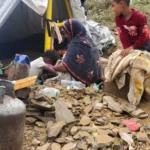
For survivors, the destruction has been absolute. Usha Nepali, 49, returned to the site of her home to find only concrete blocks and twisted metal remaining. She expressed deep uncertainty about the future, noting that she lost everything she owned and lacks the means to rebuild on land that no longer feels secure. Similarly, 36-year-old Jamuna Magar, whose family had resided in Devighat for generations, managed to save only her gold and a plastic vat of cooking oil before fleeing. She described the loss of her home and belongings as overwhelming, expressing doubt that the community could be rebuilt for decades.
The situation remains precarious for those still in the area. On Sunday, rising water levels in the Trishuli River prompted rescuers to urge residents to evacuate to higher ground immediately. Many survivors, having lost their homes and possessions, are now packing their remaining belongings and preparing to leave the region permanently. The report also notes that but the morgues have already run out of room. The report also notes that many mangled beyond recognition and turning up miles from home, authorities say they are overwhelmed with the task of trying to identify the dead. The report also notes that wrapped in a plastic bag and then placed in a shallow grave, dNA samples were taken from each body before it was given a tag and a location number. The report also notes that the hope, said the police, was that these bodies would eventually be identified by loved ones through DNA and retrieved for proper funeral rites. The report also notes that at least temporarily, in the forest on the edge of the city, many will now be buried. The report also notes that local officials have adopted a macabre approach of simply asking people to go through pictures of the bodies and look for identifying features: a necklace, a wedding ring, a tattoo, a scar, in an effort to speed up the identification exercise.