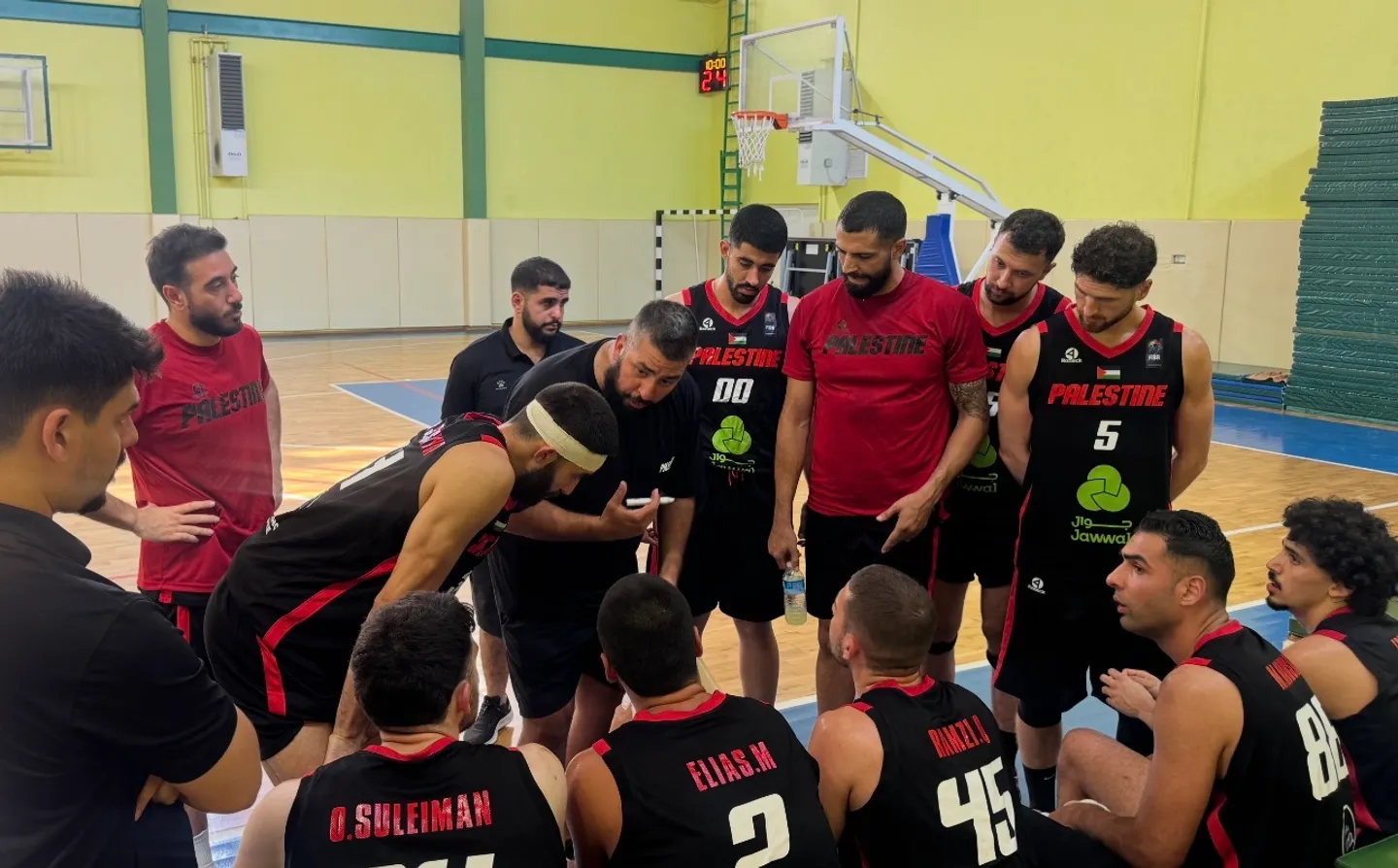









On a basketball court in Istanbul, the Palestinian national team is working through an intensive training camp, a feat that represents far more than athletic preparation. For these athletes, simply gathering in one location is a significant achievement, as the squad is fractured by the realities of war, occupation, and severe travel restrictions. The team, which is officially based in Ramallah, currently draws its roster from across the globe, including players from Europe, America, and Vietnam, alongside those residing in the occupied West Bank.
The training camp was facilitated by Türkiye’s Ministry of Youth and Sports through its Istanbul Provincial Directorate, which provided the necessary facilities for the team to prepare for the FIBA Asia Cup 2029 Pre-Qualifiers. Head coach Harry Savaya noted that the logistics of assembling the squad were immense. Some players endured journeys exceeding 12 hours just to reach Jordan before they could continue their travel to Türkiye. Savaya described the team’s experience navigating checkpoints, border controls, and significant delays as a constant struggle, noting that while the team once included players from Gaza, that is no longer possible.
The challenges facing the team extend well beyond international travel. Even within the occupied West Bank, domestic movement is heavily restricted. Players often face journeys between cities that should take an hour but can stretch to eight hours due to checkpoints. Some athletes must leave their jobs and families in Ramallah for entire weeks just to attend local practice sessions. Consequently, the time spent in Istanbul is viewed as a vital opportunity to compress months of work into a few weeks of intensive, six-hour-a-day training sessions.
Ramzi Qumsieh, a player who traveled from Bethlehem, emphasized that the team is highly motivated to succeed. With twelve teams set to progress from the opening stage to the second round, the squad is focused on reaching the main FIBA Asia Cup 2029 Qualifiers, a milestone they have not achieved in a long time. During their stay, the team also played a friendly match against Qatar on August 17, which ended in an 89-72 loss, providing the coaching staff with valuable insights into the squad’s current form.
For many players, the team serves as a surrogate family. Mohammed Mousa, who wears No. 88, carries a deeply personal connection to the ongoing conflict. He left Gaza in 2017, but his family remains there; his brother, Firas Khaled Mahmoud Mousa, was a talented basketball player who competed for Khadamat al-Maghazi and Shabab al-Maghazi. Firas was killed on November 4, 2024, during an artillery strike on the club’s premises in the Maghazi refugee camp. For Mousa, continuing to play is a way to honor his brother and the many others who have lost their lives.
The sentiment is shared by teammates like Abu Shamsiya, who wears the No. 34 jersey. He describes the team as a group of “sports ambassadors” representing Palestinians both at home and in exile. Abu Shamsiya recounted the harsh conditions of training in the West Bank, where players have experienced tear gas being fired near training facilities and the bombing of sports venues. Despite these dangers, he remains defiant, stating that the team’s existence is a message of resilience: “After everything that has happened, we are still standing and we will continue.”
Elias Marei, a 24-year-old German-Palestinian professional who plays in Germany’s ProB league, views the team as a platform to project Palestinian identity onto the world stage. While he acknowledges the importance of their role, he is quick to deflect the title of “hero” away from the players. For Marei, the true resilience is found in the daily lives of those living in the West Bank and Gaza. Nevertheless, the team remains committed to their goal, viewing their presence on the court as a voice for every young Palestinian who dreams of playing the sport. The report also notes that the ball hits the hardwood with a steady thud in an Istanbul sports hall. The report also notes that shoes squeak, coaches call out instructions, and players move through drills as a single unit. The report also notes that for a squad that spends much of the year separated, Istanbul became both a practical meeting point and a temporary home. The report also notes that 45 Ramzi Qumsieh made the journey from Bethlehem. The report also notes that we cannot travel directly from Palestine because of the borders,” he said. The report also notes that and they faced many problems on the road to Jordan, travelling here was very difficult. The report also notes that only seven players had been able to practise together, before arriving in Istanbul. The report also notes that the people, the courts and the facilities make this one of the best places for us to be.