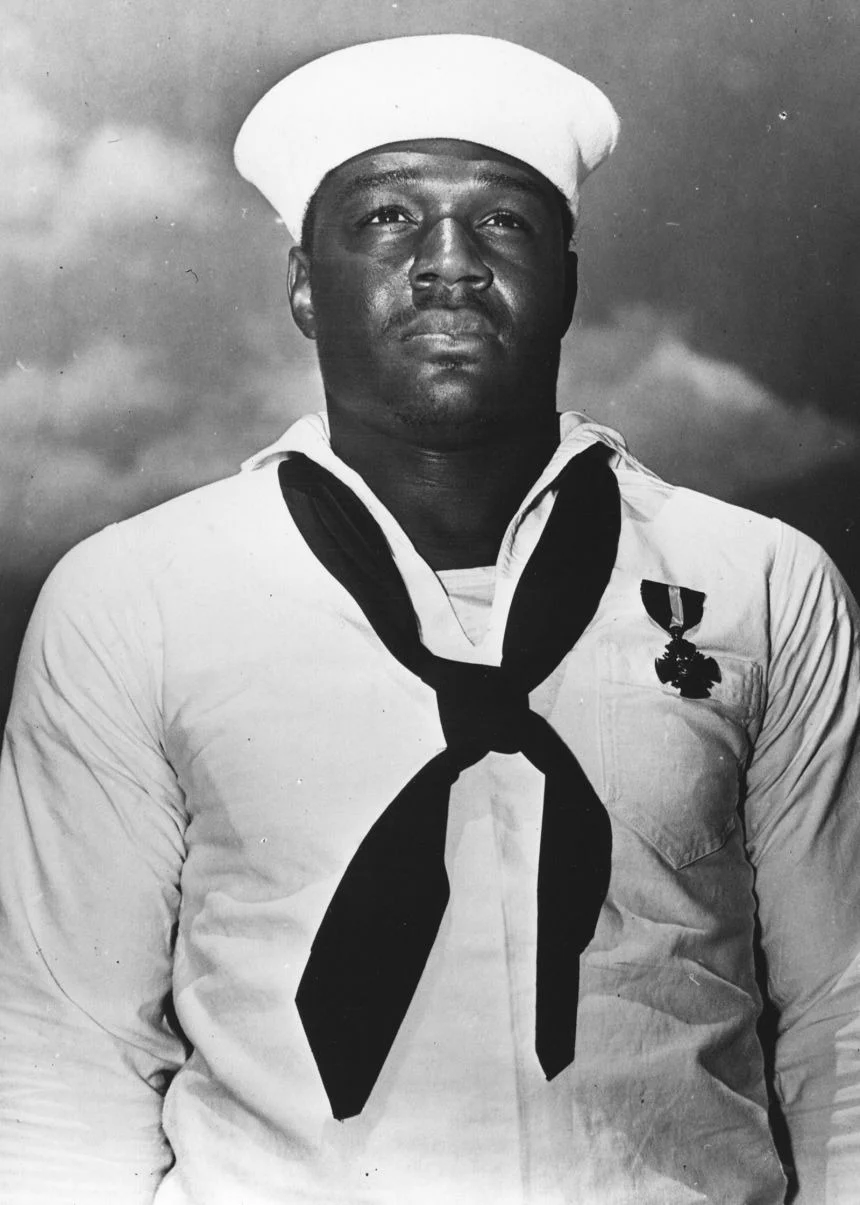







The US Navy is currently evaluating plans to rename an aircraft carrier that was previously slated to honor Doris Miller, a Black sailor celebrated for his courageous actions during the 1941 attack on Pearl Harbor. Three individuals familiar with the internal deliberations confirmed that the service is reconsidering the vessel’s name, which was initially announced during the first term of President Donald Trump.
While the Navy has not officially disclosed a new name for the carrier, sources indicated that internal conversations have included the possibility of renaming the ship after Donald Trump. Such a decision would be unprecedented, as aircraft carriers have traditionally been named for presidents, admirals, or significant naval battles. To mitigate the impact of this change, the Navy is reportedly exploring plans to honor Miller by naming a different warship after him and is simultaneously recommending him for the Medal of Honor, the military’s highest decoration for valor. The final approval for this award rests with Congress and the president.
Thomas Bledsoe, Miller’s great-nephew, stated that the family had not been notified of the potential name change or the renewed push for the Medal of Honor. While the family has been advocating for the medal for years, Bledsoe described the Navy’s current recommendation as a positive development. A Department of Defense spokesperson declined to provide a formal announcement regarding the matter.
The shift in naming policy appears to be part of a broader initiative under Defense Secretary Pete Hegseth to re-evaluate military assets. This effort has included reviewing names previously selected for diversity and inclusion purposes. In 2025, the Pentagon took the rare step of renaming the USNS Harvey Milk, which had been named for the gay rights activist and Navy veteran. Pentagon spokesman Sean Parnell noted at the time that such names are intended to reflect the commander-in-chief’s priorities and the nation’s warrior ethos.
Internally, the Navy has already ceased using the name USS Doris Miller, referring to the vessel only by its hull number, CVN-81. A recent White House executive order regarding shipbuilding also utilized this designation while directing officials to replace the ship’s electromagnetic aircraft launch system with traditional steam and hydraulic technology. The Navy faces a tight schedule to finalize the name, as the keel-laying ceremony is expected later this year, though the ship is not projected for delivery until 2034.
Doris Miller, a native of Waco, Texas, enlisted in the Navy in 1939. During the Pearl Harbor attack, while serving as a Mess Attendant Third Class—one of the few roles open to Black sailors at the time—he aided his wounded commander and operated an anti-aircraft gun despite having no formal training. He continued to assist fellow sailors until the ship began to sink. In 1942, Admiral Chester Nimitz awarded him the Navy Cross, and he later died in 1943 during the Battle of Makin.
Former Acting Secretary of the Navy Thomas Modly, who originally announced the naming of the carrier after Miller in 2020, emphasized at the time that the designation was meant to be symbolic and unifying. The current administration’s review of naming conventions follows the establishment of a commission in 2025 by former Secretary John Phelan, which sought to standardize how military assets are named. Although Phelan was removed before his review concluded, his tenure reflected a push to align ship names with specific presidential and historical criteria. The report also notes that the Navy directed questions from to the Office of the Secretary of Defense. The report also notes that the ceremony is a public event marking an important step in a ship’s construction. The report also notes that the ship is not expected to be delivered until 2034, USNI News first reported, due to shipbuilder constraints. The report also notes that “Dorie Miller was the son of a sharecropper,” Modly, a Trump nominee who had Navy leadership positions from 2017 to 2020, said at the ceremony, according to a Navy release. The report also notes that “And, he was an American sailor – so designated by the uniform that he wore — the same uniform all sailors wore, and still wear, regardless of race, ethnic background, or political persuasion.”. The report also notes that damage by Japan’s attack kept him from returning to his assigned battle station.