







Strategic Overview
- Current Status: The conflict, which the president initially declared won after a few days, is now in its sixth month.
- New Objective: A transition toward a war of economic attrition intended to collapse the Iranian economy and force capitulation.
- Diplomatic Stance: All direct communications with Tehran have been halted.
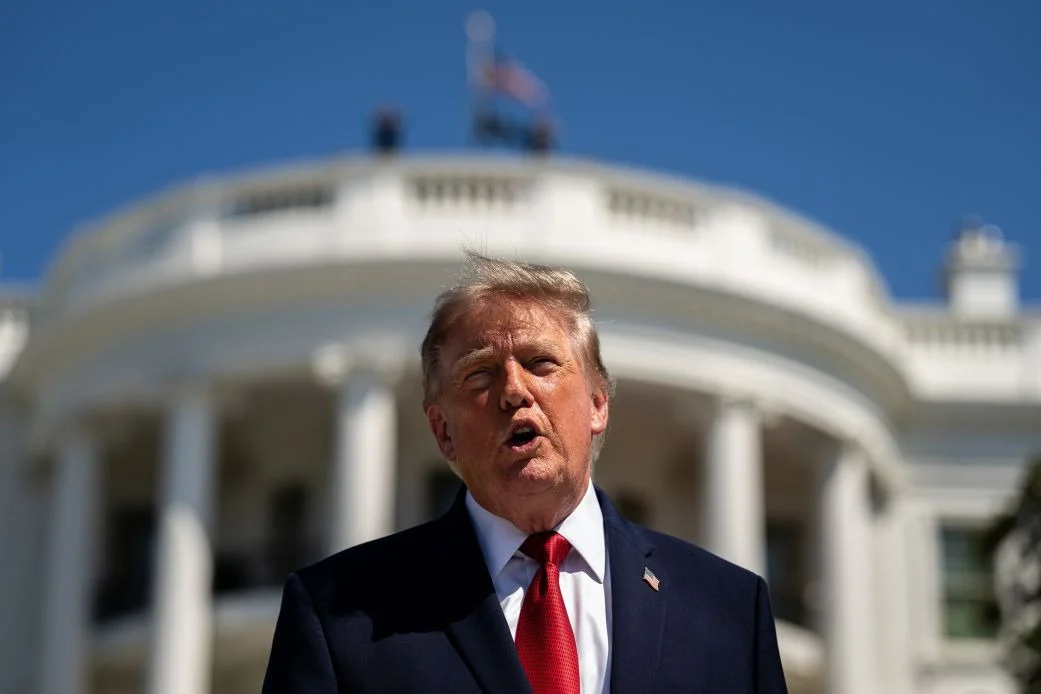
President Donald Trump has unveiled a new strategy to address the ongoing conflict with Iran, characterized by a series of aggressive, all-caps threats issued via social media. On Wednesday, the president vowed to launch what he described as “the MOST CRUSHING ECONOMIC OPERATION EVER TAKEN AGAINST ANY COUNTRY.” This pivot follows a series of failed attempts to secure a surrender through military force or nuclear negotiations, representing the latest in a long line of tactical shifts throughout the campaign.
The administration’s current approach focuses on a total economic blockade. In a subsequent post, the president warned that any entity—including financial institutions, businesses, airports, or government bodies—providing support to Iran would face severe consequences. He specifically targeted “oil smuggling, swap lines, cash transfers, exchange houses, ship registries, and front companies,” declaring that these activities must cease immediately.
Despite the administration’s confidence, many experts remain skeptical that the Iranian regime will buckle under these measures. Daniel Citrinowicz, a former head of the Iran branch in the Israel Defense Intelligence Research and Analysis Division, noted that while the economic pressure is significant, there is no indication that Tehran is altering its strategy. Citrinowicz emphasized that the Iranian calculus remains unchanged, noting that the regime has historically endured decades of intense sanctions.
The success of this new strategy may hinge on the president’s ability to maintain long-term focus, a trait often absent in his past policy shifts. Furthermore, the administration faces a complex diplomatic challenge. While the White House is relying on military power to enforce a blockade—symbolized by the president’s recent, controversial claim that the Strait of Hormuz is now US territory—a truly effective isolation of Iran would require deep cooperation from allies across the Gulf, Europe, and Asia. Current diplomatic efforts, led by Jared Kushner and Steve Witkoff, have been criticized as naive, and the president has previously alienated key partners by berating them for not joining the war effort.
Specific economic moves, such as sanctioning Chinese banks involved in Iranian oil transactions, could prove impactful. However, such a move could complicate the upcoming state visit of Chinese President Xi Jinping in September. Additionally, Tehran is expected to respond to these pressures. With the US midterm elections approaching in just over two months, Iran has a clear incentive to escalate the conflict to increase political costs for the administration, potentially mirroring the humiliation faced by President Jimmy Carter during the 1980 hostage crisis.
Democratic opposition is already mounting against the prospect of a prolonged economic war. Representative James Walkinshaw stated on Tuesday that he opposes a strategy of attrition that forces American citizens to bear the costs at the gas pump and grocery store. As the situation evolves, the administration faces the dual challenge of managing the economic fallout at home while navigating a volatile geopolitical landscape where the endgame remains unclear. The report also notes that his new approach is something of a face-saver after he failed to bomb the Islamic Republic into surrender or to coax it to nuclear talks with sweeteners in a memorandum of understanding. The report also notes that it’s the latest dizzying twist in a conflict that has spawned more tactical shifts and course reversals than it’s possible to count. The report also notes that “You know who you are,” the president added. The report also notes that known for inflicting intense repression and economic duress on civilians, will back down in its existential struggle with the US, many analysts are skeptical that the revolutionary regime in Tehran. The report also notes that he must first change his own behavior. The report also notes that destroying Iran’s economy would take months or even years. The report also notes that it would call for the kind of strategic patience that Trump almost never shows.
Important Details
- The report also notes that as usual, have to wait to see whether he folds when the political costs pile up, but the world will.