









As Florida prepares to transition away from the administration of term-limited Governor Ron DeSantis, the state’s primary elections on Tuesday highlighted shifting political dynamics within both major parties. Republicans nominated a close ally of former President Donald Trump, while Democrats selected a candidate who previously switched parties due to his opposition to the former president. David Jolly, who left the Republican Party in 2018 and officially registered as a Democrat last year, framed his victory as the start of a new political coalition in Florida. “There is a new coalition emerging in American politics tonight, and it’s starting right here in the state of Florida,” Jolly told supporters at his victory party.
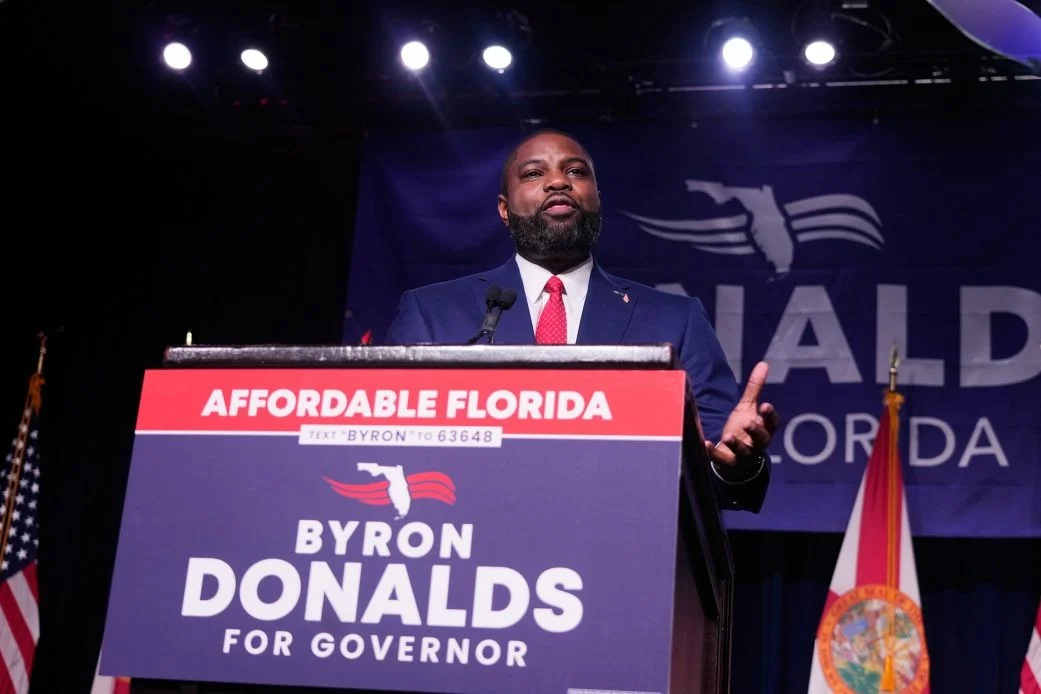
Despite the win, the Republican nominee faced questions regarding his performance, as he appeared on track to finish below the 50% threshold despite over a year of campaigning with Trump’s endorsement and the backing of the state GOP establishment. One Republican fundraiser noted that the campaign needs to analyze why he failed to eclipse the 50% mark, admitting that the result was somewhat surprising. While Florida is no longer the swing state it once was, the nominee enters the general election with significant advantages, including more than $100 million raised during the primary and a base of 1.5 million more registered Republicans than Democrats. He credited Senator Rick Scott for building a strong foundation in the state, declaring, “We put aside our differences tonight. We are one united Republican Party.”
The influence of Trump’s endorsements remained a central theme, though the results were mixed. While some candidates secured easy victories, such as Representative Andy Biggs in Arizona who won his GOP nomination with 74% of the vote, other Trump-backed candidates faltered. In Wyoming, voters rejected the Trump-endorsed state Superintendent of Public Instruction, Megan Degenfelder, in favor of state Senator Eric Barlow. Meanwhile, in Florida, Representative Cory Mills—who had been endorsed by Trump in February—lost his seat to a challenger. Trump later claimed on Truth Social that he had urged Mills to drop out of the race prior to the primary.
Mills’ defeat comes amid an ongoing House Ethics Committee investigation into potential campaign finance violations and accusations that he misused millions in pandemic relief funds to bolster his 2021 campaign. In the same district, former Republican members of Congress from other states attempted to make a political comeback but fell short. The loss of the incumbent seat means the district will likely not be represented by a Black lawmaker in Congress next year, marking the first time this has occurred in over three decades. The incoming nominee emphasized the importance of this representation, stating, “It matters and I will fight to make sure that representation counts again.”
On the Democratic side, state Representative Angie Nixon secured a surprise victory in the Senate primary, defeating retired Army Lieutenant Colonel Alex Vindman. Although Vindman significantly outspent Nixon, the race highlighted growing frustration within the Democratic electorate regarding the war in Gaza. Nixon, who recently joined the Democratic Socialists of America, emphasized her focus on the needs of everyday people, such as expanding early childhood education and addressing price gouging. Despite her win, political analysts suggest her positions may prove challenging in a general election in a state that has trended toward the right.
In Alaska, voters participated in a primary to determine the four candidates who will advance to the general election. Incumbent Republican Senator Dan Sullivan and Democratic former Representative Mary Peltola were widely expected to secure spots. A unique situation emerged regarding the Republican ballot, where a second candidate named Dan Sullivan—a former teacher—remained in the race despite efforts by the incumbent’s camp to remove him. While the incumbent is listed as Dan S. Sullivan, the presence of a candidate with the same name could potentially impact the final tally in the general election.
The primary results across these states underscore a complex political landscape. From the scrutiny of Trump’s endorsement power to the rise of progressive candidates in local races and the unusual ballot quirks in Alaska, the outcomes provide a clear look at the priorities of voters heading into the final months of the campaign season. As parties consolidate their positions, the focus now shifts to the general election, where fundraising advantages and candidate platforms will be tested against broader electorates. The report also notes that “We were all a bit surprised he didn’t get there,” the fundraiser said. The report also notes that andy Biggs, another Trump-backed MAGA stalwart, sailed to the GOP nomination for Arizona governor with about 74% of the vote. The report also notes that “It’s going to be more of a race, at least at the start, then most people wanted to believe a few months ago,” another longtime GOP operative in the state said not longer after the confetti fell at Donalds’ election watc. The report also notes that running for the first time in newly redrawn districts, survived challenges from the left, but two of the party’s House incumbents. The report also notes that across the country, Decision Desk projects that GOP Sen. The report also notes that which could be a benefit to Democrats as they look to flip the seat, the question remains whether a second Dan Sullivan will also make November’s ballot. The report also notes that here are key takeaways from Tuesday’s primaries in Florida, Alaska, and Wyoming – on a day where voters in California were also choosing between two Democrats to fill a vacancy in the House. The report also notes that decision Desk projected that Republicans chose Rep.