







Prime Minister Andy Burnham has described the death of former Cambridge professor Jason Arday as “a tragedy on so many levels,” as he called for a “moment for reflection.” Speaking to broadcasters during a visit to Cornwall, the Prime Minister urged the public to consider the circumstances surrounding the event rather than rushing to judgment. Arday, 41, was found dead at an address in Battersea, south London, on Friday afternoon.
In a formal statement issued by his publisher, Simon & Schuster UK, Arday’s family expressed they were “in shock to have lost this amazing father, partner, brother, uncle and son.” They stated that a “campaign of misinformation” had been too much for him to bear. Arday had resigned from his position as a Cambridge professor of sociology of education last week following allegations of plagiarism and questions regarding his academic achievements, all of which he had consistently denied.
A close friend of the late academic told the that Arday had described feeling “destroyed” by the recent events. He had also shared that his authorization to travel to the United States had been revoked. Eamonn McCrystal, who became friends with Arday during their time at St Mary’s University, Twickenham, attempted to reassure him that the situation would pass, but Arday replied, “it does not feel like it will.”
McCrystal shared his personal memories of the professor with the, stating, “He was the nicest person. So kind and such a gentle soul.” He added, “We shared an office at university, when I set up the student radio station, and he used to speak on the station a lot.” Reflecting on the news, McCrystal said, “I’m in shock, I can’t believe it.”
The University of Cambridge vice-chancellor, Prof Deborah Prentice, led tributes from the institution, saying the faculty was “desperately saddened” by the news. “Our heartfelt sympathies go to Jason Arday’s family and friends at this incredibly difficult time,” she added. Education Secretary Lucy Powell also expressed that she was “deeply shocked and saddened” and urged the public to remember that there are real people behind the headlines.
Mayor of London Sir Sadiq Khan stated that Arday had been subjected to unrelenting media scrutiny. He noted that the academic had faced “an unacceptable public hounding and campaign of abuse” and was the victim of “a pernicious public shaming.” Khan posted on X, “His death was a tragedy, but once again it should be a wake up call for all of us.” Jo Grady, general secretary of the University and College Union, remarked that the “level of harassment he suffered and the racism he was subjected to is a stain on our sector.”
Lord Paul Boateng, who became the UK’s first black cabinet minister in 2002, said Newsnight he was “horrified, shocked and deeply saddened” by the loss. “Racism in academia is a fact of life and needs to be addressed,” he added in a written statement. Similarly, National Education Union general secretary Daniel Kebede stated on Saturday that Arday had been subjected to “a campaign of hate.” He warned, “The effect has been chilling. It tells black people and others from underrepresented backgrounds that entering prominent public life comes with a cost that is too high to pay.”
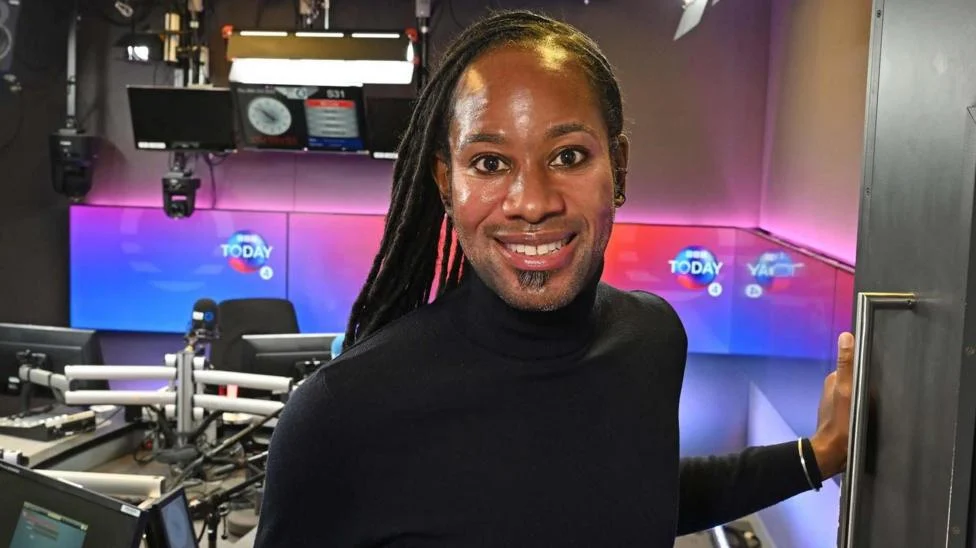
Prof Simon Baron-Cohen, director of the Autism Research Centre at the University of Cambridge, told the Today programme that Arday had been “an incredibly kind and gentle and caring man.” He revealed he had spoken to Arday on the morning of his death, noting that the academic had felt unable to leave his house. “He has experienced what he described as a campaign against him, for the last three years,” Baron-Cohen said. “What he was saying to me was ‘they’ve destroyed my life’—it’s not clear who they were but I think he was referring to the media. The personal attacks on him have been so immense.”
Professor of Black Studies Kehinde Andrews, a friend of Arday, said Newsnight that the academic was “very down” following the recent controversy. “He was very upset. He felt that there was no way out. He effectively wasn’t leaving the house. He had lost a lot of weight,” Andrews said. He added, “There should be a wake-up call to just how bad black academics actually have it in academia.”
Labour MP Bell Ribeiro-Addy also addressed the programme, stating, “The idea that an academic would be dragged through this amount of media scrutiny is just completely unacceptable.” Shadow communities secretary Sir James Cleverly expressed his anger regarding the “tragic” death, suggesting that “a number of people at a number of institutions” should reflect on their roles in the situation.
Arday had previously denied allegations of plagiarism, though he admitted to errors in his work. He had stated that the recent controversy led to “an unrelenting level of scrutiny.” The row had first erupted after another academic raised concerns about his past research. Despite this, Liverpool John Moores University, which awarded Arday his PhD in 2015, conducted a review and concluded that he had not plagiarized work. In a statement on Saturday, a spokesperson for the university said it was “saddened to hear of the tragic loss of Professor Jason Arday.”
The loss of Professor Arday has prompted widespread calls for an examination of how academia treats its scholars, particularly those from minority backgrounds. As the academic community mourns, the focus remains on the immense pressure placed on individuals in the public eye and the potential consequences of sustained, high-profile criticism. The investigation into the circumstances of his death continues as friends and colleagues honor his legacy as a dedicated educator and a kind individual.
The row first erupted after another academic – self-defined “race realist” Nathan Cofnas, who was sacked from his Cambridge role in 2024 – said he found numerous instances of plagiarism in the professor’s work.
Arday said some errors in his early academic work arose because of his autism, as he relied on using mimicry to make sense of information.
Questions were also raised about parts of his life story, including that he ran 600 miles in six days and that he had raised £5.5m for charity.
He later said the run was actually completed over a 12-day period to allow for rest days – and that the huge sum was raised with the help of others.
Arday’s appointment as Cambridge’s youngest ever black professor at the age of 37 in 2023 was hailed at the time.
He said: “While criticism is an inevitable part of academic life, what I have experienced has gone far beyond scholarly disagreement.
“The relentless accusations, speculation and public commentary have taken a profound toll on me and on those I love.”
He stressed that his resignation should not “be mistaken for an acceptance of the narratives that have surrounded me”.
Jason Arday speaks with former tutor in 2023