





By the time President Donald Trump walked onstage at the end of last month’s NATO summit in Turkey, the plan to spirit him out of the country was already in motion. Earlier that day, American officials had presented the president with alarming information. The Iranians had tracked his movements with precision, knowing which luxury hotel he occupied and, crucially, they were aware of how his motorcade was moving around the Turkish capital. The level of detail Iran had been able to ascertain about Trump’s arrangements alarmed his team, even though some American officials thought it implausible an Iranian plot to kill him could be successful at the highly fortified NATO summit.
The Israeli government had shared the intelligence of the potential Iranian assassination plot with the CIA, one of the officials said. However, the agency, as well as some other Trump officials, viewed the Israeli intelligence skeptically. Some within the CIA had raised questions about the credibility of the intelligence, as well as whether Iran even had such capabilities to carry through such an attack, the official told. Still, the disclosures led to a dramatically heightened state of alert among American officials, according to US officials and others familiar with what happened at the summit.
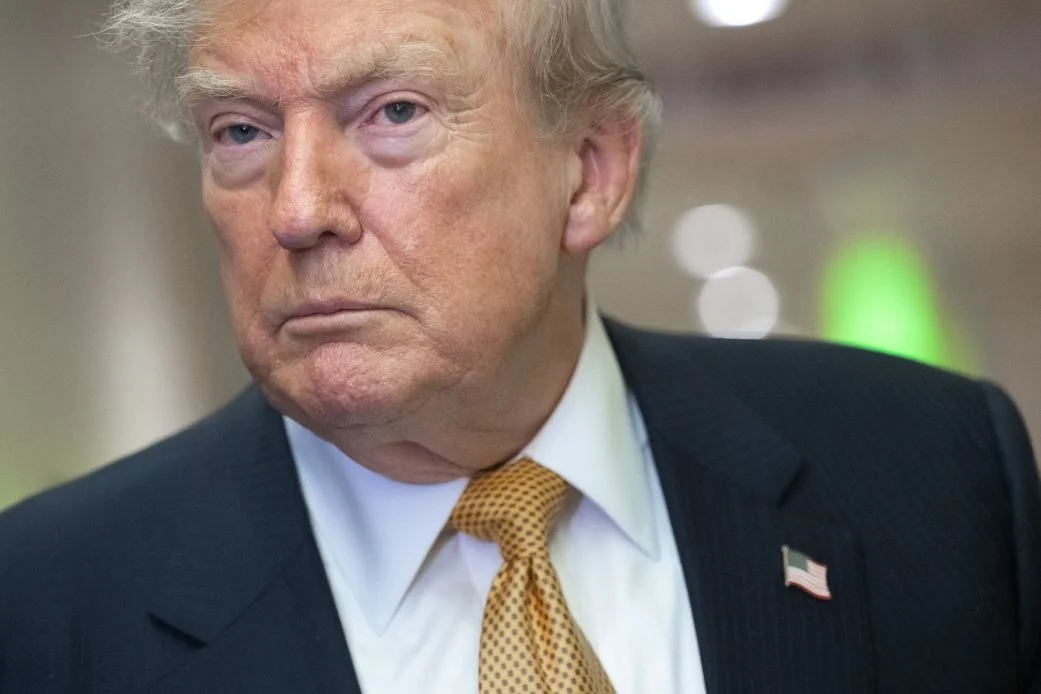
And so with a solemn face and clutching a binder in his left hand, Trump emerged two hours late to his press conference to declare the proceedings a success. “The life of a president is very dangerous,” he offered, flanked by three Cabinet members and some senior staff. “It’s a very dangerous profession.” Trump left the stage a few minutes later. Four minutes after his motorcade pulled away from the presidential complex, headed toward Ankara’s airport, the evacuation plan reached its critical phase.
Devising a way for the president to leave the country safely had become the preoccupation of a small group of senior officials, who spent the morning and afternoon in Turkey assessing their options and updating Trump as he moved between meetings with world leaders. Time did not allow for lengthy deliberation. Trump was scheduled to leave Turkey on the evening of July 8, only hours after details of the specific threat came to light. In small rooms inside the ornate, heavily fortified Beştepe Presidential Complex, Gen. Dan Caine, the Joint Chiefs chairman who had arrived in Turkey ahead of Trump, marshaled other top officials in coming up with a plan with the Secret Service.
Officials were weighing a number of factors, including the nature of the threat itself. As the summit got underway, more information came to light from US intelligence centered around the potential threat to Air Force One from a shoulder-mounted missile. To some officials, that sounded like a stretch. Security at the NATO summit was extraordinarily tight, with tens of thousands of Turkish security forces and police officers descending on Ankara. It is not clear where precisely the information about the shoulder-fired missile was derived from, but the Secret Service determined in the short timeframe they had that the potential risk — however uncertain — was worthy of taking extreme precautions.
“The threat was serious enough that extreme measures needed to be taken that day,” a US official told. “We wouldn’t have taken those steps otherwise.” The plan involved a diversionary tactic. Once the group had been loaded in, a Secret Service agent in a suit rode in the cab next to the driver for the 162-second drive across the tarmac to the smaller C-32A plane. Defense Secretary Pete Hegseth also joined Trump onboard the C-32A for the flight to Mildenhall airbase in Britain. They were told to keep their window shades down, and the aircraft departed under strict secrecy.
Former Secret Service agent and contributor Jonathan Wackrow said it is not uncommon for the Secret Service to play a three-card monte-esque game when the president travels. “If you think about every time he gets on a helicopter in Washington, DC, there are three identical helicopters that shell game constantly,” Wackrow said. Yet there was at least one indication American officials believed both jets faced potential peril, and the intensity of the operation reflected the gravity of the intelligence received. While the threat was never realized, the scramble to protect the president underscored the volatile nature of the security environment during the high-stakes summit. The report also notes that some officials believed it could be an attempt to influence Trump’s decision-making, with the war against Iran then at an inflection point. The report also notes that instead, officials described a steady drumbeat of chatter about various Iranian actors calling for Trump’s death. The report also notes that where leaders from all 32 NATO members were arriving and departing, multiple layers of security surrounded both the summit site and the airport. The report also notes that along with three separate assassination attempts in the United States, have long created an uneasy atmosphere for his team, iran’s threats on Trump’s life. The report also notes that but the information was vague, israel had first alerted the US to a new Iranian plot to assassinate Trump using its proxies. The report also notes that the desire to target Trump was not limited to Iran’s leadership. The report also notes that held the weekend before the NATO summit, mourners held signs calling on Iran to kill Trump, at the days-long funeral for Ayatollah Ali Khamenei. The report also notes that including meeting with the leaders of Ukraine and Syria before convening his press conference, and Trump maintained his schedule.