
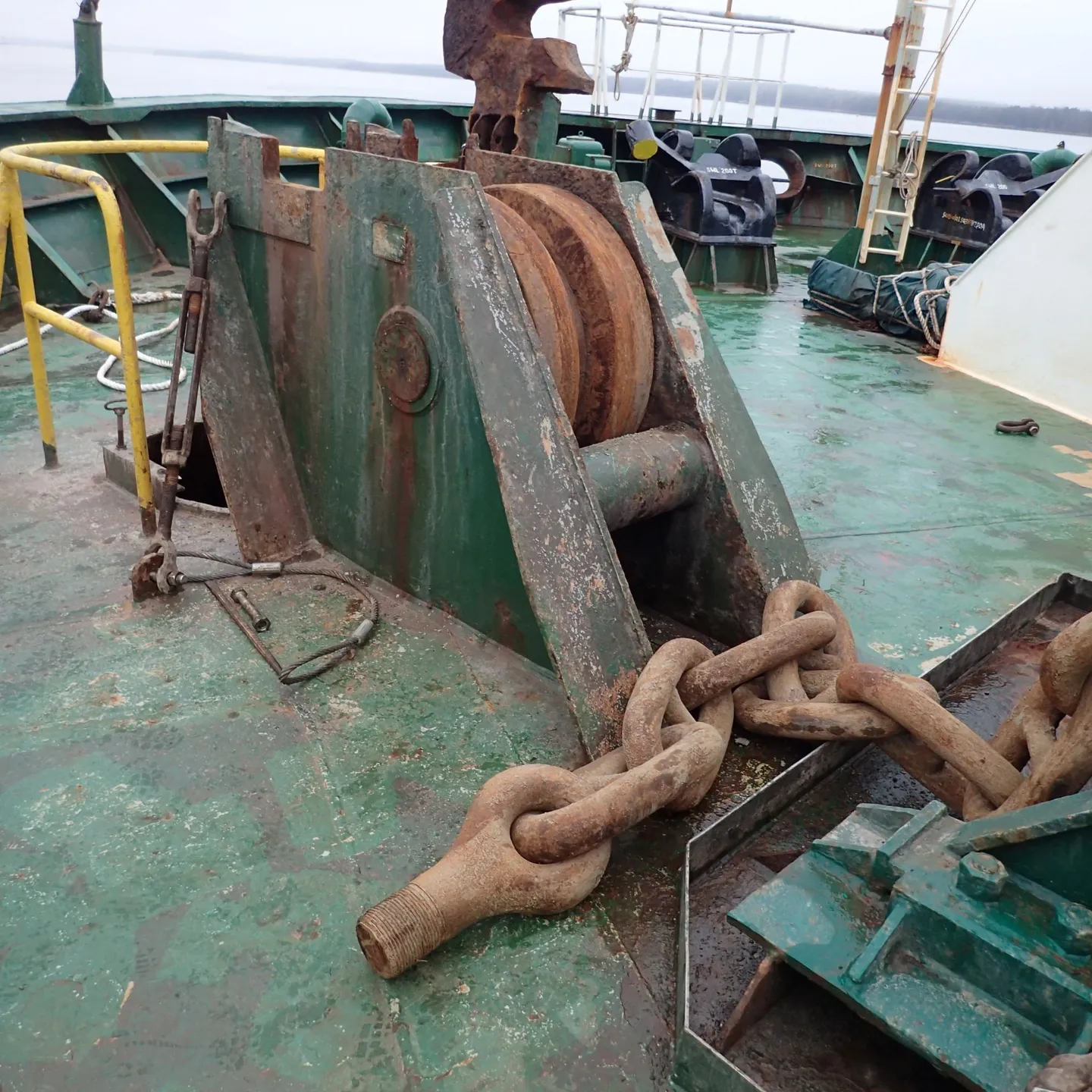





On December 25, 2024, Finnish special forces conducted a high-stakes operation, helicoptering onto the oil tanker Eagle S in the Gulf of Finland. The intervention was ordered directly by Finnish Prime Minister Petteri Orpo, who interrupted his Christmas holiday to oversee the response. The vessel had spent six hours dragging its anchor across the Baltic Sea floor for 100 kilometres, resulting in the severance of a powerline and three critical fibre-optic cables. This incident immediately captured international attention, with European officials labeling the ship part of Russia’s “shadow fleet”—a collection of vessels allegedly used to circumvent sanctions on Russian energy exports. The narrative quickly escalated, with accusations that Moscow was engaging in “hybrid warfare” by using cargo ships to deliberately target vital undersea infrastructure.
The captain of the Eagle S maintained that the anchor had come loose accidentally, a claim that faced significant skepticism. Finnish Coast Guard Commander Mikko Simola, speaking on CBS’s 60 Minutes, expressed disbelief that a captain could remain unaware of a deployed anchor for such an extended period. Despite the intense political scrutiny and the high-profile nature of the accusations, the legal outcome told a different story. A Finnish court eventually dismissed all charges of sabotage against the ship’s owner and the crew, which consisted of Georgian and Indian nationals, finding insufficient evidence of malicious intent.
This incident is part of a broader trend where routine maritime accidents are increasingly viewed through a lens of geopolitical suspicion. Since the onset of the Russia-Ukraine war in 2022 and the subsequent destruction of the Nord Stream gas pipelines in the Baltic Sea, officials have frequently cited recurring cable damage as evidence of a deteriorating security environment. However, industry data suggests a disconnect between this political narrative and the technical reality of subsea operations. According to the International Cable Protection Committee (ICPC), approximately four cables are damaged every week globally, almost exclusively due to human error and accidental maritime activity.
Industry experts emphasize that the threat of deliberate sabotage is largely overstated. Julian Rawle, a veteran fibre-optic cable consultant, notes that he does not recall any documented incident where the physical network was deliberately attacked. “It’s more of a hype,” Rawle told, describing the current atmosphere as one of hysteria. He argues that observers often fail to grasp the resilience of the network, which is designed to automatically reroute traffic when a connection is severed. The industry, which previously struggled to gain government attention regarding cable protection, now faces the opposite problem: the risk of government overreach driven by unfounded security concerns.
The technical evidence consistently points to mundane causes rather than state-sponsored malice. In November 2025, Tim Stronge, Chief Research Officer at TeleGeography, testified before the US House of Representatives Committee, stating that cable networks experience roughly 200 faults annually. He emphasized that the vast majority of these incidents are accidental. Similarly, Peter Jamieson, Vice Chair of the European Subsea Cable Association (ESCA), informed the UK Parliament that there is no publicly available evidence to suggest that Russia or any other actor is deliberately targeting these cables. The industry bodies maintain that fishing boats and cargo vessels remain the primary threats to subsea infrastructure.
Fishing, particularly bottom or demersal trawling, is identified by the ICPC as the single largest cause of submarine cable faults. These operations involve heavy nets designed to scrape the seafloor, frequently snagging and damaging cables in the process. The second most common cause is the dragging of anchors by cargo ships, which can cause significant damage when vessels fail to secure their equipment properly. These risks are concentrated in coastal areas, as approximately 98 percent of damaged cables are located within 200 nautical miles of the shore, where maritime traffic is densest and fishing activity is most intense.
Despite these clear patterns, security hawks continue to promote the idea of deliberate sabotage, influencing think tanks and media discourse. The fear reached such a level that the ESCA felt compelled to issue a statement on LinkedIn, reminding stakeholders of the statistical reality of cable faults. While governments are increasingly concerned about the security of the hundreds of subsea oil, gas, and electricity interconnectors, the focus on deliberate attacks ignores the structural vulnerabilities of the global internet. Almost all international traffic relies on these fibre-optic cables, which are roughly the size of a garden hose and inherently susceptible to damage in high-traffic maritime corridors.
The heightened anxiety is further fueled by the rapid expansion of AI applications and the growing threat of cyber warfare, leading to fears that a bad actor could cripple global communications. However, Rawle points out that if someone were truly intent on causing damage, they would likely target the more vulnerable fibre-optic infrastructure located on the seashore or in shallow waters rather than deep-sea segments. Furthermore, most developed nations maintain robust connectivity, with internet traffic routed through multiple redundant cables that allow for seamless data transfer even if one or more connections are severed.
The geopolitical focus on the “shadow fleet” also overlooks the operational realities of the shipping industry. Many of the Russian oil tankers involved in these incidents are aging vessels, which are statistically more prone to mechanical failures and accidents. The intersection of old, poorly maintained equipment and the high-density shipping lanes of the Baltic Sea creates a recipe for frequent, non-malicious accidents. By framing these events as acts of hybrid warfare, politicians may be misdirecting resources away from necessary regulatory improvements and toward reactive, militarized responses that do little to address the actual causes of cable damage.
The transition from a period of government neglect to one of intense scrutiny has created a complex environment for the subsea cable industry. For years, companies complained that governments were not paying enough attention to the regulatory regimes required to protect these assets. Now, the industry is concerned that the pendulum has swung too far in the other direction. The focus on “shadow fleets” and “hybrid warfare” risks creating a climate where legitimate maritime accidents are treated as national security crises, potentially complicating the legal and operational frameworks that govern international waters.
Ultimately, the resilience of the global internet infrastructure is a testament to the industry’s ability to manage the constant, low-level threat of accidental damage. While the security of these cables is undeniably important, the evidence suggests that the threat is not a coordinated campaign of sabotage, but rather the cumulative effect of global maritime activity. As long as fishing and shipping remain the dominant forces on the seafloor, the primary challenge for cable operators will remain the mitigation of accidents rather than the defense against state-sponsored attacks.
Moving forward, experts suggest that a more nuanced approach is required—one that balances legitimate security concerns with the technical realities of subsea infrastructure. By focusing on better maritime awareness, improved navigational standards, and more robust regulatory frameworks for cable protection, governments could address the real risks to the network without succumbing to the hype of deliberate sabotage. The incident involving the Eagle S serves as a reminder that while the geopolitical stakes are high, the actual threats to the world’s digital backbone remain largely grounded in the everyday hazards of the sea.
In its March 2021 report, ICPC attributed nearly 41 percent of cable damage to fishermen.
Between late 2023 and early 2025, a series of incidents involving Russia’s “shadow fleet” and Chinese vessels in the Baltic Sea set alarm bells ringing in Brussels and other European capitals, where concerns over the pro
The fear of deliberate cable sabotage reached such a height that the ESCA had to issue a statement on LinkedIn, reminding lawmakers that only four anchor-drag accidents were recorded in the Baltic Sea between 2023 and 2
People don’t seem to understand that we can switch traffic from one cable to another quickly.”
This hasn’t stopped security hawks from bringing up the spectre of cables being attacked deliberately in news articles, think tank analysis and parliamentary discussions.
Fishermen rely on bottom trawling, called demersal trawling, to scoop shellfish from the seafloor with the type of heavy nets that have metal doors.
Between late 2023 and early 2025, a series of incidents involving Russia’s “shadow fleet” and Chinese vessels in the Baltic Sea set alarm bells ringing in Brussels and other European capitals, where concerns over the prolonged war in Ukraine were already running high.
The fear of deliberate cable sabotage reached such a height that the ESCA had to issue a statement on LinkedIn, reminding lawmakers that only four anchor-drag accidents were recorded in the Baltic Sea between 2023 and 2025, compared with seven in UK waters between 2007 and 2009.
While there are hundreds of subsea oil and gas pipelines and electricity cables known as interconnectors, governments are focused on the security and safety of 596 fibre optic cables that crisscross ocean floors.
Whether it’s a post you see on Instagram or the $12 trillion that central banks move each day, all online activity depends on these cables.
The average age of tankers used to transport Russian oil i ncreased from 15.4 years in 2020 to 29.3 years in January 2024.
Since the first transoceanic fibre optic cable, TAT-8, was built between the US, UK and France in 1988, humans have intentionally, or due to negligence, damaged the cables in many different ways.
Organised attack was not one of them.
In the 1990s, Rene van Kessel worked at Van Oord Offshore, a Netherlands-based marine contractor, which built rock installations to protect undersea cables, power lines and oil pipes.
At the time, fishing boat-related accidents were damaging so many cables and pipes that Kessel would joke with his bosses that they could rent a fishing boat, drag it over the cables, sever them and then do rock installation work for a profit.
He and many others like him have watched with concern as the issue of protecting cables from fishing boats has gradually turned into a matter of national security.
Late last year, the Russian research vessel Yantar, tracked by the Royal Navy near UK waters, caused an uproar in London.
British officials, including then defence secretary John Healey, were concerned that Yantar was a spy ship sent to map undersea cables, leaving the country’s internet access vulnerable.