

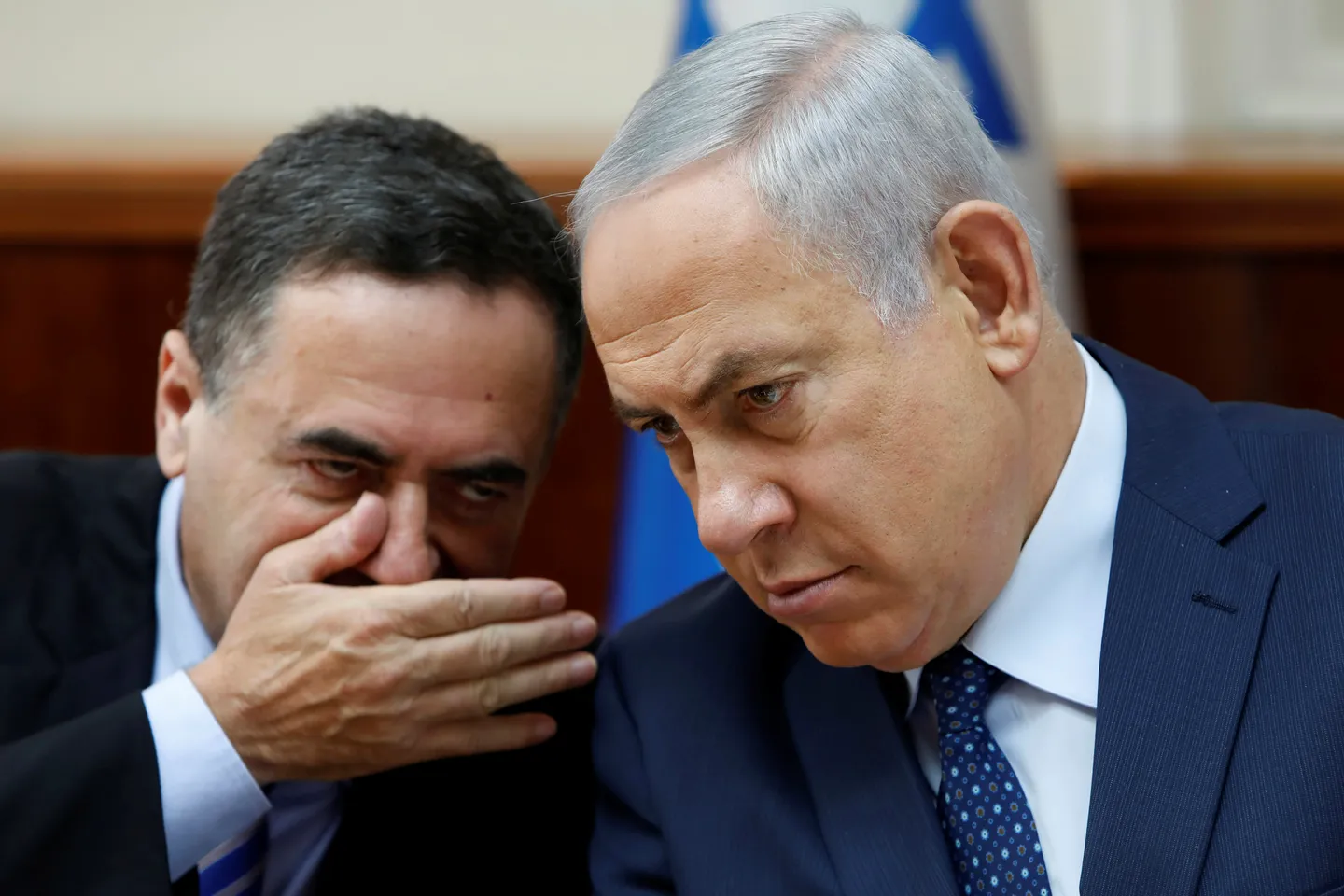








Israeli Defence Minister Israel Katz announced on live TV on Sunday that he was replacing Major General Avi Bluth, the army’s top general in the occupied West Bank. The minister also declared his intention to appoint Major General Dado Bar Kalifa to the key military post, a move that immediately ignited a firestorm within the nation’s security establishment.
The Israeli army took no time in publicly rejecting the decision announced by the defence minister on live TV. It stated that Katz lacked the unilateral authority to dismiss a senior general, as Chief of Staff Lieutenant General Eyal Zamir had not been consulted on the matter. The military confirmed that not only would Bluth remain in place, but also that no new senior appointments would be made until early 2027.
At the centre of the controversy is Tal Yinon Dardik, an Israeli settler involved in a March attack in the Palestinian village of Khirbet Humsa. The conflict arose because Katz did not want the administrative restraining order against Dardik renewed. However, Bluth acted differently, choosing to pursue the legal measure, which effectively bruised Katz’s ego and led to the public confrontation.
Katz framed the independent act by the general as defiance of government policy. Analysts suggest the minister’s primary motivation was to demonstrate that he held the “upper hand over Zamir,” a dynamic that has been building for some time as the minister seeks to consolidate his influence over the military hierarchy.
Nimrod Goren, president and founder of the Israeli Institute for Regional Foreign Policies (Mitvim), tells that the conduct of the defence minister is “unprecedented.” He says Katz pulled the “stunt” to improve his popularity within Likud—the ruling party of Prime Minister Benjamin Netanyahu—in the run-up to the primaries, an internal process that determines which candidates will contest the upcoming general election.
“This is unacceptable to the majority of Israelis who… do not want the army to be politicised or manipulated for intra-party gains,” Goren says. He notes that while the military enjoys the “highest levels of public trust” among Israeli citizens, the minister’s actions serve as a stark reminder of the growing friction between political leadership and the security establishment.
The public sparring fits a historical pattern of friction between governments led by Netanyahu, Israel’s longest-serving prime minister, and the military leadership. Differences between the military and Netanyahu were “almost always present,” says Goren. Historically, Netanyahu tends to perceive the military’s senior officials as potential rivals and seeks to undermine them, a trend that became evident as early as his first term in the late 1990s.
Security officials have often criticised Netanyahu’s decision-making process and his preference for political considerations over national security. Israel’s security establishment tried to warn Netanyahu about the possibility of surprise attacks, while he was busy with his so-called judicial overhaul before October 7, 2023. This context helps explain the recent confrontation, even though the intensity of the clash was highly unusual.
Tensions intensified after the Hamas blitz as Netanyahu quickly distanced himself from the security failure, while blaming military officials, Goren notes. Disagreements between the government and the security establishment also arose over opportunities to stop the Gaza war and secure a swift return of hostages. There was also a sense that Netanyahu seeks to prolong warfare for political reasons, in contrast to the position of security experts.
Historical tensions between governments and the military existed, but they were mostly legitimate differences on national security and were handled behind closed doors, Goren explains. The recent Katz-Zamir incident relates to a governmental attempt to restrain military actions against settler violence in the occupied West Bank, marking a shift toward more public and aggressive political interference.
Israel is a national-security state with a conscription-based army. The military enjoys a disproportionate role in everyday life, with security issues dominating the national discourse. In 2024, the Israeli army chief expressed dissatisfaction with Netanyahu’s war policy and publicly criticised him for his management of the conflict.
Trust in Netanyahu’s leadership has taken a serious hit since the judicial overhaul attempt in 2023 and throughout the Gaza war. As the political landscape remains volatile, the rift between the government and the military continues to widen, raising concerns about the stability of Israel’s democratic institutions and the future of its security apparatus.
More recently, hundreds of former generals urged US President Donald Trump to stop Netanyahu from igniting a “third intifada in the West Bank” in order to remain in power.
Yair Amitai, a postdoctoral fellow at the Institute for Liberty and Responsibility at Reichman University in Tel Aviv, says the Israeli army has always been “unusually large and influential” relative to the size of the s
Three of them – Yitzhak Rabin, Ehud Barak, and Ariel Sharon – even rose to become Israel’s prime ministers.
Yair Amitai, a postdoctoral fellow at the Institute for Liberty and Responsibility at Reichman University in Tel Aviv, says the Israeli army has always been “unusually large and influential” relative to the size of the state.
Many Israeli generals have joined politics in the past.
In recent decades, however, the military’s relative influence has gradually declined as the economy expanded and power alternated between the left and the right, he says.
But the composition of the senior officer corps has gradually changed, with more commanders emerging from the political right, particularly the religious Zionist community – some of whose members are settlers in the occupied West Bank.
In Likud’s primary elections, candidates compete for the support of party members who generally hold more hawkish positions than the broader Israeli electorate, Amitai notes.
Katz later tried to walk back the impression that he had summarily dismissed Bluth, insisting the general was performing well and that no disagreement existed.
But the initial live announcement, a lack of coordination with the military chief, and the subsequent freeze on key appointments leave little doubt about the depth of the civil-military divide in Israel.
Recent pre-election public polls also show that more Israelis see former military chief of staff Gadi Eisenkot as a better candidate than Netanyahu for premiership.