


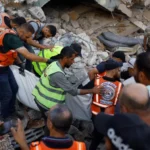




A series of Houthi attacks in recent weeks, which are among the deadliest in years, is raising fears that Yemen could be on the brink of a return to full-scale conflict. The fragile stability that has characterized the region since the 2022 truce is rapidly deteriorating, as both the Houthi movement and the Saudi-backed Yemeni government ramp up military posturing.
A 2022 truce led to the end of heavy fighting between the pro-Iranian Houthis and Saudi-backed Yemeni government forces, which had been ongoing since September 2014. Although the intensity of the war declined significantly after that agreement, no comprehensive peace settlement followed, leaving the country in a state of uneasy stalemate.
The Houthis seized the capital Sanaa in 2014 and have since fought a war with the government for control of the country. This fragile status quo came under increasing pressure after the United States and Israel launched their war against Iran on February 28, which fundamentally altered the regional security architecture and emboldened various proxy actors.
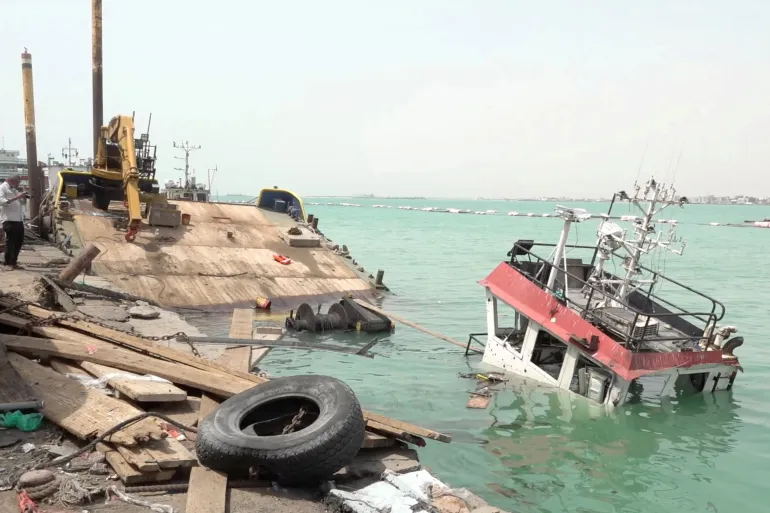
The Houthis have killed a number of civilians in a series of attacks on the government-controlled west coast port of al-Makha, also known as Mocha. These strikes have targeted civilian infrastructure, signaling a shift toward more aggressive tactics that directly threaten the safety of non-combatants in government-held territories.
There was also an attack on a commercial vessel in the Bab al-Mandeb Strait on Tuesday, which Yemen’s coastguard said killed six people and injured 10 others. The Houthis claimed the vessel was carrying weapons, justifying the strike as a defensive measure, though international observers have condemned the attack as a violation of maritime security.
It followed the Houthis targeting Yemeni government military sites in eastern Yemen with drones and rockets, killing at least 30 government soldiers and causing further clashes. This escalation marks a significant departure from the relative calm that had persisted for months, forcing the Presidential Leadership Council to re-evaluate its defensive posture.
In response, Rashad al-Alimi, chairman of the Presidential Leadership Council (PLC), said the internationally-recognised government would not accept “a new truce that reproduces previous experiences”. Al-Alimi emphasized that the government is no longer interested in temporary pauses that allow the Houthis to regroup and rearm at the expense of national sovereignty.
“No action by the Houthi militias will go unanswered or unchecked,” al-Alimi said, according to Yemen’s Saba news agency. This rhetoric signals a hardening of the government’s stance, suggesting that any future Houthi aggression will be met with a robust and immediate military response rather than diplomatic appeals.
But he also appeared to leave space for a political way back, saying the Houthis could still “lay down their arms, engage in political life and compete through the ballot box on an equal footing with all other Yemenis”. This offer remains the government’s stated path to peace, though it appears increasingly unlikely given the current trajectory of the fighting.
On July 13, Yemeni government forces – which are backed by Saudi Arabia – attacked Sanaa airport, reportedly to prevent an Iranian aircraft carrying a Houthi delegation from landing. The rebel movement responded by launching missiles towards Saudi Arabia. Then, on July 20, the Houthis announced a series of new military operations, further complicating the diplomatic landscape.
As the attacks have intensified, Saudi Arabia has begun to take a more proactive approach to its security – both in terms of direct defense and regional alliance building. Some analysts believe the prospect of the Houthis ultimately blocking the Bab al-Mandeb – the narrow strait connecting the Red Sea to the Gulf of Aden – is a primary driver of this shift.
Saudi Arabia was somewhat insulated from Iran’s closure of the Strait of Hormuz because it could use its East-West pipeline to bypass the bottleneck. However, if the Houthis were to severely restrict shipping through the Bab al-Mandeb, that would threaten the Red Sea route for one of the world’s most vital energy and trade corridors, creating an economic crisis for Riyadh.
Last month, Riyadh announced a new international alliance intended to protect shipping in the Red Sea from Houthi interference. It is also deepening its security relationships with Pakistan and Turkiye through a new joint defence agreement, while the Saudi Defence Minister, Khalid bin Salman, recently met US Vice President JD Vance amid reports that Crown Prince Mohammed bin Salman is seeking stronger security guarantees.
Nadwa Al-Dawsari, Associate Fellow at the Middle East Institute, said those fears may be fuelling the current escalation. “Since January, there has been significant progress towards bringing Yemen’s different government forces under a more unified command,” Al-Dawsari told Al Jazeera. Ultimately, she said, the Houthis are trying to shape the rules of any coming confrontation so that “if escalation takes place, it happens on their own terms”.
Simon Mabon, professor of international relations at Lancaster University in the UK, said Saudi policy on the issue has undergone a profound transformation. “After years of attempting to de-escalate and work towards an accommodation with the Houthis, Riyadh appears to have concluded that approach is no longer viable,” Mabon noted.
“Saudi Arabia’s concern has become particularly acute because conflict around the Strait of Hormuz has increased the importance of the Red Sea route,” Mabon added. While a Saudi-led ground offensive is not inevitable, the Houthis have also shown over the past decade that they cannot be defeated by air power alone.
“Yemen’s mountainous terrain makes a ground campaign exceptionally difficult, while Riyadh has little appetite to become trapped again in a prolonged war,” he said. “Amidst all of this, the tragedy is that people in Yemen are paying the price,” Mabon concluded, highlighting the humanitarian toll of the ongoing power struggle.
Then, on July 20, the Houthis announced a maritime blockade against Saudi Arabia, threatening oil shipments diverted towards the Red Sea and attacking Saudi Aramco facilities in Jizan and Yanbu.
Dozens of countries were invited, with the kingdom saying 13 had agreed to participate.
“That’s a marked shift from what we had been seeing previously,” he said.
Al Jazeera’s Yousef Mawry, reporting from Sanaa, said the latest attacks were being interpreted by some experts as a direct defiance of the new defence pact.
But experts say the defence pact does not mean that Pakistani or Turkish troops will join the war in Yemen on behalf of their ally.
Wolfgang Pusztai, a security policy and defence analyst, told Al Jazeera that the agreement so -far is “just ink on paper”.
Iran has long cultivated a so-called “axis of resistance” of governments and groups opposed to Israel and the United States, including Hezbollah in Lebanon, Hamas in Gaza, armed groups in Iraq and Syria and the Houthis in Yemen.
Mohammed Albasha, a Yemeni American analyst and former spokesperson for Yemen’s embassy in Washington, said the Houthis’ attacks on Saudi Arabia should therefore also be understood within the broader US-Iran confrontation.
“The Houthis’ objective in this recent escalation is to disrupt these preparations before government forces are ready, degrade their capabilities and force them onto the defensive.”
The consequences of major fighting on the ground between the two sides will inevitably mean that civilians will suffer most.
“It wasn’t long ago that Yemen was facing one of the worst humanitarian crises since the Second World War.
People are struggling, and continued fighting will make it far worse.”