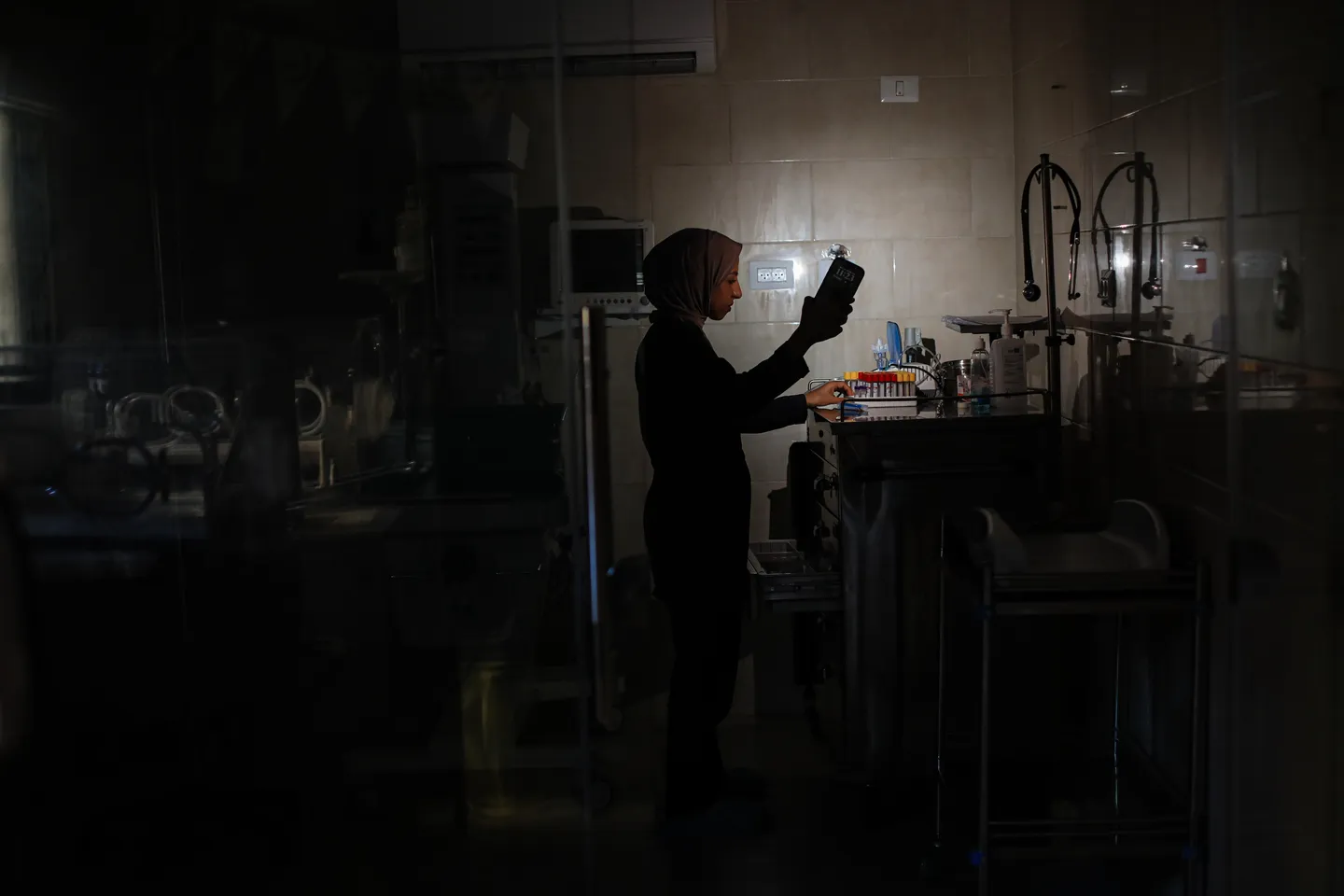









Two American physicians who served in Gaza’s war-battered hospitals have described the harrowing reality of witnessing patients die from conditions that would be considered treatable in well-equipped medical facilities elsewhere. Their accounts highlight a healthcare system systematically hollowed out by persistent bombardment, severe supply restrictions, and the closure of major medical centers. Leaving overwhelmed medical teams to treat critically injured patients with dwindling resources, hospitals that once provided specialised care have been damaged or forced to close. “We actually ran out of chest tubes,” she said, describing how medical teams improvised devices to drain blood from patients’ chests. He recalled treating a man in his twenties whose spinal cord had been damaged by gunfire. Sterilising them and reusing them because replacements were unavailable, khaleel recalled hospitals removing metal pins used to stabilise fractures from deceased patients. While hospitals struggled with patients suffering from untreated chronic illnesses, israeli strikes and gunfire continued to cause casualties.
Dr. Nour Sharaf, an emergency physician who worked at Shuhada al Aqsa Hospital, Nasser Hospital, and al Shifa Hospital during three trips between July 2025 and June 2026, recalled the case of a two-year-old girl named Alia. Although conscious, Alia appeared confused as she was rushed to hospital. She recalled a makeshift emergency department, converted from outpatient clinics, where as many as 300 casualties could arrive simultaneously, at al-Shifa Hospital. When hunger became another emergency. He recalled a badly burned child with a partially amputated hand gesturing towards his mouth to indicate hunger.
Following an explosion near her home, the child arrived at a makeshift emergency department showing signs of an intracranial hemorrhage.
Despite the urgent need for a CT scan, diagnostic delays lasted four hours.
Even after the injury was identified, doctors lacked the necessary resources to perform life-saving surgery.
Sharaf noted that a paediatric neurosurgeon had explicitly stated that without proper equipment, they were helpless to intervene.
This case reflects the broader collapse of Gaza’s medical infrastructure. According to the World Health Organization, as of September 2026, only 19 of the territory’s 36 hospitals remained partially functional, with none operating at full capacity. Essential supplies like chest tubes, cardiac stents, and basic diagnostic tools have become luxuries, forcing staff to improvise or reuse equipment.
Dr. Mohammed Adeel Khaleel, a spine surgeon who completed three rotations in Gaza between April 2024 and August 2025, described surgeons salvaging instruments from closed hospitals to treat patients. In one instance, he stabilized a young man’s spine using mismatched screws recovered from elsewhere. While he did achieve success with some patients, such as an 18-year-old girl who regained the ability to walk after surgery, many others faced bleak outcomes due to the unavailability of modern hardware. Yet Khaleel remembered him smiling and joking with the anaesthesiologist before surgery, the young man was unlikely to walk again.
The restriction of medical supplies remains a contentious issue. Physicians for Human Rights has documented widespread shortages, and in a March 2026 investigation, it was confirmed that Israeli authorities had confiscated microsurgical instruments from medical teams for failing to receive prior clearance. The Coordinator of Government Activities in the Territories (COGAT) has rejected claims of intentional obstruction, asserting that these security measures are necessary to prevent the diversion of materials. The opportunity to save the little girl had passed, by the time the results confirmed the bleeding.
By the summer of 2025, the crisis was compounded by rampant starvation, with medical teams treating malnourished patients alongside traumatic war injuries. Dr. Khaleel reported observing children with gunshot wounds, some sustained while attempting to gather food at aid distribution sites. Official records from the UN Human Rights Office indicate that between late May and September 17, 2025, at least 2,319 people were killed while seeking assistance, with 1,202 of those deaths occurring near militarized distribution centers. Most deaths were reportedly caused by live fire. He believed some injuries suggested deliberate targeting.
The ongoing humanitarian emergency persists despite an October 2025 ceasefire that slightly reduced the intensity of bombings. This environment follows the findings of a United Nations commission of inquiry in September 2025, which concluded that Israel had committed genocide during its military operations against Hamas following the October 7, 2023, attacks. Israel has consistently rejected these findings, maintaining that its actions are strictly targeted at militants.
For the medical professionals involved, the experience remains a profound moral challenge. Dr. Sharaf emphasized that the deaths were not inevitable consequences of the injuries themselves, but direct results of an environment where the fundamental tools of healing are systematically denied. As Dr. Khaleel noted, even in the midst of such widespread disability and despair, the human cost continues to mount as hospitals struggle to function under the weight of an escalating catastrophe. Though, not every story ended in despair.