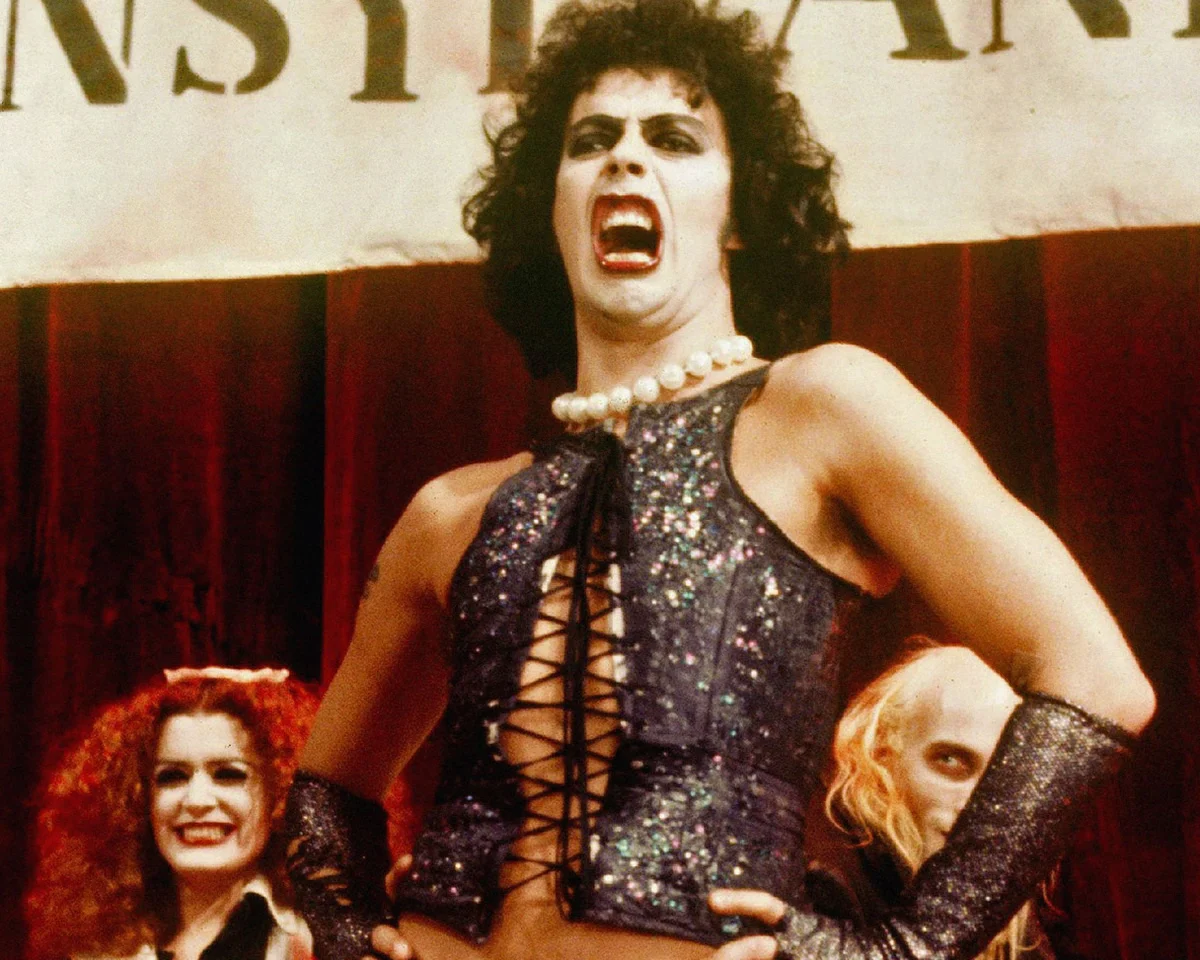









Tim Curry, a performer whose career spanned decades of stage and screen, remains an integral figure in the pre-history of modern discussions regarding gender fluidity and trans identity. As an icon of 1970s underground cinema and proto-punk culture, Curry brought a unique, subversive energy to the screen that helped define an era. While his later work included notable roles in projects like Stephen King’s It, he is perhaps most indelibly linked to his portrayal of the sensational Dr. Frank-N-Furter in the 1975 film adaptation of The Rocky Horror Picture Show.
The role of the “sweet transvestite from Transsexual, Transylvania”—a vampiric sex outlaw draped in fishnets and mascara—challenged the conventional sensibilities of the era. By disrupting the lives of the timid, straight-laced couple Janet and Brad, played by Susan Sarandon and Barry Bostwick, Curry’s character became a symbol of the sexual peacock movement that countered the drabness of the 1970s. Curry’s performance was deeply tied to the glam rock aesthetic, placing him alongside contemporaries like David Bowie and Marc Bolan.
Despite the film’s eventual status as a cultural phenomenon, its initial reception was far from certain. Curry recalled the uncomfortable silence that filled the room during early private screenings with 20th Century Fox executives. The film’s survival was largely due to Tim Deegan, a publicity director who recognized the potential for the movie to thrive in New York’s burgeoning “midnight” cinema circuit. This strategy birthed the underground cult film movement, paving the way for other unconventional works like Eraserhead, Pink Flamingos, and Night of the Living Dead.
Curry’s career was marked by a constant tension between his massive success in Rocky Horror and his desire for artistic range. He was a highly respected stage actor, earning Tony nominations for his performances in Amadeus, My Favorite Year, and Spamalot. However, he admitted that the overwhelming success of Frank-N-Furter led to significant typecasting, which hindered his film career for years and shifted much of his professional focus toward voiceover work. He also noted that the film’s soundtrack provided a steady financial foundation over the long term.
The actor’s ability to embrace camp and kitsch was a hallmark of his style. The Rocky Horror Picture Show itself was a love letter to the B-movie tradition, featuring references like the line, “We could take in an old Steve Reeves movie,” a nod to the post-war bodybuilder who became a cult icon in his own right. Even as he moved into other projects, such as the 1985 board-game-inspired murder mystery Clue—where he played the frantic butler Wadsworth—Curry maintained a unique connection to his cult celebrity status.
Though he explored a wide variety of roles throughout his life, the brief, explosive impact of Dr. Frank-N-Furter remains his most enduring contribution to pop culture. Curry’s work provided a blast of subversive fun that helped shape the aesthetic of the punk movement and the Vivienne Westwood era, leaving behind a legacy that continues to resonate with audiences today. The report also notes that the screen version of the 1973 stage show, he was the sensational Dr Frank-N-Furter in the thoroughly outrageous Rocky Horror Picture Show (1975). The report also notes that because of typecasting in a role that could not really ever be repeated, and in fact a great deal of his income from screen work from then on deri, curry himself said that the movie stymied his film career for many years. The report also notes that he was a part of the sexual peacock movement that was upending the dullness and drear of the 70s. The report also notes that and a versatile performer – he got Tony nominations for his varied stage work on Broadway as Salieri in Amadeus, Alan Swann in My Favorite Year (the part Peter O’Toole played on screen) and as King Arthur in Monty Python’s Spamalot, curry was a good-looking actor with a tremendous speaking and singing voice. The report also notes that but it was his strange destiny to be remembered for one role: at once indelibly prominent and weirdly peripheral. The report also notes that these hapless straights had got lost and found themselves in his exotic domain.