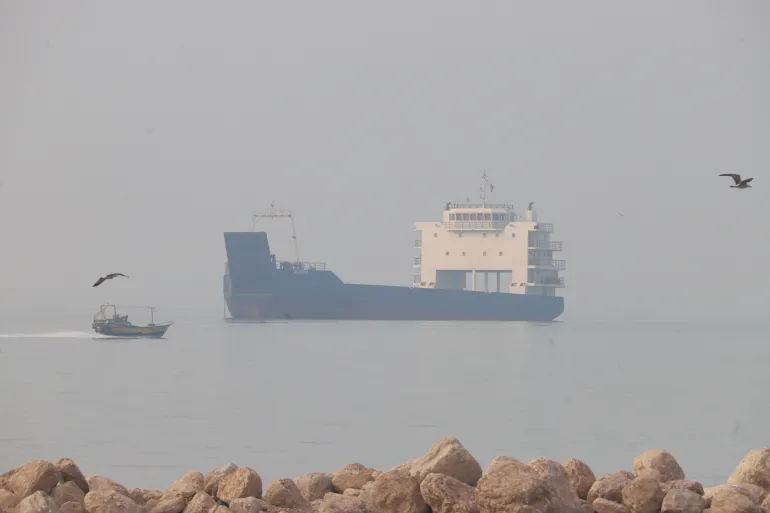










Shipping transit through the Strait of Hormuz has dropped to its lowest levels since July as the ongoing regional conflict intensifies the danger for merchant vessels. Despite the decline in detectable traffic—with only seven ships recorded in the last week—the logistics of moving oil out of the region remain highly lucrative for those willing to take the risk. According to kpler, On Tuesday that the number of detectable vessels passing through the strait had fallen to its lowest level in more than two months, with only seven vessels passing through the crucial waterway in the previous week, the lowest figure since July 23. Iran has launched strikes at ships making the crossing without its express permission.
Reports indicate that tanker captains are now commanding base salaries as high as $100,000, supplemented by a $50,000 bonus for every individual transit. Across the entire vessel, crews are seeing earnings jump to four to six times their standard rates. Some shipping firms are reportedly spending between $30 million and $40 million for single round-trip operations involving ship-to-ship transfers to circumvent the blockade.
The hazards of the route have fundamentally changed navigation tactics. Captains on shuttle runs describe operating in complete darkness, with strict protocols requiring all lights and mobile phones to be switched off. Vessels often navigate using only coastal features and lighthouses for reference, maintaining only a single radar active to avoid detection. One captain, recently returned to the Philippines after a three-month rotation, noted that he relied on the US Navy to assist with mine avoidance and threat warnings after witnessing fires from attacks during his voyage.
Regional oil exports reached approximately 16.5 million barrels last month, matching pre-war averages if excluding Iran, which remains under a US naval blockade. However, the nature of these shipments has shifted significantly; roughly 40 percent of volume is now moved via Saudi Arabia’s East-West pipeline or through high-risk ship-to-ship transfers conducted by smaller boats that frequently disable their transponders. But shipping data from Kpler shows that about 40 percent of those are leaving the region due to a combination of pipeline exports and small shuttle boats carrying out risky ship-to-ship transfers.
The security situation has become increasingly volatile. On Wednesday, the United Kingdom Maritime Trade Operations reported casualties following projectile strikes on a ship off the coast of Qatar. This follows a period where Iranian attacks on commercial shipping have reached their highest frequency since the conflict began in late February. Another captain of a Liquefied Natural Gas tanker told Bloomberg that his journey began by turning off the breaker that connects the ship’s location transponder to hide their whereabouts while they were travelling along the Omani coast.
Analysts at MST Marquee warn that the combination of extreme logistics costs, constrained product flows, and a high probability of further escalation will continue to drive oil prices upward. Brent crude futures recently climbed 2.28 percent to $102.28 a barrel, while US West Texas Intermediate saw a 1.88 percent gain to $89.94. With Brent crude futures increasing by $2.28, or 2.28 percent, to $102.28 a barrel by 04:27 GMT, oil prices rose on Thursday morning. US West Texas Intermediate crude futures gained $1.66, or 1.88 percent, to $89.94.
Shipping executives currently estimate a one-in-20 chance of a vessel being hit during a transit of the strait. The East-West pipeline, critical to keeping oil flowing toward the Red Sea and Yanbu port, remains a frequent target for Iran-backed factions, further complicating the supply chain.
While many sailors are drawn to the high wages from countries including India, the Philippines, and China, the psychological and physical strain of the transit is severe. Captains admit that their contracts are often shorter than standard deployments because the work is not easy, yet the financial incentives remain unmatched in the maritime industry for decades.
The US government continues its naval escort operations to protect certain vessels, but the overall blockade of Iranian ports and Tehran’s insistence on strictly limiting passage through the waterway have created a fractured transit environment. As it stands, the combination of high-stakes, off-the-grid navigation and persistent military intervention remains the new baseline for Gulf energy logistics. Crew members also barricade the main decks with sandbags in case drones or missiles attack them.