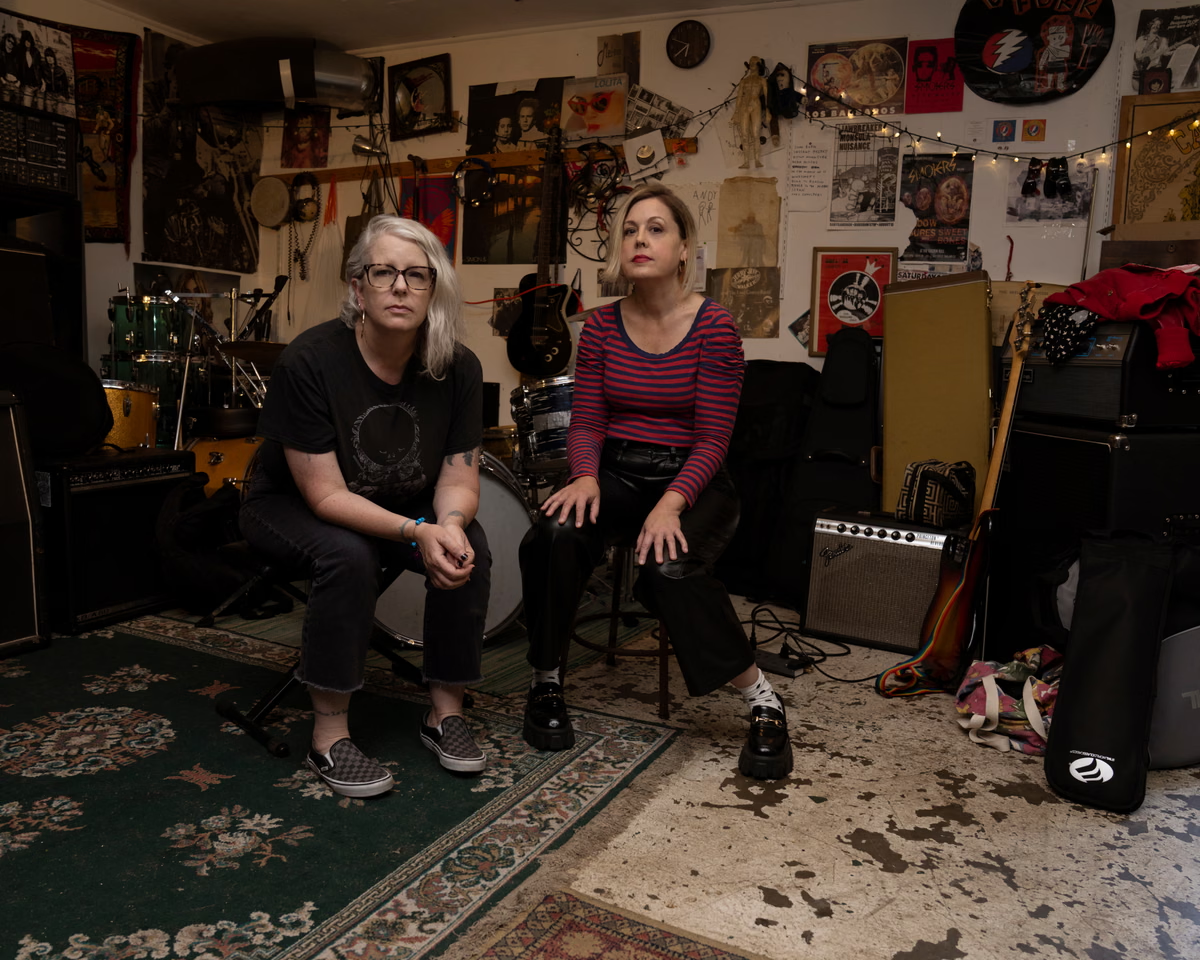









In a surprise move that electrified the independent music scene, the pioneering feminist punk duo Heavens to Betsy recently performed their first live show in 32 years. The reunion took place at an intimate community venue in Portland, Oregon, following the appearance of hand-made flyers on local utility poles. Despite the lack of an online announcement, the show sold out immediately, proving the enduring legacy of the band formed by drummer Tracy Sawyer and singer-guitarist Corin Tucker.
The duo first gained prominence 35 years ago this week, making their debut at the International Pop Underground Convention in Olympia, Washington. That historic two-song set occurred when both members were barely out of high school. Reflecting on that initial performance before an audience of roughly 100 people, Sawyer, now 52, recalled feeling overwhelmed by nerves, thinking only that the set had to end quickly. However, the reception was immediate; even Fugazi’s Ian MacKaye sought them out after the show to offer his congratulations.
During their active years from 1991 to 1994, Heavens to Betsy became a cornerstone of the riot grrrl movement, standing alongside contemporaries like Bikini Kill and Bratmobile. Their only studio album, 1994’sCalculatedshowcased a raw, grungier sound that complemented their earlier, more spartan demos. The band’s lyrics tackled heavy, personal subjects including sexual abuse, body image, abortion, and the systemic challenges faced by young women, delivering a message of defiance that continues to resonate with modern artists like Olivia Rodrigo.
The band’s resurgence is marked by the upcoming release ofBaby’s Gonean LP that compiles a rare 1992 demo tape and two 7-inch EPs. The original demo was recorded by Bratmobile’s Molly Neuman using a four-track machine borrowed from the Evergreen State College media library, with only about 100 cassettes ever produced. Last autumn, Kill Rock Stars approached the duo about a wide release, an opportunity Tucker described as an “impossible dream” because she believed the original master tapes had been lost.
Tucker, who later gained fame as a member of Sleater-Kinney, noted that revisiting these early recordings felt like a profound rediscovery. “There’s a really particular voice with Heavens to Betsy, a way of writing a song that speaks to the clarity you have as a young person,” she said. “I felt really energised and empowered by that voice coming back into my life.” She added that the lack of a filter between her emotions and her voice was a defining characteristic of their early work.
The reunion has allowed the two musicians to reconnect after drifting apart following their initial breakup, which they attribute to poor communication skills during their youth. Both women are now mothers, and they have found common ground in their shared history. Sawyer admitted that she was initially apprehensive about performing songs written in their teens, but the experience of seeing a new generation of fans—many of whom are the same age the duo were when they started—singing the lyrics at the top of their lungs has been transformative.
“They knew all the words and were screaming them at the top of their lungs,” Tucker said of the recent Portland show. Sawyer echoed this sentiment, noting that young fans have even approached her to explain that they are learning to play drums specifically by studying Heavens to Betsy records. This connection across generations highlights the lasting impact of the band’s zines and records, which helped translate academic feminist concepts into a relatable vernacular for teenagers.
The duo’s friendship began in middle school in Eugene, Oregon, where they bonded over shared musical interests in The Cure, REM, and Depeche Mode. Their creative philosophy remains rooted in the DIY ethos they developed in the early 90s. “You have to create the world before anything else, and cling to it,” Tucker explained. “That’s true about every creative idea: you need to commit to that world. And once you do, then you can make it real for everyone else.”
As they prepare for a US tour, the band members are embracing this second chance. For Sawyer, the process has been a gift, allowing her to understand the trajectory of Tucker’s life and the shared experiences that continue to bind them together. The upcoming tour and the release ofBaby’s Goneserve as a testament to the band’s refusal to apologize for their rage or their commitment to expressing their autonomy through music. The report also notes that a cut-and-paste photocopied flyer began appearing on telegraph poles around Portland, Oregon, promoting a DIY show by an apparently defunct band at an intimate community space, b ack in June. The report also notes that but hopeful fans bought every ticket anyway, the band hadn’t mentioned it online. The report also notes that the festival also featured the likes of Fugazi, Bikini Kill and Melvins; meanwhile Heavens to Betsy had practised only a couple times. The report also notes that “They were singing along to a lot of the songs,” Tucker, now 53, says on a video call from her home in Portland. The report also notes that “They knew all the words and were screaming them at the top of their lungs.” After the gig, Sawyer, 52, recalls from her yard in Oakland, California, “20-year-old kids came up to me and said, ‘I’m learning to play drums by listening to Heavens to Betsy records.’”. The report also notes that turning their spare setup into an extreme sound, Heavens to Betsy made songs that were emotional, fearsome and dead serious. The report also notes that “I will decide my life / No man is gonna rule my life,” they declared on Decide.