







Scientists have reached a significant milestone in understanding the biological origins of autism, utilizing artificial intelligence and lab-grown brain organoids to create the most comprehensive molecular map of the condition to date. Published in the journal Science, this research details how specific genetic mutations associated with autism spectrum disorder rewire the brain, providing a potential roadmap for future drug discovery.
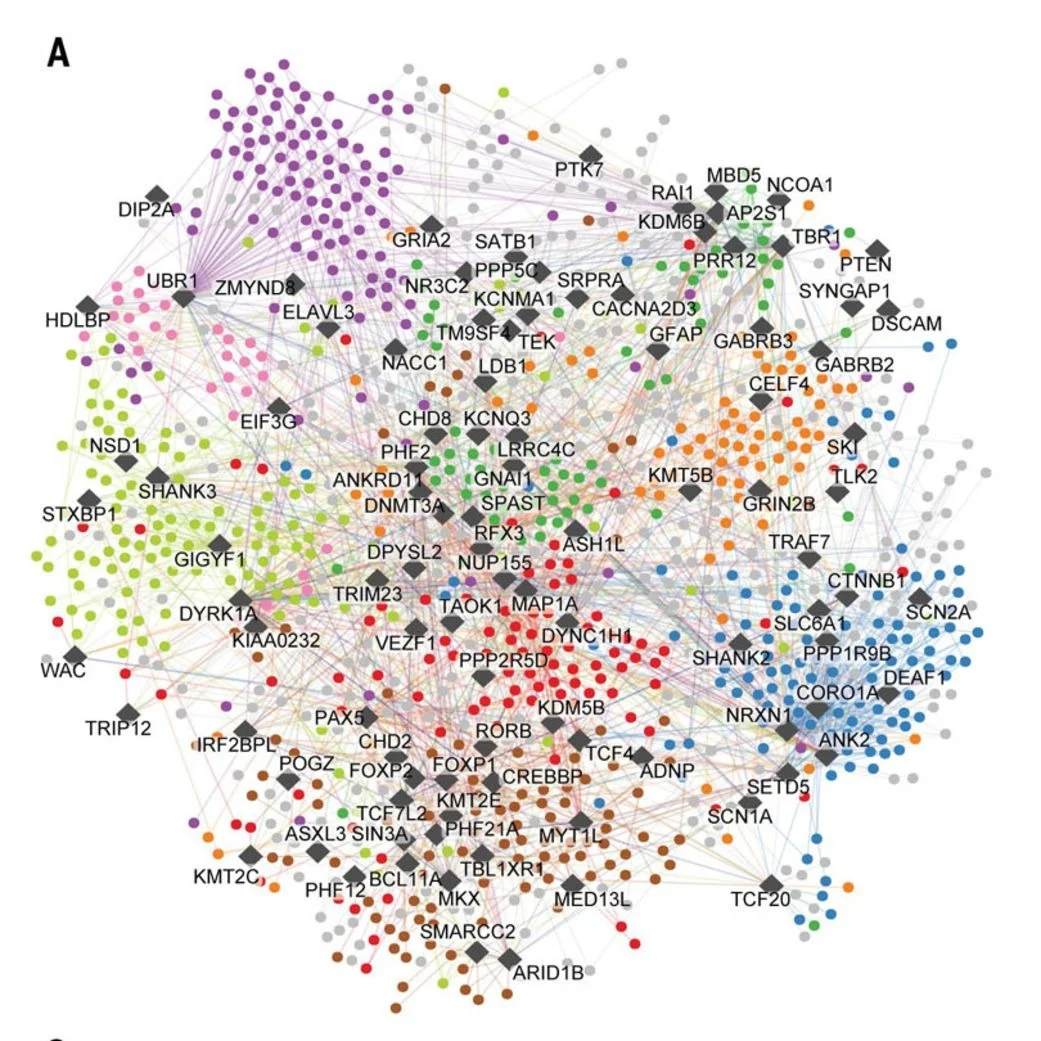
Dr. Nevan Krogan, a professor at the University of California, San Francisco, and senior investigator at the Gladstone Institutes, noted that while genetic lists have long been available, they function only as a “parts list.” By mapping how these mutations affect protein-to-protein interactions, researchers have created a “wiring diagram” that reveals how these components communicate. This approach allows scientists to target shared biological pathways rather than attempting to address hundreds of individual genetic mutations separately.
The study, described by Krogan as the largest of its kind for any neuropsychiatric disorder, identified more than 1,800 protein-protein interactions linked to autism, 87% of which were previously unknown. To achieve this, the team used the AI system AlphaFold to prioritize key mutations, which were then analyzed within lab-grown brain models. Krogan confirmed that his team has already launched three programs to explore potential therapies based on these findings.
While the research offers a promising path forward, experts emphasize that clinical applications remain a long-term goal. Dr. Fikri Birey, an assistant professor of human genetics at Emory University School of Medicine, described the study as an exciting, systematic view of autism risk. He noted that future efforts might focus on stabilizing disrupted protein complexes, though he cautioned that extensive additional research is necessary before these findings can be translated into medical treatments.
The study’s scope is particularly relevant to the approximately 30% of individuals with autism spectrum disorder who are diagnosed with profound autism and often require 24-hour care. Krogan suggested that the insights gained regarding protein interactions could also have broader implications for other conditions, including schizophrenia, obsessive-compulsive disorder, tic disorders, and cancer.
Alison Singer, president of the Autism Science Foundation, praised the work as a “huge watershed moment” for the field. She highlighted that identifying where diverse autism genes converge on shared biological pathways could provide therapeutic targets for a much wider group of patients, including those without a clearly identified genetic cause. For families of individuals with profound autism, she added, this represents the kind of scientific progress that offers hope for moving beyond symptom management toward precision medicine.
Despite the optimism surrounding the scientific discovery, some experts have raised concerns regarding the future of federal research priorities. While Michael Shih of Autism Speaks expects the new Interagency Autism Coordinating Committee (IACC) strategic plan to emphasize genetic research and developmental trajectories, Singer expressed skepticism. She voiced concerns that the current administration might shift focus away from established biological science toward unproven theories regarding vaccines and autism. The report also notes that “You need this insight to ultimately develop drugs, and we’ve generated a map now that is providing essentially the molecular underpinnings of autism and pointing us in a multitude of different directions for ultimate drug discovery,” said study author Dr. The report also notes that “The hope would be at some point you’d be looking back and saying, ‘Ah, this map led to X, Y, and Z, and therefore we have now the first-ever treatment to autism.’ That’s the vision, and I believe that’s going to come to fruition at some point in the future,” Krogan said. The report also notes that for decades, developing effective treatments for autism has been a scientific puzzle. The report also notes that finding a treatment that targets the genetic roots of the disorder is equivalent to seeking a single key for hundreds of different locks, since there are more than 250 genes associated with autism spectrum disorder. The report also notes that proteins are molecules that physically build and help maintain the brain. The report also notes that that’s a parts list,” said Krogan, who also serves as director of the Quantitative Biosciences Institute at UCSF.