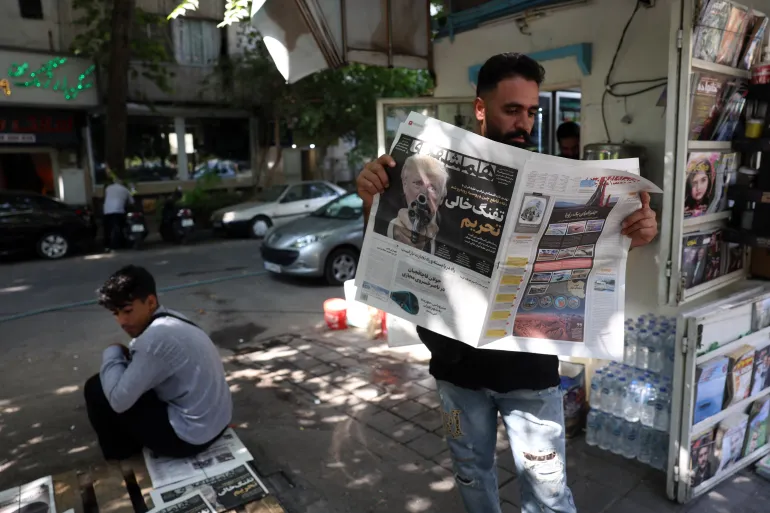







Iran has issued a stern warning to neighboring countries, declaring that any nation joining the United States in its economic campaign against Tehran will be treated as an enemy. Mohsen Rezaei, secretary of Iran’s Supreme National Security Council, delivered the ultimatum during an interview with state broadcaster IRIB on Saturday.
The threat follows a series of escalating economic maneuvers by the administration of US President Donald Trump. On Wednesday, Trump announced plans for what he described as the “most crushing economic operation” yet against Iran, citing the ongoing hostilities between the two nations. The US and Israel have been engaged in a military conflict with Iran since February 28, when they launched an initial series of strikes against the country.
Beyond the economic pressure, Trump has pledged “tremendous economic consequences” for any state that provides a “lifeline” to Iran. Treasury Secretary Scott Bessent reinforced this stance, stating, “You’re either with us or against us.” In response, Iran’s Ministry of Foreign Affairs condemned these measures on Saturday, characterizing the US approach as an illegal assertion of “extraterritorial sovereignty” over United Nations member states.
Rezaei outlined a three-stage strategy for dealing with regional neighbors. He stated that Iran would first attempt to negotiate and use “pleasant language” to distance these nations from American influence, as Tehran is not seeking to expand the conflict. Countries would then be given time to reconsider their positions before Iran takes decisive action in a third stage.
The Iranian official suggested that the US strategy is rooted in the hope that economic hardship will fracture Iranian society and incite public protests, effectively aiding American military efforts, including the use of F-35 aircraft. Efforts to resolve the conflict have remained stagnant since the collapse of a June 17 memorandum of understanding, which had sought a permanent end to military operations.
A central point of contention remains the Strait of Hormuz, a critical shipping lane that Iran moved to close early in the war, causing global prices for oil and fertilizer to surge. As regional states seek alternative trade routes to bypass the strait, Rezaei warned that Iran would target these new shipping paths if those countries participate in the US economic war.
Furthermore, reports indicate that Tehran is considering expanding its list of potential targets beyond the Middle East. This could include striking US allies in Europe that have provided support for Trump’s ongoing operations against Iran. The report also notes that otherwise, we will consider them as enemies,” Rezaei told IRIB. The report also notes that “But in the third stage, we will definitely act.”. The report also notes that “They hope that, if possible, they can break our unity with economic pressure and a group of protesters will take to the streets, and in a way, they will come to the aid of American F-35s,” he said, referring to a kind of military aircraft. The report also notes that following the failure of a June 17 memorandum of understanding (MoU) that called for an “immediate and permanent termination of military operations”, negotiations to end the conflict have stalled in recent months. The report also notes that sending the price of goods like oil and fertiliser skyrocketing, iran quickly moved to shut down traffic through the strait early in the war.