
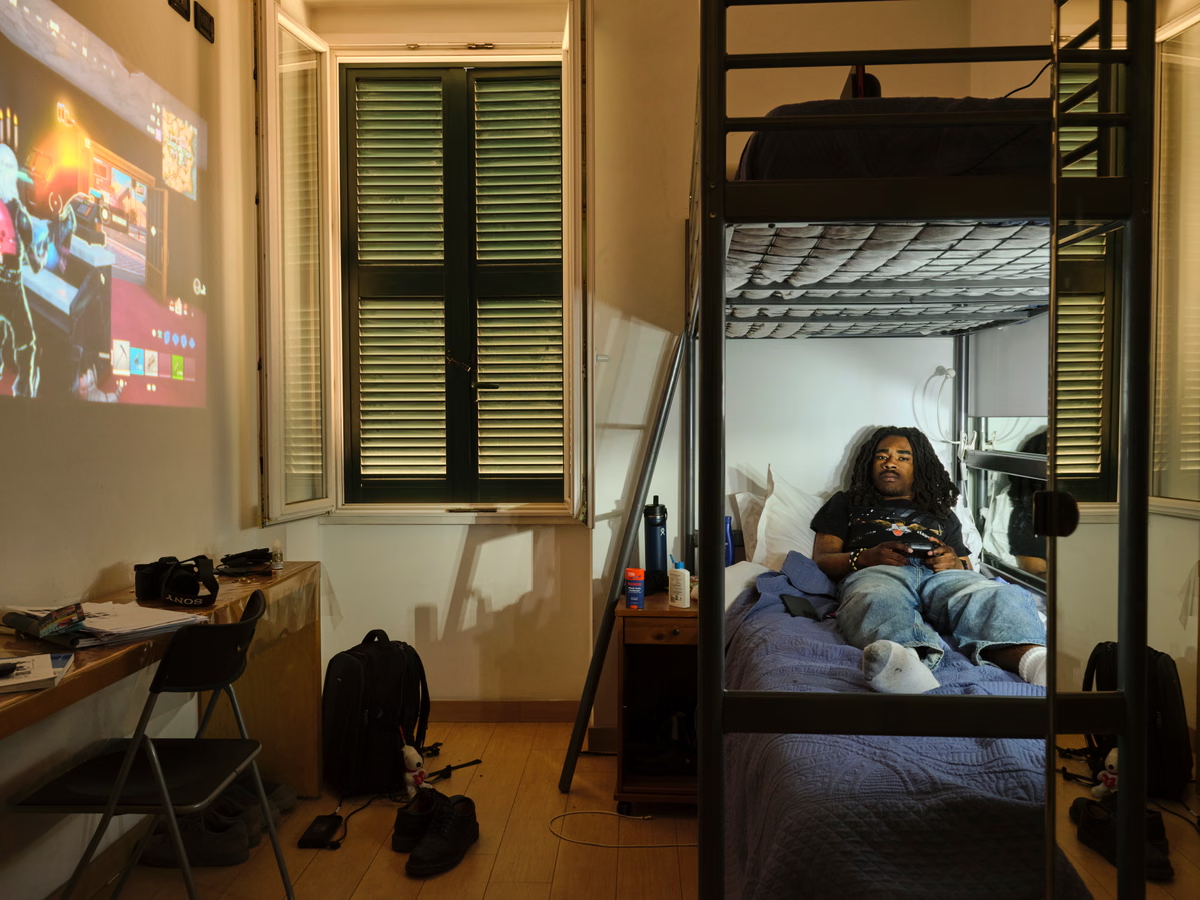







For the generation born into a world where the internet is a mother tongue, identity is often split between two distinct realms: the physical sanctuary of the bedroom and the curated landscape of social media. Italian photographer Niccolò Rastrelli, a member of Generation X born in 1977, sought to document this duality in his project, aptly titled IRL—an acronym for “in real life.” Recognizing that he lacked the lived experience of these digital natives, Rastrelli aimed to bridge the generational gap by exploring how younger people construct their sense of self.
Rastrelli recruited a diverse group of subjects ranging from 14-year-olds to adults in their late 20s, primarily from Italy but also including participants from the UK, Morocco, and France. Each portrait in the series features two components: a photograph of the subject in their bedroom and a selection of their phone screen activity. Rastrelli emphasizes the bedroom’s significance as a young person’s first solo home, a space that historically served as the primary site for identity formation through personal items like posters, books, musical instruments, and sports equipment.
The project highlights how social media has become an extension of this private space. Rastrelli asked participants to co-curate their digital representation, often revealing that many maintain multiple accounts on a single platform to manage different levels of privacy. For instance, 16-year-old Lana, who received her first smartphone at 11 after extensive negotiations with her parents, uses TikTok as a pastime while treating Instagram like a diary. She maintains several profiles, noting that she only feels truly free to be herself on her most private account.
The photographer observed that many Gen Z individuals are surprisingly cautious, often using social media less than his own generation. Despite ongoing debates regarding the potential dangers of these platforms—including a planned ban for under-16s in the UK starting next spring—Rastrelli found that his subjects were not necessarily more affected by the technology than their elders. In Italy, where no such restrictions are planned, the digital habits of his subjects varied widely.
The participants’ stories reflect the diverse ways they navigate the digital world. Stevie, a student from Pennsylvania studying in Rome, manages a public and a private Instagram account, shifting his tone depending on the audience. Sofia, an animation student, faces strict parental controls that block Instagram and TikTok, leading her to rely on WhatsApp to share her creative work. Meanwhile, Roberto, who moved from Italy to London, did not receive his first smartphone until age 15 or 16, and remains highly selective about his online presence.
Other subjects use social media as a professional or creative tool. Mark, born in Nigeria and raised in Italy, purchased his first phone at 12 through odd jobs and now uses Instagram primarily for research. Melina, who studied 3D animation, uses the platform to discover artists and tutorials, keeping a secondary account with no followers to store her own work. Anna, who received her first phone at 11, views social media as a future professional asset for her film career, using Instagram currently for creative inspiration.
The project also features Francesco, a 23-year-old web developer and social media manager who chooses not to post on his own account, and Andrea, a drag artist who maintains separate personal and professional profiles. Andrea’s approach remains consistent across both, showcasing himself without filters and using Photoshop only to enhance the editorial quality of his images. Through these portraits, Rastrelli captures the nuanced reality of a generation that is as comfortable in their physical rooms as they are in the digital feeds they curate. The report also notes that a younger millennial, was on the brink of teenhood, s ocial media arrived just as I. The report also notes that my friends and I signed up for accounts on Facebook, Myspace and Twitter, as well as less remembered sites such as the now defunct Bebo. The report also notes that we didn’t know what we were doing; no one did. The report also notes that for that matter – to see, we posted indiscreet messages and photos on public feeds that we wouldn’t want any future employer – or really anyone. The report also notes that and our parents and their parents, too, learned what it means to live with that world-changing phenomenon that we term social media, then gradually we. The report also notes that a process that is ongoing, we started to find different ways to adapt. The report also notes that “In the last few years, I’ve also worked a lot with younger people. The report also notes that so I want to understand their point of view,” says the photographer, who was born in 1977, making him a member of generation X, i’m older and don’t have children.