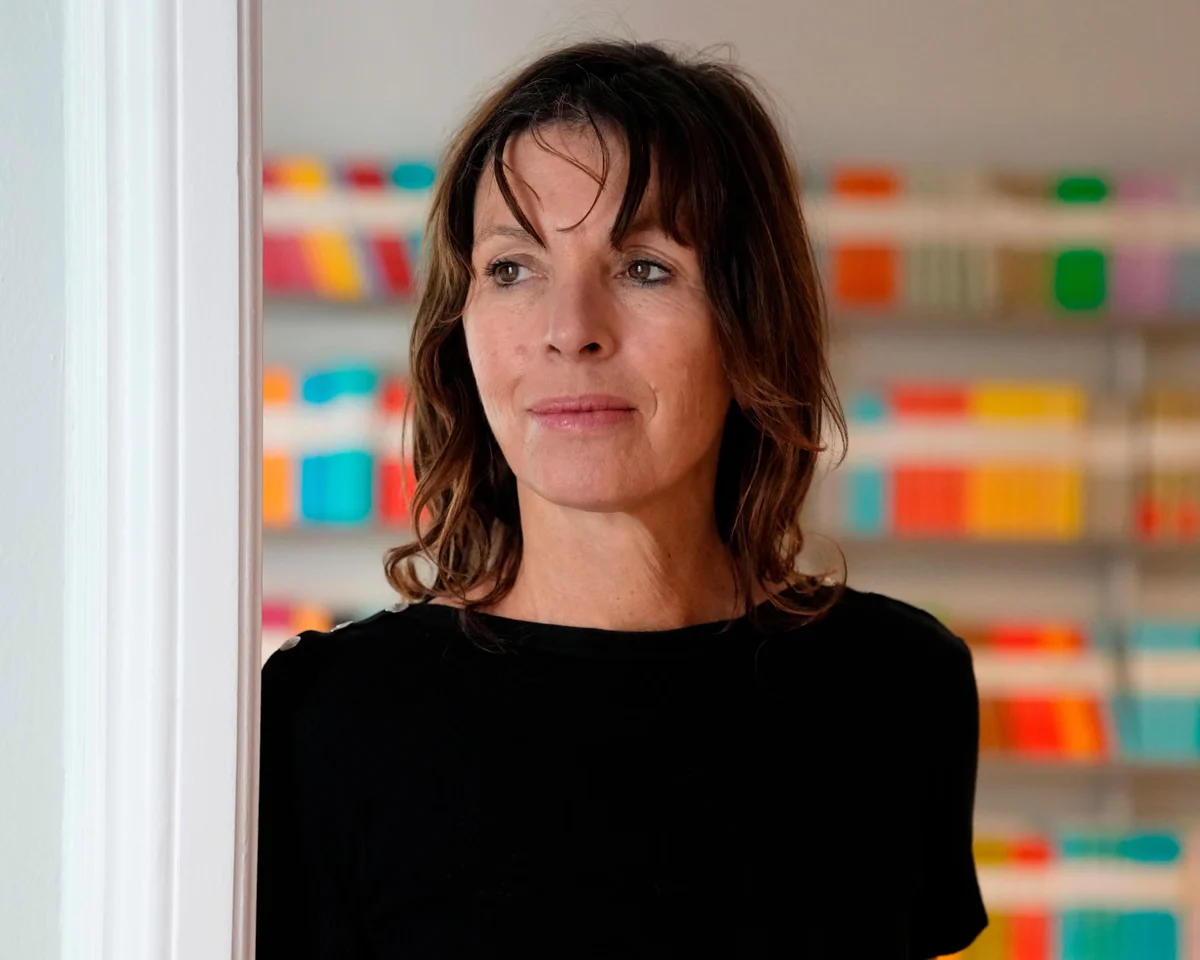










Rachel Cusk has carved out a unique space in modern literature, evolving from a celebrated chronicler of social manners into a pioneer of spare, wintry autofiction. Her latest release, Life of M, continues this trajectory by presenting an abstract, fictionalized portrait of a film star reminiscent of Natalie Portman. The novel employs a stark style—notably utilizing a sans-serif typeface—to examine the emptiness of celebrity, capturing the mantra that to constantly perform a role is to lack a permanent home. The New York Times described this turn toward abstracted character study as “rarefied, cosmopolitan, self-serious,” noting lines such as: “Everything I did or said in her company was false. It was as if I was acting, while M came across as authentic and real.”
Before her pivot toward the avant-garde, Cusk established herself through razor-sharp social satire. Her 1993 debut, Saving Agnes, won the Whitbread award when she was just 26. Although it displays the exuberance of a young writer leaning on elaborate phrasing for comedic effect, the prose remains precise. The novel follows Agnes Day’s search for love in London, featuring the memorable observation that her friend Merlin possessed “a salary for which Elizabeth Bennet would have left Darcy’s dinner burning in the oven.” This penchant for biting character studies continued in her second novel, The Temporary, a romantic dramedy tracking the volatile relationship between a publishing temp and a posh Londoner, culminating in a chaotic climax where Cusk masterfully oscillates between perspectives.
Cusk’s ability to find dark humor in domesticity reached a peak in A Life’s Work, a memoir chronicling the “love and terror and strangeness” of early motherhood. Eschewing the conventional, sanitized tropes of parenting books, Cusk documented her own frustrations with the drudgery of infant care with searing candor. She famously argued that her work was not a childcare manual, insisting that readers must think for themselves. This theme of maternal resentment permeates her fiction as well; The Country Life features a misanthropic lens on five young mothers who struggle with their domestic confinements, often with brilliant, biting humor. One character’s realization that she had returned to school as a teacher—only to conclude she was merely “good at going to school” rather than truly gifted—exemplifies the novel’s jaundiced eye.
Her evolution toward more experimental structures is evident in works like The Lucky Ones and Second Place. The former, a collection of linked stories, highlights Cusk’s narrative versatility as she shifts from stories of prisoners to accounts of high-society ski trips. The latter, inspired by D.H. Lawrence’s 1920s sojourn in New Mexico, depicts an artist named M who invites a provocative painter to reside in her home. It is a strange, compelling novel where the friction between characters provides the primary engine. M’s declaration, “I’ve been criticised all my life – it’s how I’ve come to know that I’m there,” perfectly encapsulates the tension that Cusk excels at creating.
In the broader scope of her bibliography, novels such as The Bradshaw Variations serve as a perfect synthesis of her early cynical humor and her later linguistic rigor. The story focuses on individuals desperate to avoid the appearance of unconventionality, yet it contains the seeds of her eventual departure from traditional fiction, with one character asserting: “Better to be broken than to be a slave of method!” Similarly, her longest novel, The Temporary, remains one of her darkest early comedies, blending situational humor with deep social awareness as the protagonist, Stella Benson, navigates an unsettling environment while working as an au pair. Through these works, Cusk has consistently challenged the reader, offering, as some critics noted, a “triumph of attitude and daring” even when the narratives reject the standard rewards of traditional storytelling. The report also notes that set in the now standard late-Cusk sans serif typeface (no frivolous flourishes!), Life of M serves up observations on fame in a light fictional coating. “To always be playing a part is to have no home. The report also notes that having made her name as a devilishly good creator of brainy social comedies, Cusk’s pivot to wintry autofiction since the Outline trilogy appears to have reached its logical conclusion in this flat, abstracted portrait of empty celebrity. The report also notes that they start weakly – Cusk struggles to embody a working-class female prisoner – but improve once she turns her caustic eye to ski trips and lawyers. The report also notes that the short form enables Cusk to show a narrative strength we don’t always see. The report also notes that starching and folding and putting away their youth, their excitement, their spontaneity.”, sample line: “Jane and Thomas were ironing out their lives in preparation for parenthood. The report also notes that like the party, was subsiding”), Cusk’s cheerfully comic debut tickles the reader throughout, as Agnes Day looks for love in contemporary London, after a cracking first line (“The house. The report also notes that leaving her with nothing but a rearranged face and a few years of bad luck.”, sample line: “Like a mirror he gave back nothing but what was already there; smash it and he would be gone. The report also notes that two Londoners – publishing temp Francine and posh Ralph – bond over a dried-out risotto “like a dish of planetary matter brought back by an alien”.