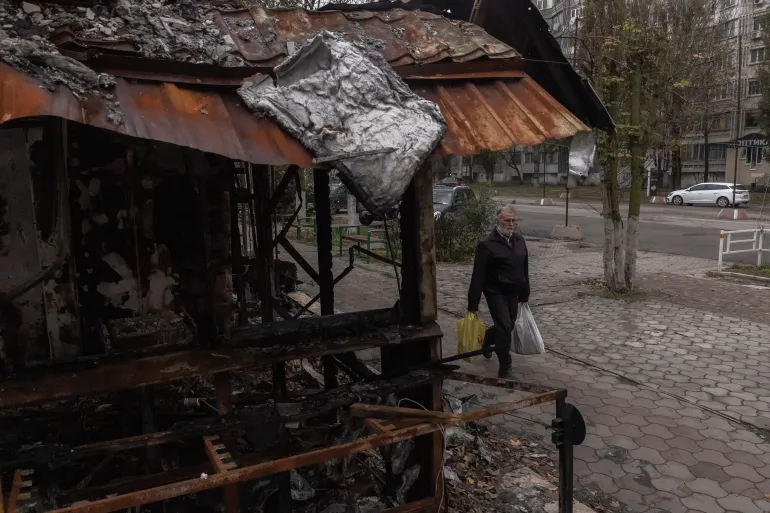









A six-day localised ceasefire in Ukraine’s Kherson region concluded on Sunday night without any reported violations or an extension. The temporary truce, which expired at 10:59pm local time (20:59 GMT), allowed for a rare collaborative evacuation effort between Kyiv and Moscow in the Russian-occupied town of Oleshky. Knyha is from Oleshky and used to commute from there to Kherson for work.
Ukraine’s military confirmed the evacuation of 167 civilians from the frontline area on Sunday, including 22 children and 21 individuals with mobility challenges. According to the General Staff, units from the ‘South’ group of forces worked alongside local authorities to relocate these residents to safer areas. Before the ceasefire, approximately 2,000 civilians were estimated to be in Oleshky, where they were given the option to move to territory controlled by either Kyiv or Russia, or remain in the city with fresh supplies. According to on Sunday, Ukraine’s military, It evacuated 167 more people from threatened areas of the southern Kherson region, including 22 children and 21 people with limited mobility requiring special assistance.
United States First Lady Melania Trump, who helped mediate the agreement alongside Pope Leo XIV, noted on social media that the pause provided residents with access to food, water, and medicine.
She expressed a hope that the area could serve as a starting point for broader peace.
Kremlin spokesperson Dmitry Peskov indicated that Moscow viewed the operation and the coordination between human rights commissioners positively. However, a Ukrainian official told the AFP news agency that Russia reportedly declined a request from Kyiv’s Foreign Ministry to extend the truce. “That’s also what keeps me here,” he told the Associated Press news agency.
As the quiet in Kherson ended, regional governor Oleksandr Prokudin urged residents to remain vigilant and avoid the ‘red zones’ near the Dnipro River, warning that the risk of high-intensity strikes persists. In Kherson city, which remains under Ukrainian control, residents and local figures like theater director Oleksandr Knyha maintained a composed outlook, though the threat of returning conflict looms large. “Don’t be afraid, keep holding on,” Oleksandr Knyha, head of the Mykola Kulish Kherson Regional Academic Music and Drama Theater, told the audience as he opened a concert.
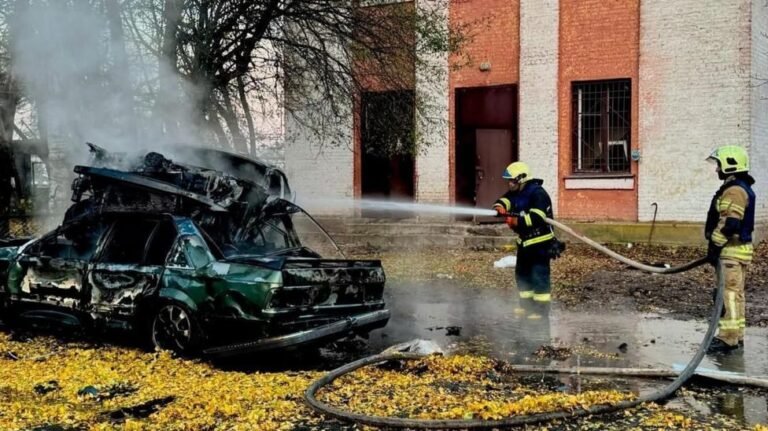
The end of the local ceasefire coincides with escalating violence across other parts of the country. President Volodymyr Zelenskyy reported that Russian strikes hit energy infrastructure in four regions on Sunday, cutting power to hundreds of thousands of homes. The Ukrainian Air Force recorded 433 drone attacks overnight, claiming 371 were neutralized. A separate Russian drone strike in the Vinnytsia region hit the grounds of a vocational school, resulting in three deaths—including a 13-year-old girl—and four injuries.
Regional authorities in Kyiv also reported that drone attacks for the second consecutive day damaged homes and energy facilities, wounding one woman. Simultaneously, conflict persists inside Russian borders. Governor Gleb Nikitin stated that more than 100 Ukrainian drones were intercepted over the Nizhny Novgorod region, with media reporting a fire at the Kstovo oil refinery. Additionally, Zelenskyy confirmed that Ukrainian forces targeted a missile component factory and air defense installations in the Rostov region. The attack sparked a blaze at the Kstovo oil refinery, Russian media outlets reported, sharing images of black plumes of smoke over the horizon.
Since the full-scale invasion began in February 2022, Russia has seized control over large portions of the Donetsk, Luhansk, Kherson, and Zaporizhia regions. Zelenskyy emphasized that the recent Ukrainian strikes were defensive measures intended to degrade Russia’s capacity to sustain its ongoing aggression. “We are justly defending ourselves against Russian aggression and doing everything to reduce Russia’s capability to continue it,” Zelenskyy said.