

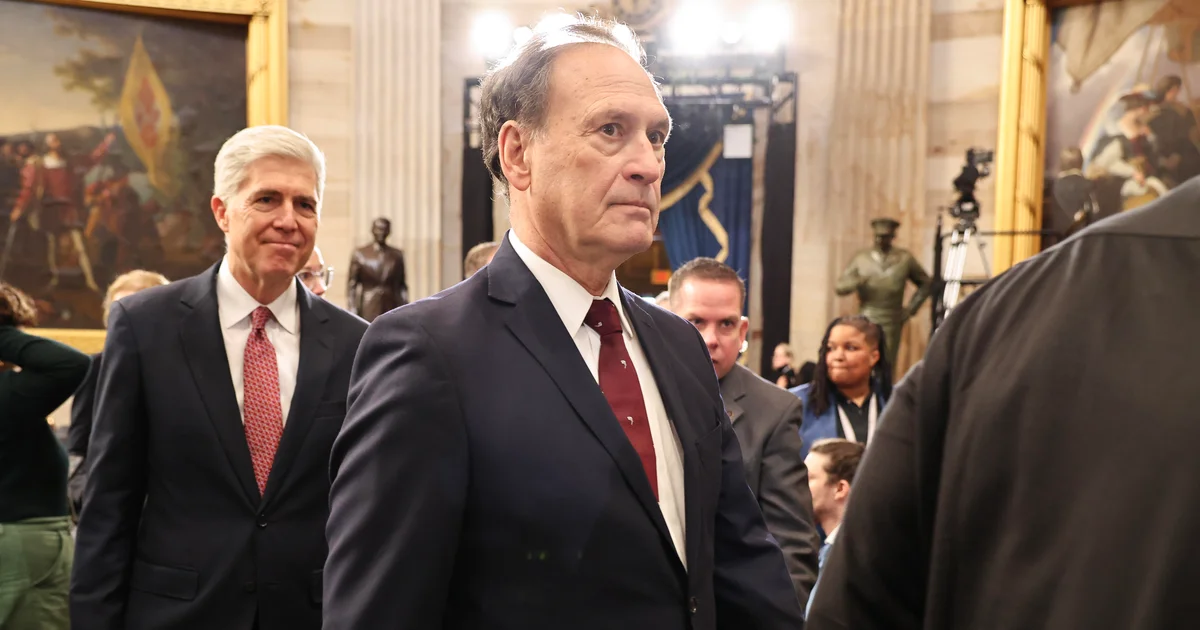









Supreme Court Justice Samuel Alito will no longer participate in a significant climate change legal battle involving two major energy corporations. According to a notice issued Monday by Supreme Court Clerk Scott Harris, Alito decided to step aside from the case, though no official reason was provided for his recusal.
Observers suggest the move likely relates to Alito’s personal financial disclosures from 2025, which reveal stock holdings in the energy sector. While his portfolio does not appear to contain shares in the primary defendants—Exxon Mobil and Suncor Energy—he does hold investments in ConocoPhillips and Phillips 66. But it is likely because the justice has stock holdings in oil and gas companies, according to his financial disclosure report for 2025, no reason for Alito’s decision to sit out was provided.
This development occurs just one week before the Supreme Court is scheduled to begin its new term with arguments regarding the lawsuit between Boulder, Colorado, and the two energy companies. The legal dispute, which originated in 2018, centers on allegations that Exxon Mobil and Suncor engaged in the aggressive production, marketing, and sale of fossil fuels while allegedly misrepresenting the associated environmental risks.
Boulder’s legal team contends that these actions led to an unchecked rise in atmospheric greenhouse gases, causing severe consequences such as extreme heat, frequent wildfires, and ecosystem damage. The city and county are seeking billions of dollars in damages to cover ongoing costs for infrastructure repairs, public health measures, and emergency services linked to climate impacts.
The energy companies have consistently fought the lawsuit, attempting to move the litigation to federal court and secure a dismissal. They argue that federal statutes, including the Clean Air Act, and the Constitution preclude Boulder from pursuing claims under state law. However, the Colorado Supreme Court previously ruled that the case could proceed, setting the stage for the current high-court review.
The Supreme Court is now tasked with determining whether it possesses the jurisdiction to review that state-level ruling and whether the lawsuit should be blocked from continuing. The final decision in this matter carries major implications for numerous other pending cases across the country where local governments are seeking billions in damages from fossil-fuel producers based on violations of state law. According to the outcome of the case could impact scores of similar lawsuits brought by, And localities against fossil-fuel producers alleging violations of state law.